
Alpine Valleys and Ancient Trails
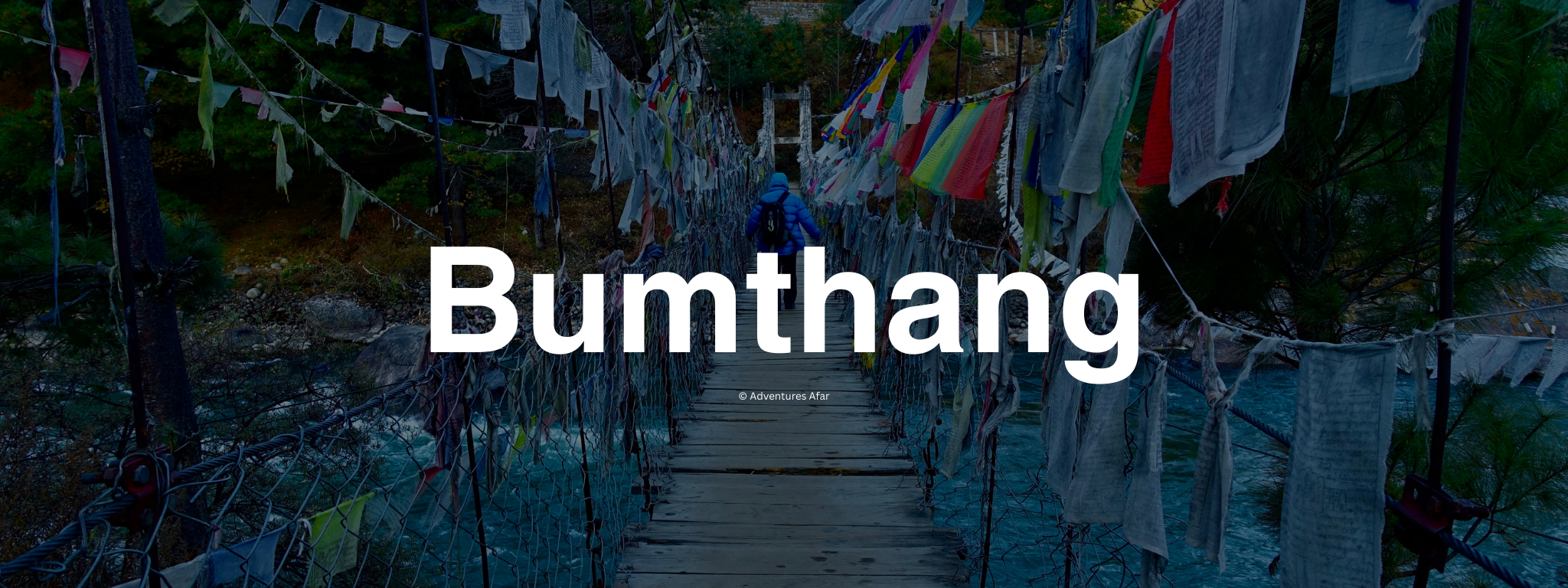
Often described as the spiritual heart of Bhutan, Bumthang is a region where the landscape is as rich in legend as it is in beauty. Comprising four high-altitude valleys, it boasts rolling hills, timeless wooden architecture, and some of the kingdom's most respected temples. While the pace of life here is typically slow and deeply connected to the seasons, the region celebrates many vibrant festivals throughout the year. For those seeking an immersive look at the country’s living heritage, Bumthang offers an unparalleled glimpse into the soul of the Dragon Kingdom.
Unmissable Highlights
-
Kurjey Lhakhang
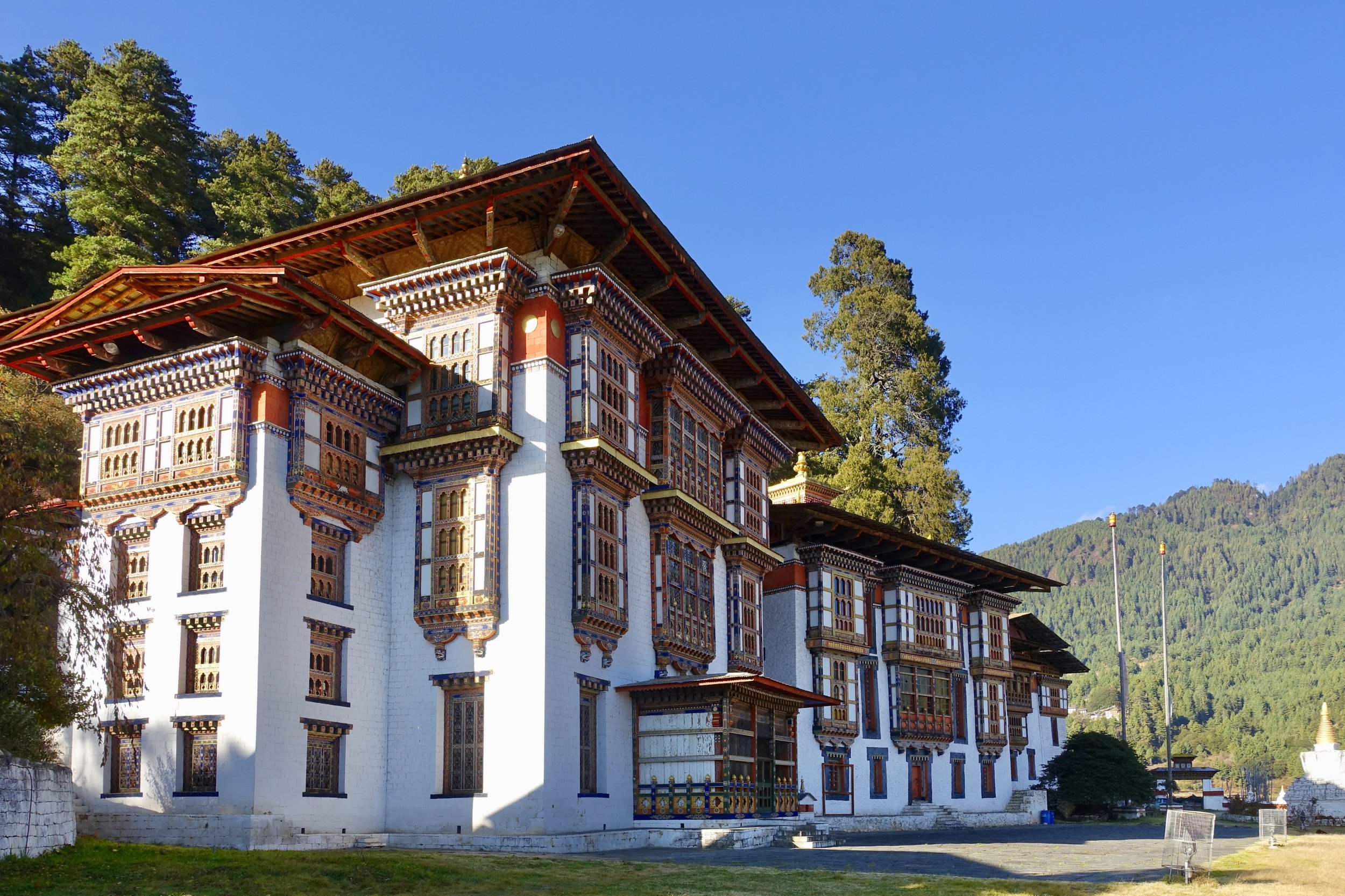
Kurjey Lhakhang is one of Bhutan's most sacred pilgrimage sites, consisting of three grand temples surrounded by a wall of 108 stupas, locally known as chortens. The complex is built against a sheer rock face where Guru Rinpoche meditated in the 8th century to subdue a local demon that had cursed the king. The architecture is a masterclass in Bhutanese design, featuring intricate wood carvings and whitewashed walls that glow against the pine-covered hills. Among the temple’s profound stillness, the scent of juniper incense and the sound of distant chanting fill the air.
Did you know? The name "Kurjey" literally translates to "Body Imprint." Inside the oldest temple, there is a cave containing a solid rock that bears a clear, physical indentation said to have been left by the Guru’s body during his deep meditation.
-
Bumthang Countryside
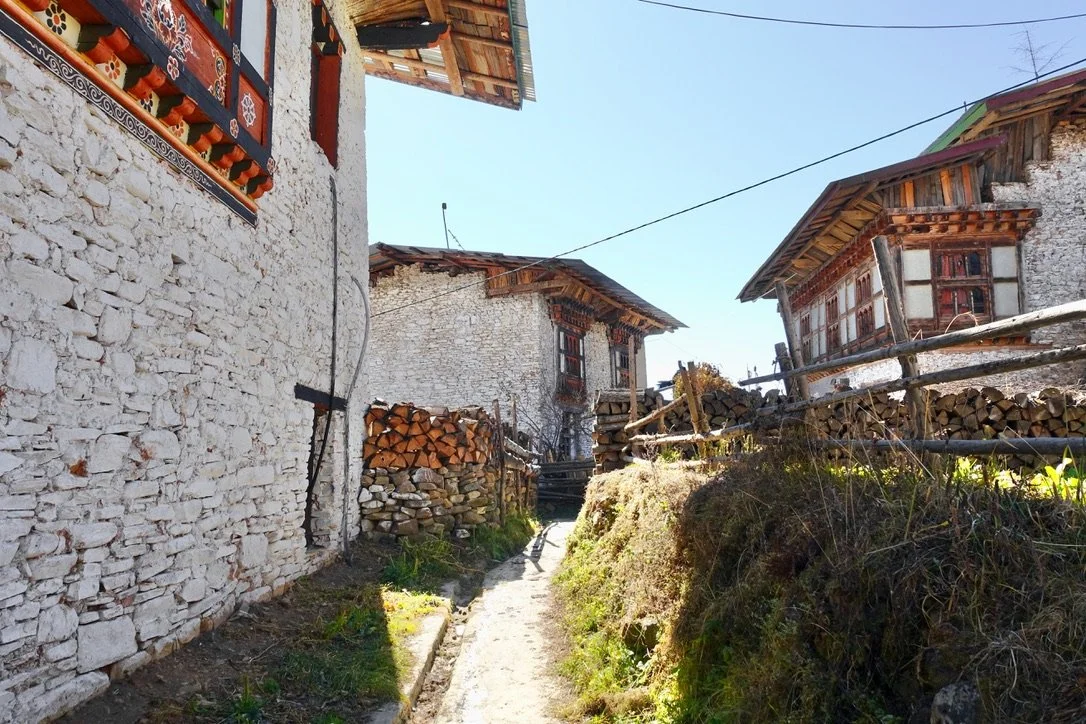
The best way to experience the Bumthang countryside is on foot. The valley floor is criss-crossed with gentle trails that wind through blue pine forests, across traditional wooden bridges, and past quiet apple orchards. Walking between the valley’s villages allows you to witness an authentic perspective of Himalayan life. Those that choose to explore beyond the main attractions, can observe farmers tending their red rice paddies and weavers working on backstrap looms. The many pathways offer a slower, more intimate perspective on the landscape that you simply cannot get from inside a vehicle.
Did you know? Many of the traditional three-storey houses you pass feature an open top floor beneath a wide, overhanging roof. This design isn't just for ventilation but is traditionally used to air-dry the famous local chillies and store winter fodder for livestock.
-
Ura Lhakhang
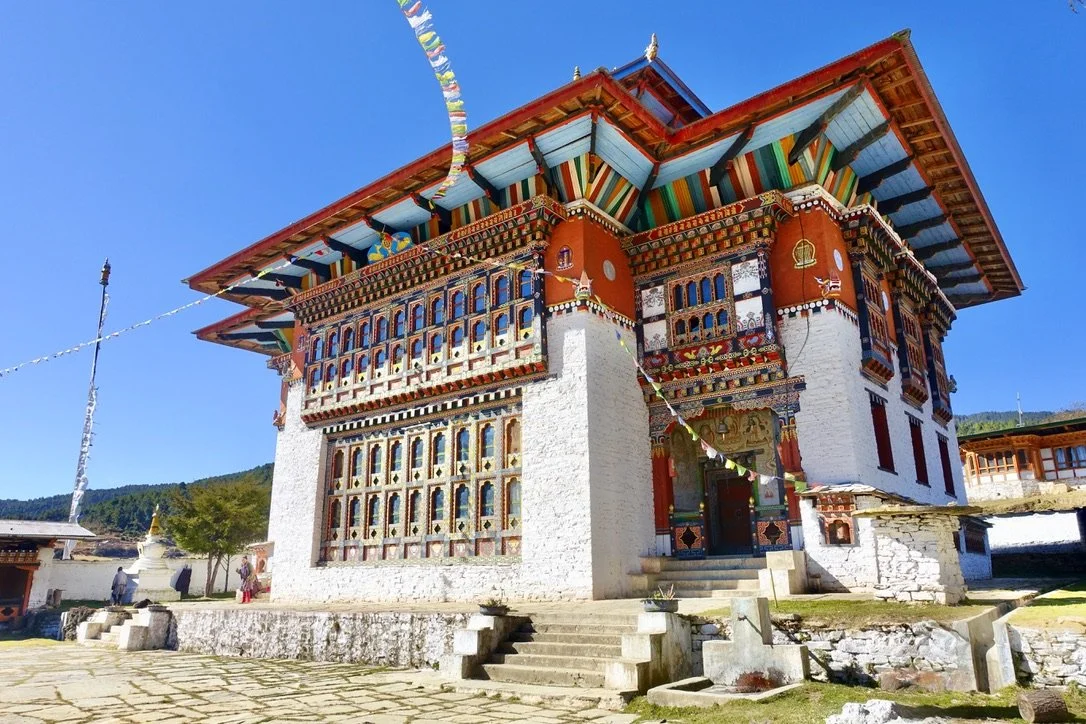
Situated at a crisp 3,100 metres, Ura Lhakhang is a monastery that sits at the centre of one of Bhutan’s most unique clustered villages. Unlike the scattered farmhouses found elsewhere, the homes here are huddled together along cobblestone paths, creating a medieval atmosphere that feels worlds away from the modern capital. The monastery itself is dedicated to Guru Rinpoche and serves as the communal heart of the valley. Inside, you can find massive statues and vibrant murals that depict the saint's journey through the Himalayas, providing a peaceful space for contemplation and local worship.
Did you know? Ura Valley, or Ura Gewog, is poetically known as "the golden bowl" due to its shape and the glowing fields of buckwheat and barley that surround the village. Legend says Guru Rinpoche blessed it as a secret, hidden land of spiritual refuge.
-
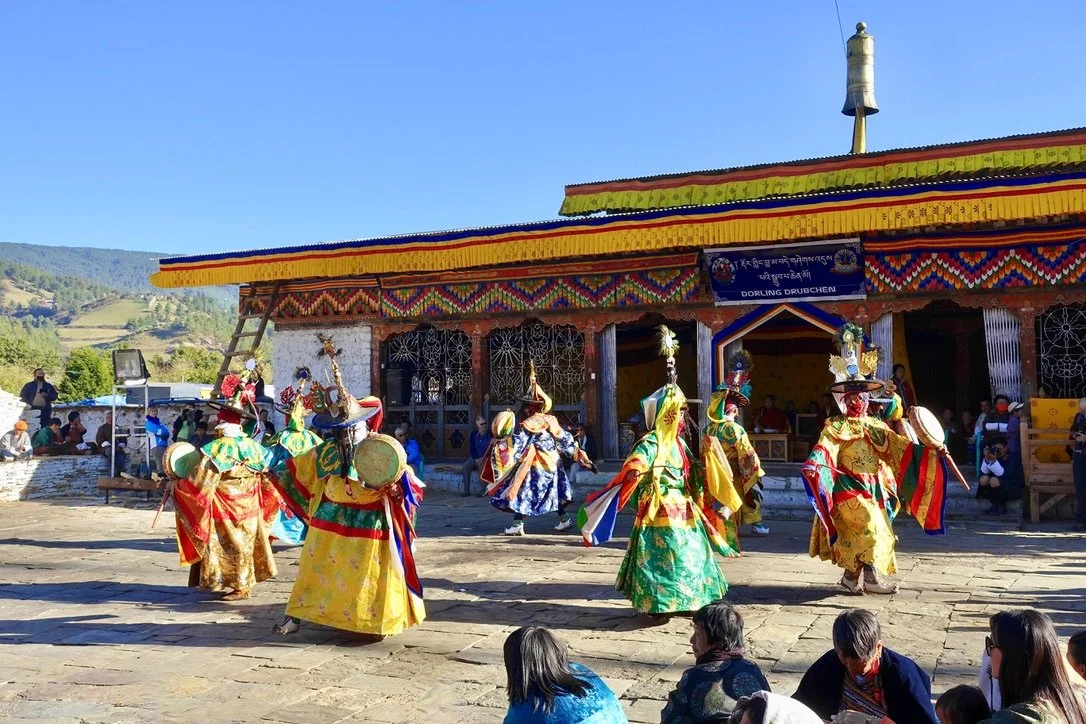
Jambay Lhakhang Drup
Held at one of the 108 temples built by the Tibetan King Songtsen Gampo in the 7th century, the Jambay Lhakhang Drup is a festival unlike any other. For four days, the temple courtyard becomes a stage for sacred mask dances, fire blessings, and ancient rituals meant to honour Guru Rinpoche. The atmosphere is electric, as locals from across the region gather in their finest silk kiras and ghos to receive blessings and socialise. It is a powerful display of living faith, where the line between the mythical past and the present day completely disappears.
Did you know? While celebrations occur throughout the day, the festival’s most famous ritual is the "Tercham," or naked dance, performed at midnight. Local men wear only masks and bone ornaments to perform a dance believed to ward off evil spirits and bring fertility to the land.
Recommended
Multi-Day Itineraries
Put this guide into practice with these hand-picked small group journeys,
featuring both iconic landmarks and immersive cultural experiences.
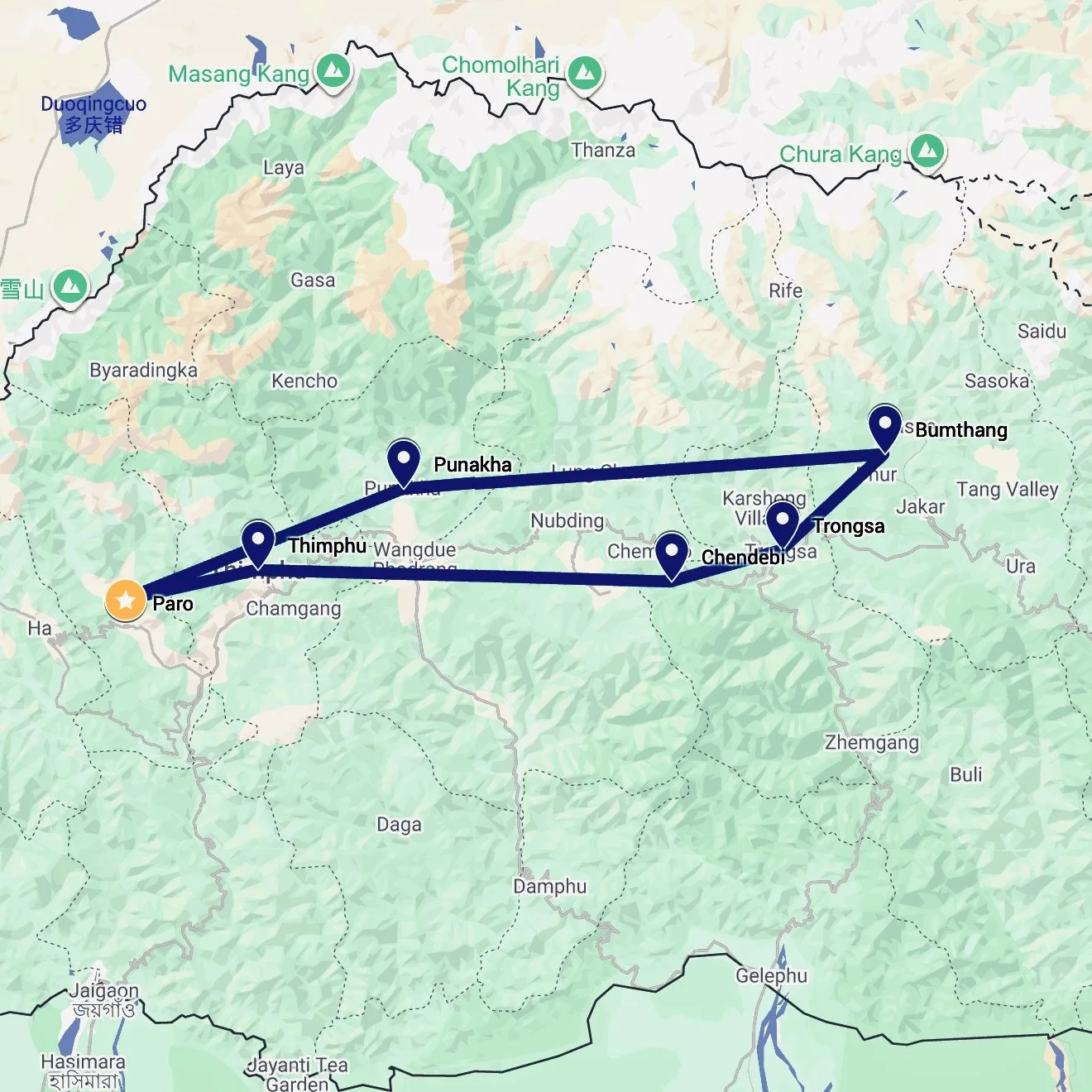
Explore the historic Trans Bhutan Trail. Visit ancient mountain passes, lush river valleys and traditional villages. Discover Bhutan’s rural life and spiritual customs while trekking through this majestic kingdom.
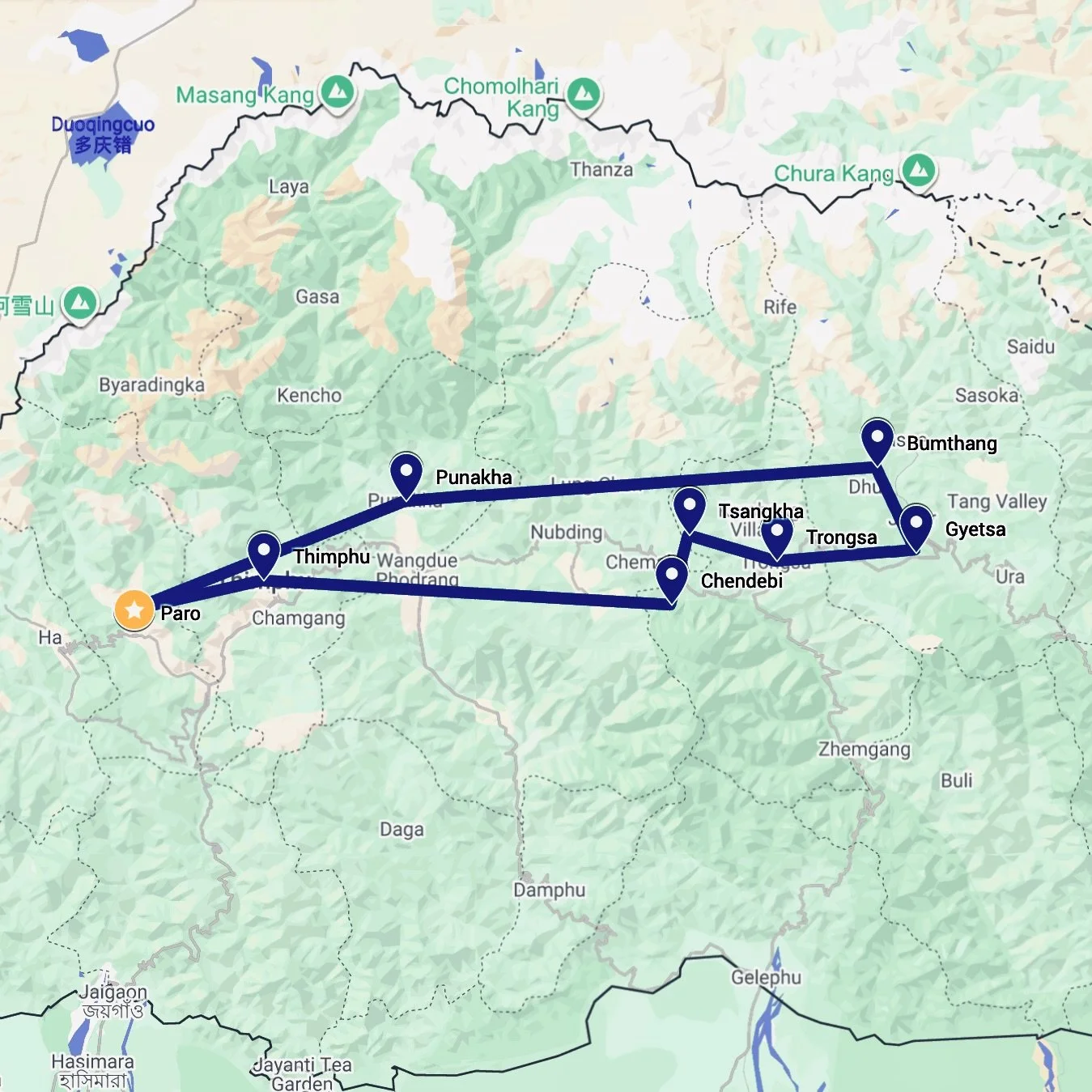
Hike the Trans Bhutan Trail on this immersive adventure. Visit remote mountain passes and trek through ancient river valleys. Discover traditional villages while camping in the wild and staying in local homestays.
-
The most pleasant months to visit Bumthang are during autumn from September to November, and spring between March and May. Autumn is particularly spectacular as the valleys turn shades of gold and red, and the skies provide the clearest mountain views. This is also when the celebrated Jambay Lhakhang Drup festival takes place, usually in October or November, offering a rare look at sacred dances and fire rituals. Spring is equally beautiful, with rhododendrons blooming across the hillsides and milder temperatures perfect for exploring on foot.
It is best to avoid the monsoon peak from June to August, as heavy rain can make the long winding roads to central Bhutan quite challenging. Winter, from December to February, brings beautiful sunny days but very cold nights. While travel is still possible, snow can block the high mountain passes like Thrumshing La, which may impact your journey. To ensure a smooth trip, try to avoid the busiest local holiday periods around Losar (Lunar New Year) in February, as many small shops and family-run eateries may close.
-
While some visitors rush through Bumthang in two days, staying for three to five days is much more in line with a responsible and curious travel style. Bumthang isn't a single town but a collection of four distinct valleys and rushing between them means missing the subtle details that make this region so special. A longer stay allows you to venture beyond the main temples in Jakar and into the quieter reaches of the Tang or Ura valleys, where life moves at a much slower pace.
Spending at least four days here gives you the chance to settle into the landscape, visit local cheese factories, and take part in longer village walks that support remote communities. It is the ideal amount of time to explore both the famous landmarks like Kurjey Lhakhang and the lesser-visited farmsteads where you can see traditional weaving and buckwheat farming first-hand. This unhurried approach is the best way to honour the spiritual heritage of the area and truly immerse yourself in the local way of life.
-
Bumthang is exceptionally safe, and you will likely find it among the most welcoming places you have ever visited. However, it is always a good idea to consult your government’s local travel advisory for the most current information.
Scams are virtually non-existent here, but as with any travel, keep your valuables secure in busy market areas. Common-sense practices like avoiding drinking in excess and staying mindful of local laws regarding sacred sites will ensure your visit remains respectful and trouble-free.
The most practical safety concern in this high-altitude region is the terrain itself. Roads can be narrow and steep, so it is best to rely on experienced local drivers. Stray dogs can be quite active and loud at night, so stay alert if you are walking back to your guesthouse after dark.
Given the remote nature of central Bhutan and the potential for altitude-related health issues, always make sure you have a comprehensive travel insurance policy that includes medical evacuation.
For more practical tips and expert advice on staying safe during your trip, visit our dedicated page on Travel Safety.
-
Showing respect for the local culture is easy if you follow a few simple clothing and behaviour guidelines. When walking through villages or sightseeing, everyone should dress modestly. At religious monuments and inside temples, it is essential to keep your shoulders, chests, and legs covered. Long trousers or skirts and shirts with sleeves are the expected attire. If you are invited into someone's home, removing your shoes at the entrance is a standard mark of respect.
When visiting sacred sites, always walk in a clockwise direction around chortens and prayer walls. Avoid pointing your feet towards people or religious statues when sitting, as this is considered disrespectful. It is also polite to ask for permission before taking photos of people or inside temple chapels, where photography is often restricted. These small acts of mindfulness show the local population that you value their traditions and religion, making your interactions far more meaningful.
-
The climate in Bumthang can be quite varied, so packing plenty of layers is a good strategy. Even in summer, evenings are cool, and in winter, you will need a proper down jacket and thermal wear to stay comfortable. Sturdy walking shoes are vital, especially for the village trails and temple courtyards where the ground can be uneven. Since you will need to remove your shoes frequently when entering temples and homes, bring a few pairs of warm socks.
Avoid packing singlet tops or shorts, as these are not suitable for the conservative local environment. If you plan to visit any of the natural hot springs or try a traditional hot stone bath, bring a modest swimsuit to avoid offending locals. For the wetter months, particularly in late summer, a lightweight raincoat and a sturdy umbrella are essential. Don't forget about high-SPF sunscreen and a hat, as the mountain sun is much stronger at this altitude than you might expect.
-
Bumthang is famous for its unique food, particularly its use of buckwheat, which thrives in the high-altitude soil. You must try khule (buckwheat pancakes) and puta (buckwheat noodles), which are often served with a spicy sauce or melted butter. These dishes are central to the local community as they represent the traditional agricultural heritage of the valley. Another local specialty is the honey and Swiss-style cheese produced in the Jakar area, a legacy of historical development projects that has become a delicious part of the local identity.
For an authentic experience, visit the small eateries in Jakar town or the local weekend markets where you can find fresh mountain honey and seasonal vegetables. Trying these local staples is a fantastic way to support the farmers and producers who live in the valley. It offers a direct connection to the land and is a highlight for anyone interested in how high-altitude communities have sustained themselves for centuries.
Essential Insights
-
The fastest way to reach Bumthang is by flying from Paro International Airport (PBH) to Bathpalathang Airport (BUT) in Jakar. The domestic flight takes about half an hour and offers incredible views of the Himalayas, though it is weather-dependent and typically only runs a few times a week.
For those who prefer a more grounded journey, the drive from Thimphu and Punakha takes you over scenic mountain passes and through lush forests. Most visitors travel with the private vehicle and driver included in their pre-arranged tour. By doing so, it allows for stops at viewpoints and small villages along the way. The road journey is longer than flying but offers a much deeper sense of the country's geography and diverse landscapes.
-
Bumthang’s core villages, particularly Jakar, are quite compact and very pedestrian-friendly, making it easy to visit local shops and nearby temples on foot. For reaching sites further out in the Tang or Ura valleys, taxis are the most common option. These are usually unmetered, so it is a good idea to agree on a price with the driver before you set off.
Most visitors will have a vehicle and driver as part of their tour package, which is the most seamless way to reach the more remote trailheads and monasteries. If you want to explore the valley floor at a slower pace, some guesthouses can arrange bicycle rentals. This is a wonderful, low-impact way to see the riverside paths and orchards, allowing you to stop whenever something catches your eye.
-
Staying connected in central Bhutan is straightforward, though coverage can be a little patchier in the more remote valleys. An eSIM is often the most convenient choice for modern travellers, as it allows you to set up your data plan before you arrive. Gigago provides reliable digital options for Bhutan, letting you bypass the shops and activate your plan by simply scanning a QR code once you land or cross the border.
If you prefer a physical SIM, you can easily pick one up from TashiCell or Bhutan Telecom in Jakar town or at the airport. You will need a copy of your passport to register the card, but the process is usually quick. Having a local data plan is incredibly useful for checking maps and staying in touch with your guide, especially when you are out exploring the quieter countryside trails.
-
The local currency is the Ngultrum (BTN), and while ATMs are available in Jakar town, they can sometimes be temperamental with international cards. Most accept Visa and Mastercard, but it is wise not to rely on them for all your funds. Cash is still the king in Bumthang, especially in smaller family-run shops, farm stays, and local markets. While larger hotels might accept credit cards, many smaller businesses do not yet have the facilities.
Mobile payment apps are very common among locals, but these usually require a local bank account. Carrying a healthy supply of cash in Ngultrum is a good idea, and Indian Rupees in smaller denominations are also widely accepted. Just remember that 500 and 1000 Rupee notes are generally not taken, so keep your denominations small for day-to-day spending.
-
You will find that English is widely understood and spoken in Bumthang, particularly by the younger generation and those working in the travel industry. English is the medium of instruction in schools across Bhutan, so most people can communicate effectively. Many signs, menus, and even local government notices are printed in both English and the national language, Dzongkha, making it very easy for travellers to get around.
Even with the high level of English, downloading a language translator that includes Dzongkha is a great way to bridge the gap with older residents in more remote villages. Learning a few basic phrases like "Kuzuzangpo la" (hello) or "Kadinchey la" (thank you) will always be met with a warm response. It shows a genuine interest in the local culture and can lead to much friendlier and more authentic interactions during your stay.
-
No, the tap water in Bumthang is not safe for drinking unless it has been boiled or treated. To stay hydrated while being a responsible traveller, it is best to use a reusable water bottle with an inbuilt filter. This helps to minimise the amount of single-use plastic waste, which is a significant environmental concern in the pristine mountain valleys of central Bhutan.
Most guesthouses and hotels in the region provide large containers of boiled or filtered water for their guests to use for refills. Choosing these refill stations over buying new plastic bottles is a simple but effective way to protect the local environment. It is also a good idea to avoid ice in your drinks and be cautious with salads that might have been washed in tap water, ensuring your trip stays healthy and enjoyable.