
Sacred Peaks and Ancient Temples
Few places capture the spirit of Bhutan quite like the Paro Valley. Perched precariously on a cliff 900 metres above the valley floor, the iconic Tiger’s Nest Monastery is both a sacred pilgrimage site and one of the most breathtaking landmarks in the Himalayas. Beyond this gravity-defying ascent, Paro serves as the gateway to the Dragon Kingdom, home to the country’s only international airport. This serene valley is a tapestry of traditional painted houses, ancient fortress-monasteries, and quiet willow-lined rivers, offering travellers an authentic immersion into a culture where spiritual heritage and natural beauty remain perfectly intertwined.
This Adventures Afar guide contains affiliate links. If you book through these, we may earn a commission at no extra cost to you.
Unmissable Highlights
-
Tiger’s Nest Monastery
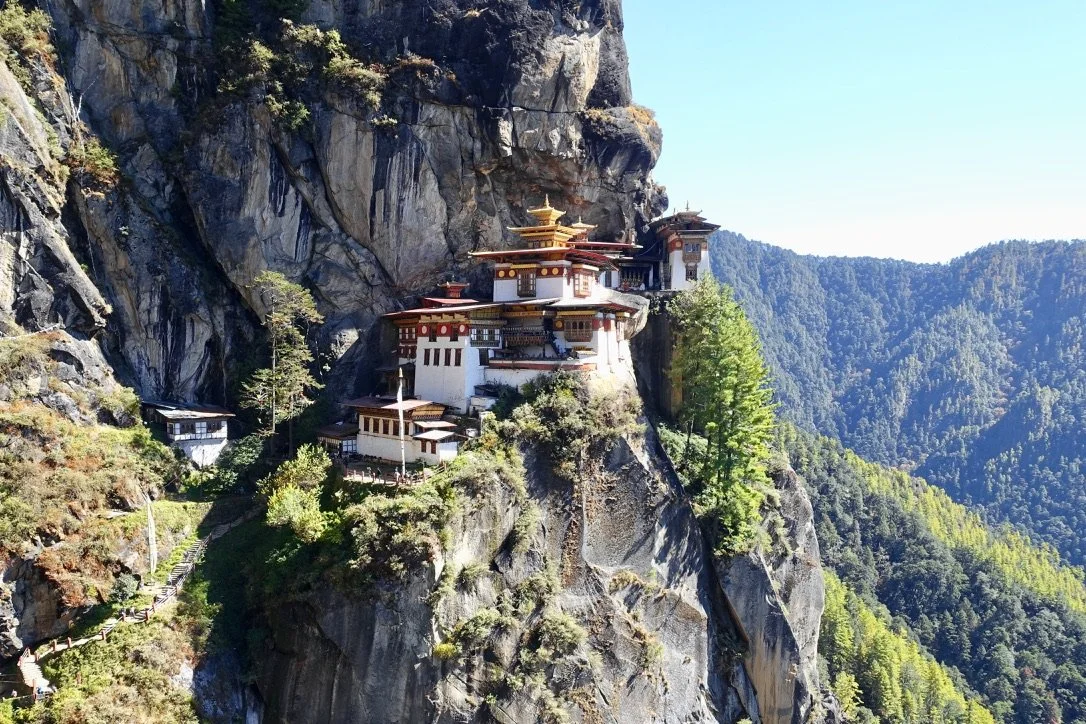
For many, the ascent to Tiger’s Nest, or Paro Taktsang, is a life-changing experience. This sacred complex clings to a sheer granite cliff, reachable only by a steady trek through blue pine forests and pathways draped in colourful prayer flags. As visitors navigate the final 600 stone steps, the sound of distant waterfalls and chanting monks creates an atmosphere of deep reverence. While the climb is a test of stamina, the reward is an unparalleled view of the valley and a glimpse into the meditation caves where Bhutan’s spiritual history began.
Did you know? According to legend, Guru Rinpoche flew to this cliffside on the back of a tigress in the 8th century to subdue local spirits. He is said to have meditated in the "Tiger’s Lair" cave for precisely three years, three months, three weeks, and three days.
-
Kyichu Lhakhang
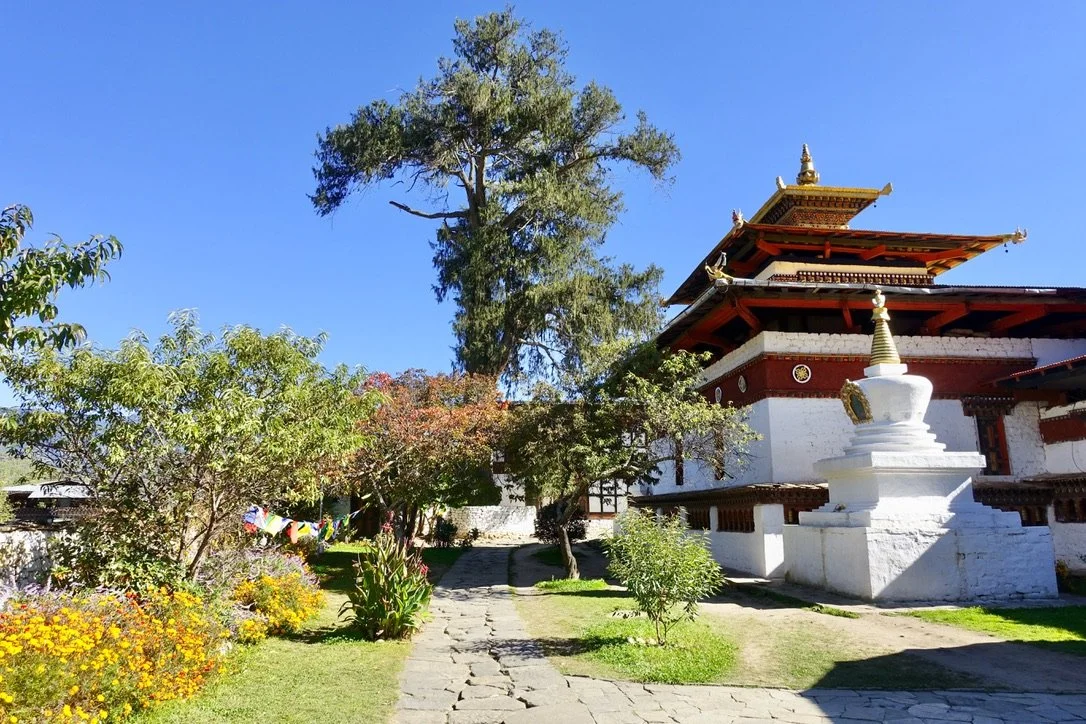
As one of the oldest and most atmospheric temples in the kingdom, Kyichu Lhakhang is a peaceful retreat near Paro town. This 7th-century sanctuary belongs to a legendary network of 108 temples commissioned by the Tibetan King Songtsen Gampo, designed to pin a giant ogress to the earth so that Buddhism could flourish. Inside the quiet courtyard, a pair of sacred orange trees are said to bear fruit all year round. Watching pilgrims spin prayer wheels beside the miraculous trees, offers an intimate look at the enduring traditions of the Paro Valley.
Did you know? The wooden floorboards inside the main chapel feature deep, smooth grooves worn into the timber by generations of pilgrims. These indentations were formed over hundreds of years by the hands and feet of devotees performing traditional prostrations in front of the sacred Jowo statue.
-
Rinpung Dzong
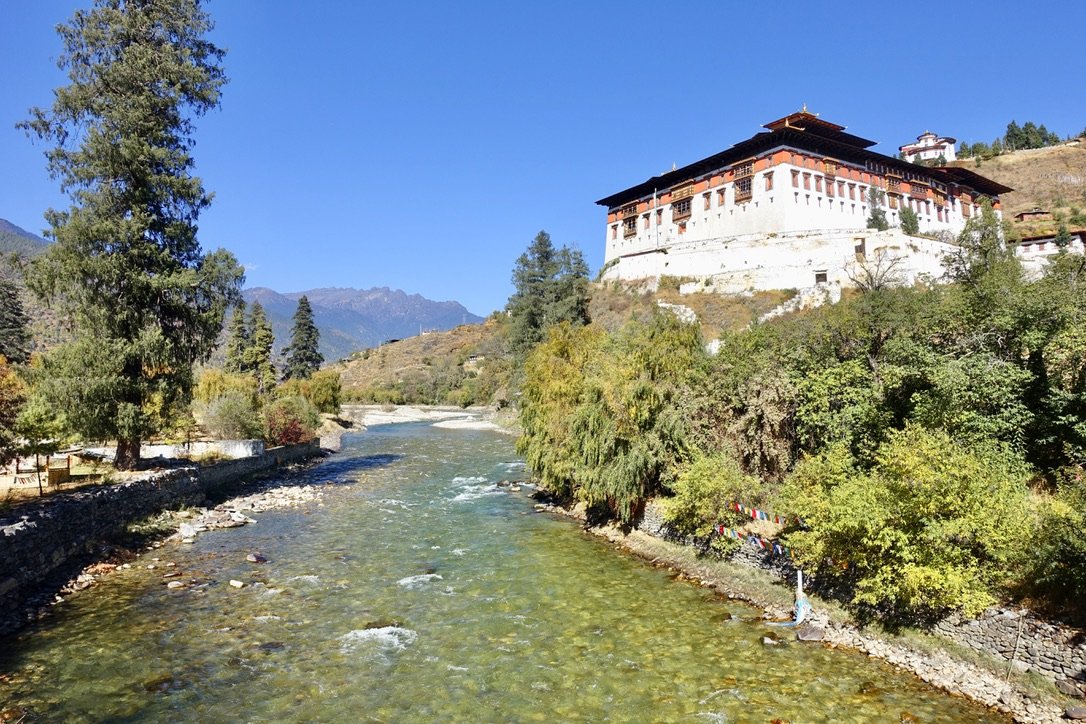
Dominating the skyline above the river, Rinpung Dzong is a masterpiece of Bhutanese architecture. Known as the "Fortress on a Heap of Jewels," this massive structure serves as both the administrative centre and the monastic heart of the Paro district. Its towering white walls and intricate woodwork were constructed in 1646 to defend the valley against northern invasions. Visitors can walk across the traditional covered cantilever bridge to reach the fortress, where the inner courtyards are filled with vivid murals depicting the life of the philosopher-saint Milarepa.
Did you know? The fortress is famously constructed without the use of a single iron nail, relying entirely on traditional wooden joinery. Its grand architecture even caught the eye of Hollywood, serving as a primary filming location for the 1993 movie Little Buddha.
Recommended
Multi-Day Itineraries
Put this guide into practice with these hand-picked small group journeys,
featuring both iconic landmarks and immersive cultural experiences.
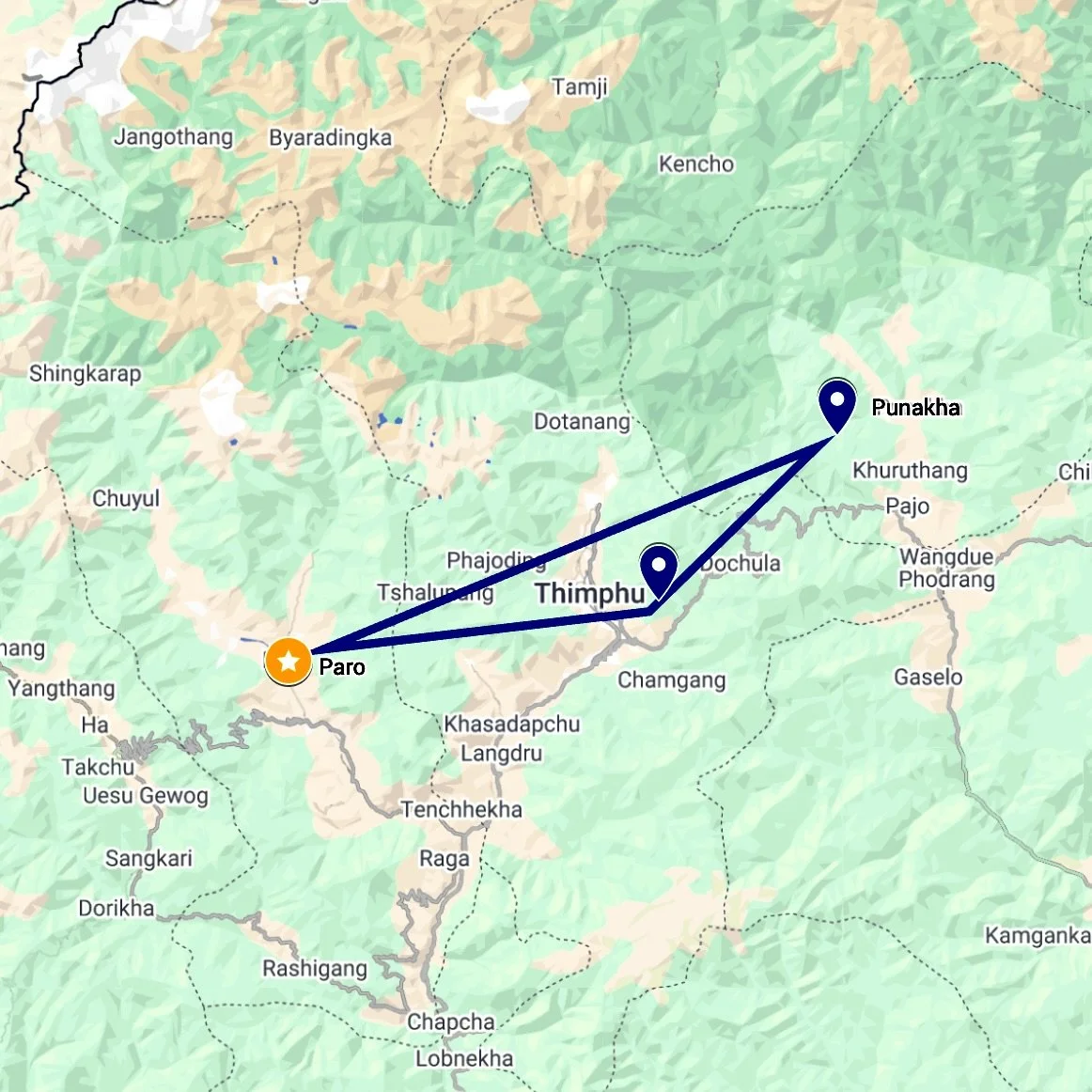
Discover the spiritual heart of the mountain kingdom of Bhutan. Visit the iconic dzongs and mountain trails of Paro, Thimphu, and Punakha. Immerse yourself in ancient traditions and experience the serene beauty of this Himalayan landscape while connecting with local Bhutanese culture.
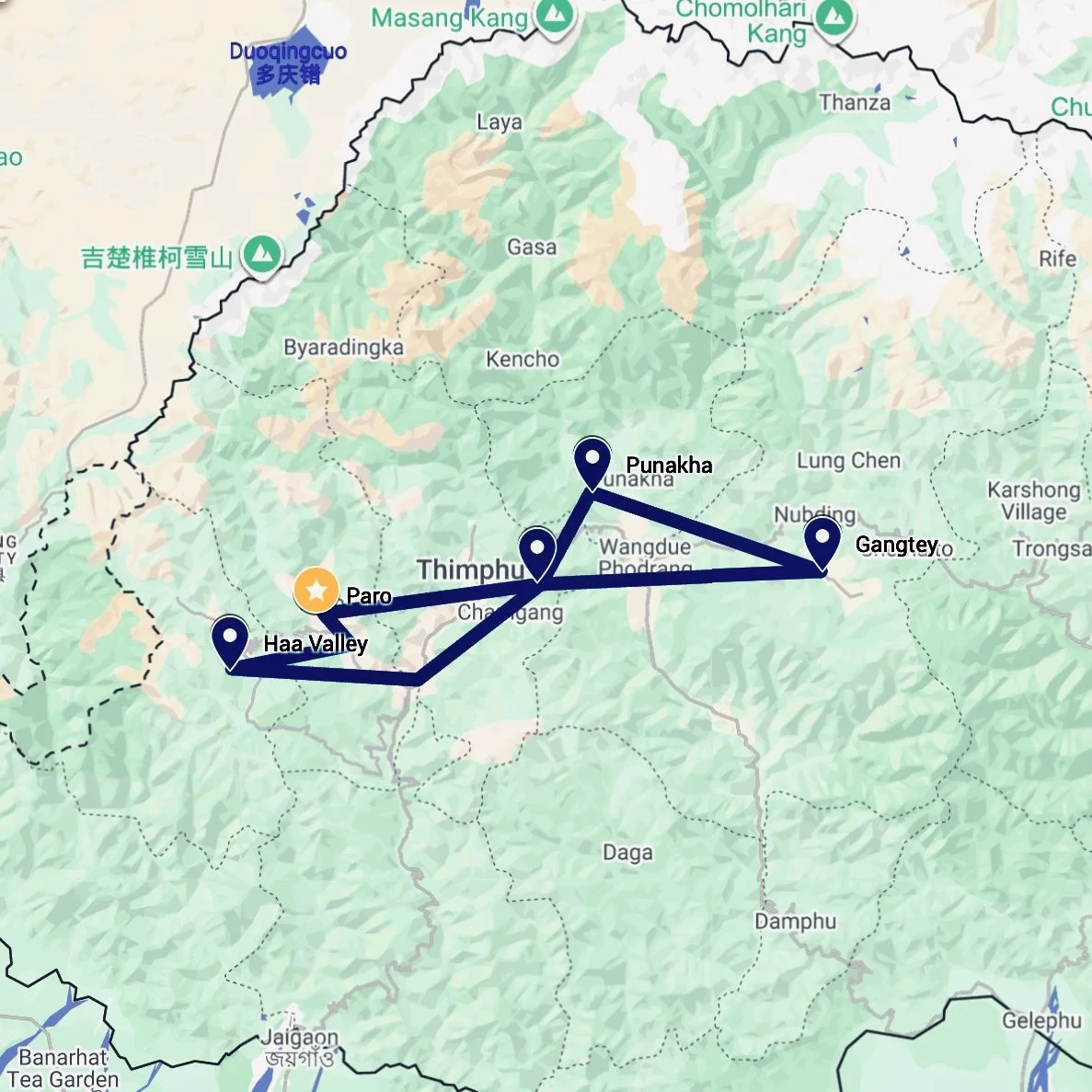
Visit the Himalayan kingdom of Bhutan on this National Geographic tour. Explore spectacular fortresses and shrines in Paro, Thimphu, and Punakha. Immerse yourself in the remote Haa Valley and Gangtey while discovering the secrets of Buddhist culture and Bhutanese wellbeing.
Essential Insights
-
Paro is home to Paro International Airport (PBH), the only international gateway into Bhutan. It is served by the national carrier, Drukair, and the private airline, Bhutan Airlines. Because the approach is flown entirely by sight through narrow mountain passes, flights only operate during daylight hours and are highly weather-dependent.
From neighbouring India, you can enter by land at the Phuentsholing border crossing. While there are no trains in Bhutan, the drive through the mountains is far more atmospheric than flying between regional hubs and allows you to see the landscape change as you climb into the Himalayas.
-
Paro is a very pedestrian-friendly town, and you can easily visit the local shops and riverside cafes on foot. If you wish to explore the valley floor at your own pace, some guesthouses offer bicycle rentals, which is a wonderful, low-impact way to see the riverside villages.
For reaching the Tiger’s Nest trailhead or the various dzongs outside the centre, taxis are the main option. They are generally unmetered, so it is a good idea to agree on a price before you set off. It is mandatory to have a pre-arranged tour guide when travelling beyond Paro and Thimphu districts. They will usually provide a private vehicle and driver for the duration of your stay. This is also the most seamless way to reach the more remote temples, and a guide is required to enter dzongs and temples anywhere in Bhutan.
-
Staying connected is fairly straightforward either with a local SIM card or eSIM. Both methods are much cheaper than international roaming and will ensure you have the data needed for maps or sharing your first glimpse of Tiger's Nest.
If you want to be online the moment you land at Paro International Airport, an eSIM is the most convenient choice. Gigago offers reliable digital data packages specifically for Bhutan, allowing you to bypass the airport kiosks and activate your plan by simply scanning a QR code before you even leave home.
For those who prefer a physical card, you can easily pick up a local SIM from TashiCell or Bhutan Telecom (B-Mobile) at the airport arrivals building or in Paro town. These local options often provide better coverage if you plan on trekking in more remote areas.
-
The local currency is the Ngultrum (BTN), which is pegged to the Indian Rupee. ATMs are available in Paro town and generally accept Visa and Mastercard, though they can sometimes be temperamental with international cards. While larger hotels and souvenir shops are beginning to accept credit cards, cash remains the most common form of payment in smaller cafes and markets.
Mobile pay via QR codes is becoming very popular among locals, but these often require a local bank account. It is a good idea to carry some cash in small denominations for minor purchases. While you can exchange USD or EUR at the airport or local banks, having some Indian Rupees as a backup is also helpful, as they are widely accepted throughout the country.
-
English is the medium of instruction in Bhutanese schools, so you will find that most people in Paro speak it with a high level of proficiency. English language signs and menus are commonplace in the tourist areas, and you should have no trouble communicating with shopkeepers, waiters or your guide.
Even though English is widely spoken, downloading a language translator that includes Dzongkha is a great way to bridge the gap in more rural farmhouses. Learning a few basic phrases like "Kuzuzangpo la" (hello) will always be met with a warm smile and is a lovely way to show respect for the local culture.
-
No, the tap water in Paro is not safe for drinking unless it has been boiled or treated. To stay hydrated responsibly, use a reusable water bottle with an inbuilt filter. This helps minimise the quantity of one-time use plastic bottles, which is a significant environmental concern in the fragile Himalayan ecosystem.
Most hotels and lodges provide free water refill stations or large jars of boiled water for their guests. Choosing these options instead of buying individual plastic bottles is a simple but effective way to practice responsible travel during your stay in the valley.
-
The ideal months to visit Paro are during the spring, from March to May, and the autumn, from September to November. Spring is a highlight for nature lovers as the valley erupts in rhododendrons and wildflowers. It is also the season for the famous Paro Tshechu, a vibrant religious festival usually held in March or April, where you can witness sacred mask dances and incredible local costumes. Autumn offers the crispest, clearest views of the Himalayan peaks, making it the premier time for trekking to Tiger’s Nest.
It is sensible to avoid the monsoon season from June to August, as heavy rains can make trails slippery and occasionally cause flight delays at Paro’s mountain-hugged airport. Winter, from December to February, is sunny but bitterly cold at night, though you will find far fewer crowds. To ensure a smooth trip, try to avoid travel during major regional public holidays or the peak of the monsoon when landslides can sometimes block the winding mountain roads.
-
While many visitors only stop in Paro for two days to see the main fortress and the Tiger’s Nest, staying for three to five days allows you to discover the valley’s true character. A longer stay encourages the kind of curiosity that leads you to quieter spots like the ancient Kyichu Lhakhang or the ruined heights of Drukgyel Dzong, rather than just ticking off the main landmarks.
Spending extra time here also allows you to acclimatise to the altitude before tackling the steeper treks. With five days, you can explore the lesser-known farmhouses of the upper valley, spend a morning in the National Museum, and still have time for a slow, contemplative walk along the river. This unhurried pace is the best way to soak in the "Gross National Happiness" that Bhutan is so famous for, away from the typical tourist rush.
-
Paro is incredibly safe, and violent crime is virtually non-existent. However, you should always check your government’s local travel advisory for the most up to date information. While scams are practically unheard of, it is worth keeping an eye on your belongings in busy markets, just as you would at home.
Common sense should be practiced such as avoid drinking in excess and always be mindful of local laws, particularly those regarding tobacco and the protection of religious sites. The altitude can be a genuine health risk, so stay hydrated and take it slow.
To be fully prepared for any unexpected mountain weather or travel delays, always ensure you have a comprehensive travel insurance policy that covers high-altitude trekking and medical evacuations.
For more practical tips and expert advice on staying safe during your trip, visit our dedicated page on Travel Safety.
-
Bhutanese culture is deeply rooted in respect and modesty. When sightseeing or walking through town, everyone should dress neatly and avoid anything too revealing. In religious monuments, dzongs, or if you are invited into a local home, it is essential to keep your shoulders, chests and legs covered. Long trousers or skirts and shirts with sleeves are the standard to be worn year-round.
Showing respect to the local population is easy if you follow a few simple cues. Always remove your hat before entering temple courtyards and take off your shoes before stepping into a shrine room or a private residence. If you see a fallen prayer flag, walk around it rather than over it. These gestures are a way to show you value the sacred traditions and the warm hospitality of the people you are visiting.
-
The key to packing for Paro is layering. Even in summer, the temperature can drop significantly once the sun goes down. Pack sturdy walking shoes with good grip for the trek to Tiger’s Nest. Consider bringing an old pair of socks for temple visits, as you will often have to walk on cold stone floors without shoes.
Avoid packing singlet tops, crop tops or short shorts, as these are considered disrespectful at most sites. If you plan to try a traditional hot stone bath, bring a modest swimsuit, though many farmhouse stays will provide a private area for this.
For the wetter months of July and August, bring reliable wet weather gear. If you are visiting in winter, you will definitely need a warm down jacket, thermal layers, and a good pair of gloves to handle the sub-zero evening temperatures.
-
You can’t visit Paro without trying ema datshi, the national dish made of spicy chillies and melted cheese. It is a staple of the local diet and a true reflection of the Bhutanese love for heat. Another must-try is red rice, which is grown locally in the valley’s mineral-rich soil and has a unique, nutty flavour.
For a more local experience, head to the Sunday market or find a small eatery serving hoentay (buckwheat dumplings) or phaksha paa (spicy pork with radishes). These dishes are important to the community as they rely on seasonal, high-altitude ingredients. Trying them is a fantastic way to support local farmers and understand the agricultural heart of the valley.