
Ancient Cedars and Eternal Meditation
High in the forested peaks of the Kii Peninsula lies Koyasan, a sacred monastery town that serves as the spiritual heart of Shingon Buddhism. Founded over 1,200 years ago, this UNESCO World Heritage site is a place where ancient rituals remain a daily reality. Mist-shrouded cedar forests, golden-lit lantern halls, and the rhythmic chants of monks create an atmosphere that feels entirely detached from the modern world. Whether you are staying in a traditional temple lodging or walking the moss-covered paths of Japan's largest cemetery, Koyasan offers a profound journey into the country's religious soul.
This Adventures Afar guide contains affiliate links. If you book through these, we may earn a commission at no extra cost to you.
Unmissable Highlights
-
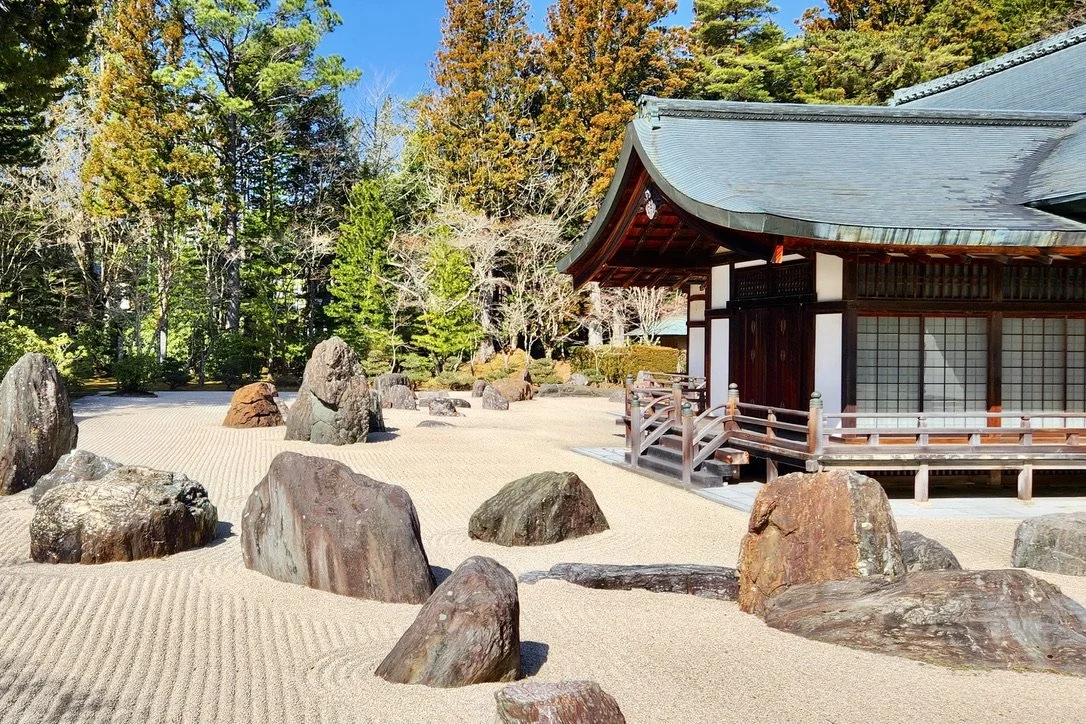
Kongobu-ji
Originally built by Toyotomi Hideyoshi to commemorate his mother, Kongobu-ji stands as the prestigious head temple of the Shingon sect. The complex is famous for its exquisite sliding screen doors, gilded and painted with seasonal motifs by the celebrated Kano school. However, the true highlight is the Banryutei Rock Garden. As the largest of its kind in Japan, the garden uses over 140 granite stones to depict a pair of dragons emerging from a sea of clouds to protect the sanctuary. Many people use the space for deep contemplation and reflection during their visit.
Did You Know? The temple contains a notorious space called the Willow Room. It was here that Toyotomi Hidetsugu, the nephew of the temple’s founder, was famously ordered to commit ritual suicide (seppuku) after falling out of favour with his powerful uncle.
-
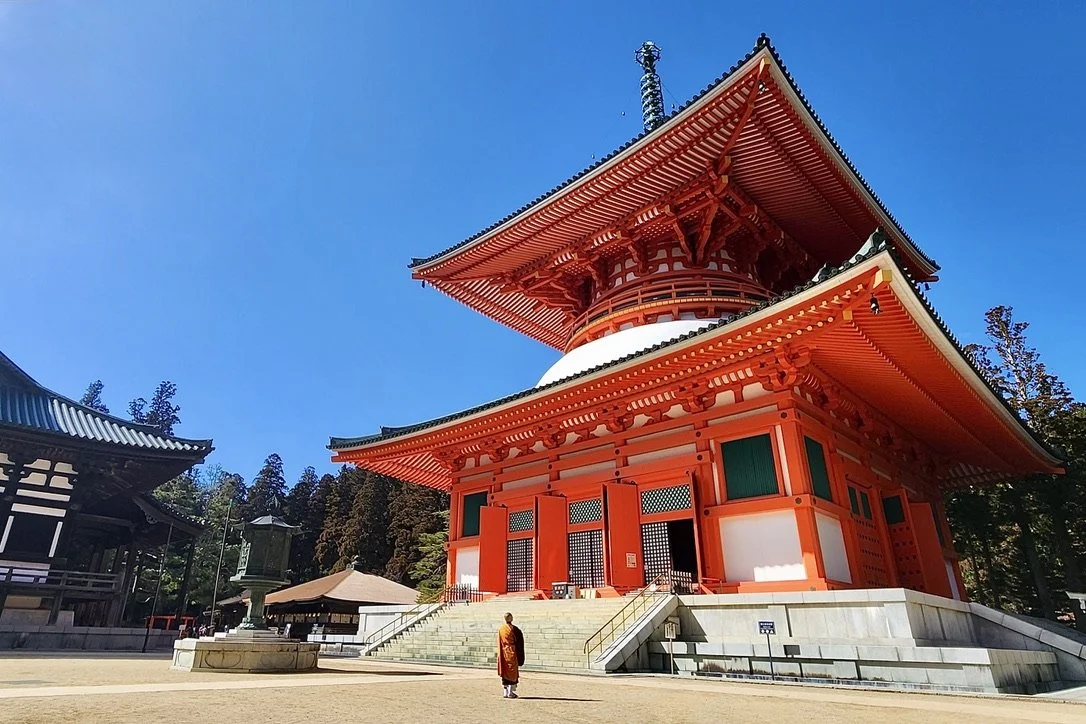
Danjo Garan
As the first temple complex established by Kobo Daishi upon his arrival at the mountaintop, Danjo Garan is considered the "central arena" of Koyasan. The site is dominated by the Konpon Daito, a massive 48.5-metre vermilion pagoda that serves as a three-dimensional representation of a mandala. Inside, vibrant statues and paintings depict the cosmic Buddha, creating an immersive spiritual environment. This sacred ground also features the Kondo (Golden Hall), where major religious ceremonies take place, and the original sites where the mountain’s first monks began their esoteric training.
Did You Know? Near the Golden Hall sits the Sanko no Matsu, or Three-Pointed Pine. Legend says Kobo Daishi threw a ceremonial tool from China toward Japan, and it landed in this tree, miraculously leading him to discover Koyasan as the perfect site for his monastery.
-
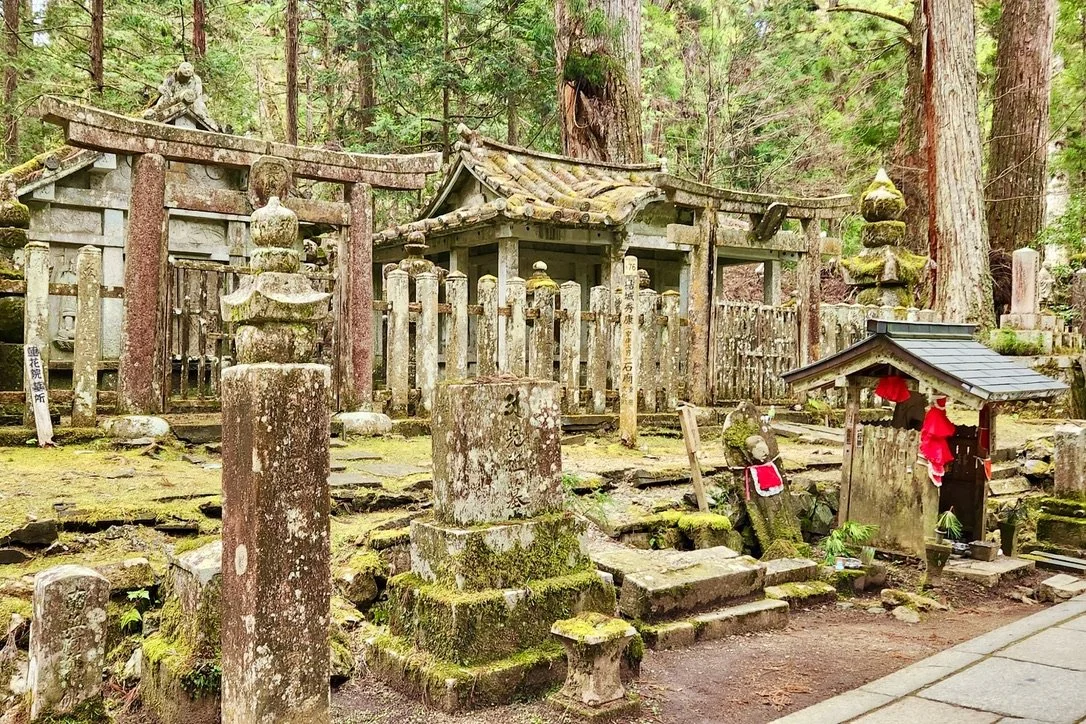
Okuno-in Temple & Cemetery
A key component of the region's UNESCO World Heritage status is due to Okuno-in, Japan’s most sacred burial ground. A two-kilometre path, lined with over 200,000 monuments and towering 800-year-old cedars, leads to the Mausoleum of Kobo Daishi. Believers hold that the great monk is not dead but in a state of eternal meditation, waiting for the future Buddha. The journey culminates at the Torodo Hall, where over 10,000 donated lanterns are kept permanently lit, casting a shimmering, golden glow that has flickered for centuries.
Did You Know? The cemetery is home to some surprisingly modern memorials. Major Japanese corporations, including Panasonic and Nissan, have erected large monuments here to honour their deceased employees and even specific products, such as a giant coffee cup for a beverage company.
-
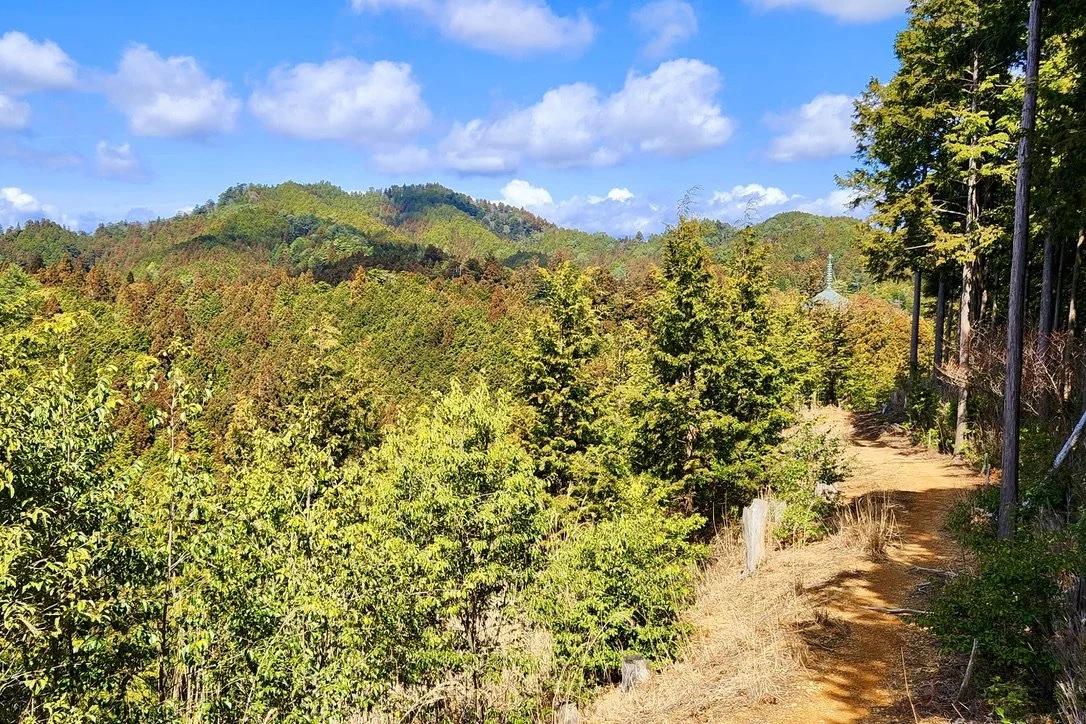
Hiking Sacred Trails
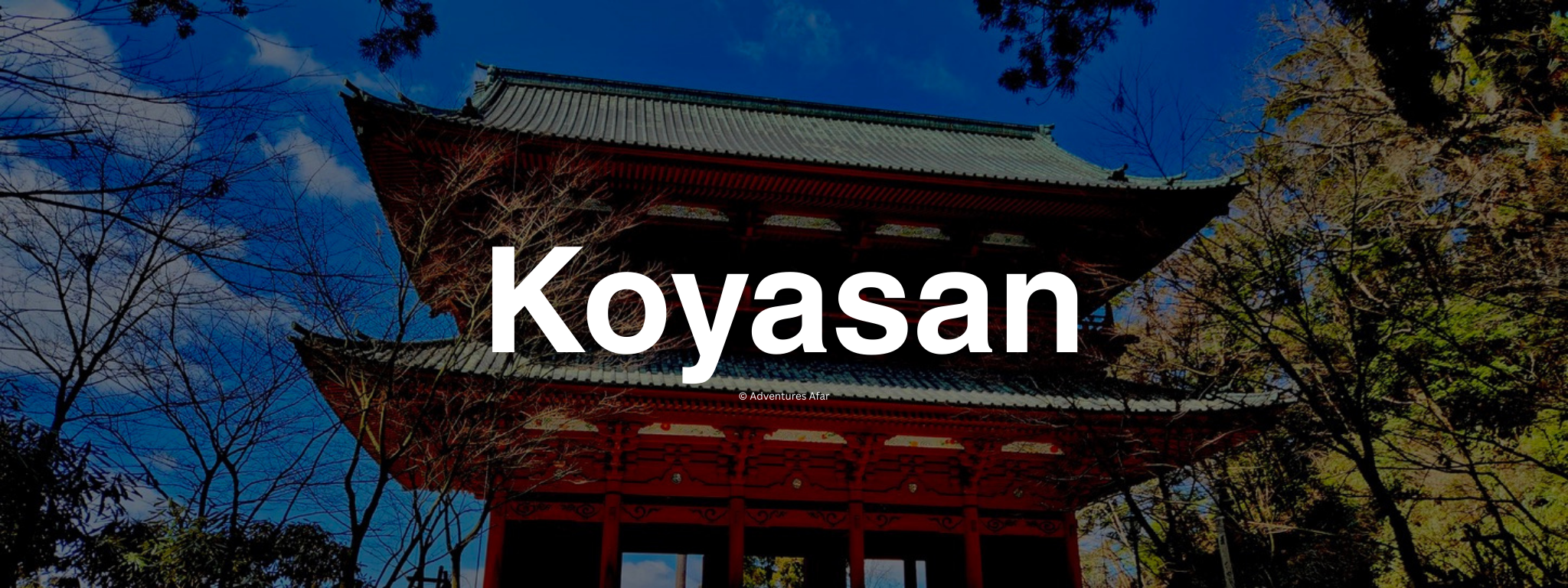
Trekking through Koyasan provides a direct link to the paths walked by historical pilgrims. The Women’s Pilgrimage Trail is a popular choice, which consists of a 7-kilometre loop that circles the town’s perimeter. This route was historically significant as it allowed female worshippers to view the sacred sites from above during the centuries when they were forbidden from entering the town itself. The trail is considered moderate, taking roughly 2 to 3 hours to complete. For a grander entrance, the Choishi Michi trail ends at the massive Daimon Gate, the traditional scarlet portal that has welcomed pilgrims for over a millennium.
Did You Know? Wildlife is often seen along the trails and signs warn hikers of Asian black bears in the woods. As a result, many local walkers carry "bear bells" on their packs to make noise and avoid startling the animals as they move through the trees.
Recommended
Multi-Day Itineraries
Put this guide into practice with these hand-picked small group journeys,
featuring both iconic landmarks and immersive cultural experiences.
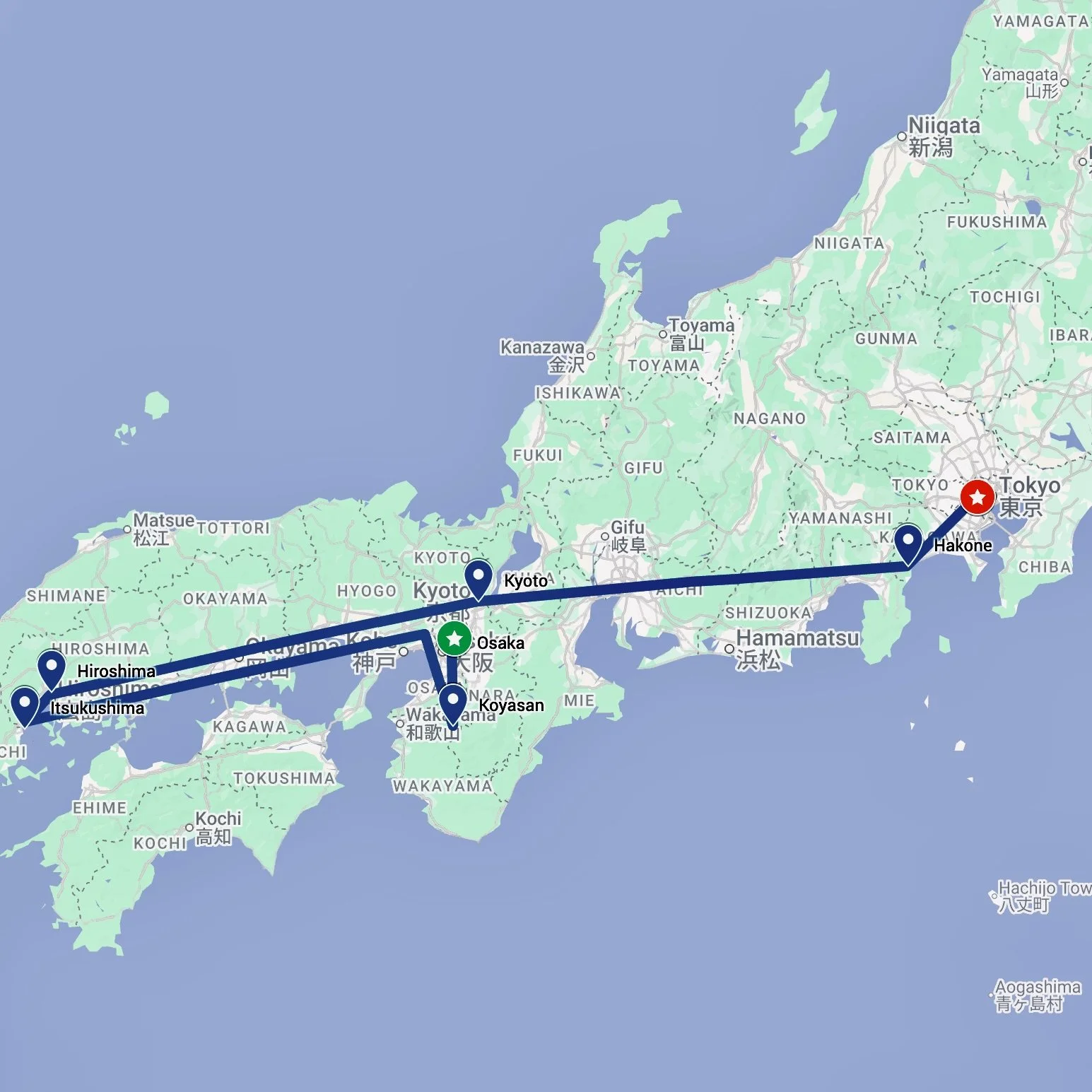
Discover the many faces of Japan, beginning in Osaka and ending in Tokyo. Visit the mountain temples of Koyasan, the historic streets of Kyoto, and the poignant sites of Hiroshima and Miyajima before witnessing Mount Fuji and the neon lights of Tokyo's vibrant districts.
Iconic Japan
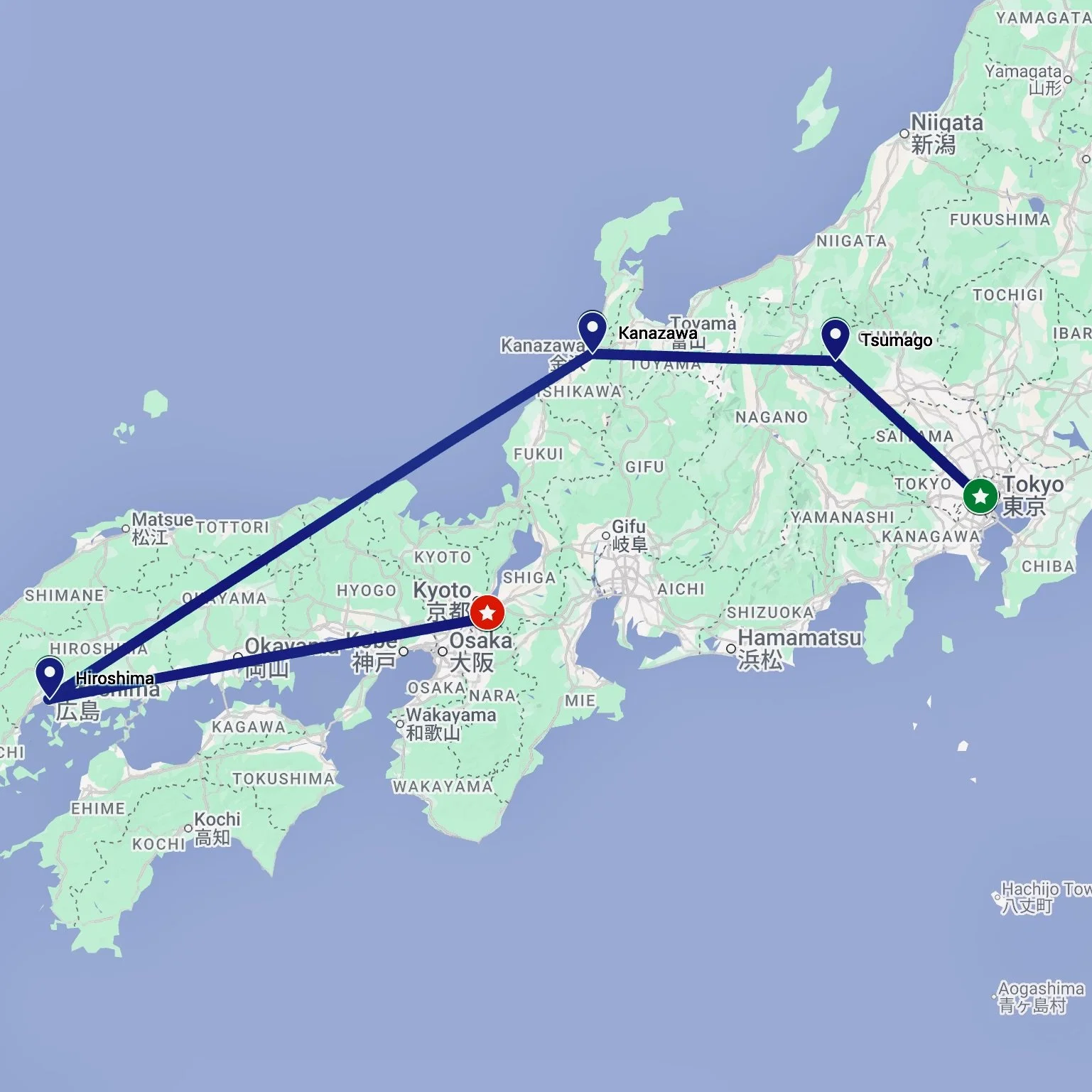
Immerse yourself in Japan’s living history, from Tokyo’s neon-lit streets to the quiet temples of Kyoto. Visit the samurai traditions of Hagi, the scenic beauty of Hakone and Mount Fuji, and the landmarks of Hiroshima and Osaka while enjoying regional Japanese cuisine.
-
Koyasan is a destination that changes dramatically with the seasons, but for the most comfortable experience, aim for spring (April to May) or autumn (October to November). In the spring, the mountain air remains crisp and the cherry blossoms often bloom a little later than in the lowlands. Autumn is arguably the most spectacular time to visit, as the temple grounds and surrounding forests are set ablaze with brilliant red and gold maple leaves.
It is worth being mindful of a few key dates that can be exceptionally busy. Golden Week, which usually runs from late April to early May, is a major domestic holiday period that can make accommodation scarce and transport crowded. The Obon festival in mid-August is another time when many people travel to pay their respects to ancestors, which can lead to a surge in visitors at the Okunoin cemetery.
Winter (December to February) brings a beautiful layer of snow, but it is bitterly cold on the mountain. If you choose this time, be aware that some smaller hiking trails may be slippery or closed.
-
While many people attempt to see Koyasan as a day trip from Osaka, this often results in a rushed experience that misses the true essence of the mountain. At a minimum, staying for one night is essential to experience a temple stay (shukubo), which allows you to participate in morning prayers and eat traditional Buddhist meals. This two-day, one-night stay covers the main highlights like Okunoin and the Danjo Garan.
However, for those with a genuine curiosity for the region’s spiritual heritage, a stay of three or four days is far more rewarding. Taking a longer stay allows you to slow down and explore the extensive network of pilgrimage trails, such as the Women’s Trail or the ancient Choishi Michi, without rushing back for a train. It also gives you the chance to see the temples in the quiet of the early morning or late evening after the day-trippers have departed. This approach to travel helps you truly connect with the monastic lifestyle and the profound stillness of the cedar forests.
-
Koyasan is incredibly safe, even by Japan’s high standards for security. You can walk through the town and the Okunoin cemetery at night with total confidence. However, it is always a sensible habit to check your government's local travel advisory for the latest updates before you depart. While crime is almost unheard of on the mountain, keep an eye on your belongings in busy areas like the cable car station and ensure you have a comprehensive travel insurance policy for any unexpected medical needs or travel disruptions.
One unique safety consideration in this region is the local wildlife. If you are planning on hiking the forest trails, be aware that Asian black bears live in the area. Many locals carry bear bells on their packs to make noise as they walk to minimise an unwanted encounter. Additionally, while the atmosphere is relaxed, it is important to respect local laws and avoid drinking in excess as Koyasan is an active religious community.
For more practical tips and expert advice on staying safe during your trip, visit our dedicated page on Travel Safety.
-
Respect is the foundation of life in Koyasan, and following a few simple etiquette guidelines will go a long way. When you are visiting religious sites, modest clothing is the best choice for everyone. This generally means ensuring your shoulders and knees are covered. Avoiding very revealing clothes like crop tops or short shorts shows respect for the monks and the sacred nature of the temples. It is a good idea to pack smart-casual layers that are easy to move in but conservative in style.
If you are staying in a temple, you will be expected to remove your shoes at the entrance and use the provided slippers for indoor hallways. Remember that slippers must be removed before stepping onto straw tatami mats as you should only walk on those in your socks. Because of this, always make sure you are wearing clean, presentable socks! During morning prayers or the fire ceremony, keeping your voice low and refraining from photography unless explicitly permitted is essential to maintaining the spiritual atmosphere.
-
Since Koyasan is situated at a high altitude, it is consistently cooler than nearby Osaka or Kyoto. Even in summer, the evenings can be quite fresh, so bring a light jacket or sweater. If you are visiting in winter, you must pack warm clothes, including thermals, a heavy coat, gloves, and a hat, as snow is common. For those planning to tackle the pilgrimage trails, sturdy walking shoes or hiking boots are a must, as the paths can be uneven and mossy.
You should also pack some neat, modest attire for temple stays and religious ceremonies. Sleeveless tops and shorts are generally not suitable for these settings. If you enjoy a dip in an onsen (hot spring), remember that traditional Japanese baths are enjoyed nude, so you won't need swimwear unless your accommodation has a specific western-style pool. Finally, June and July are the wettest months, so a compact umbrella or a reliable waterproof jacket will be very useful for those misty mountain walks.
-
Eating in Koyasan is a unique experience centred around Shojin Ryori, the traditional vegetarian cuisine of Buddhist monks. This style of cooking is built on the "rule of five", incorporating five colours, five flavours, and five preparation methods to create a balanced meal. It is a vital part of the local community’s spiritual practice, as it avoids meat and strong-smelling ingredients like garlic and onions to help keep the mind and body in balance.
The most famous local speciality is goma-tofu (sesame tofu). Unlike regular tofu, it is made from sesame paste and arrowroot powder, giving it a silky, creamy texture that is delicious when served with a touch of wasabi and soy sauce. You should also look for koya-tofu, which is freeze-dried tofu that has a unique, sponge-like texture perfect for soaking up savoury broths. Trying these dishes in your temple lodging or at local restaurants like Hanabishi is a wonderful way to receive the "energy of the mountain" through its food.
Essential Insights
-
Most travellers reach Koyasan via Osaka. The main gateway is Nankai Namba Station, where you can board a Nankai Railway train on the Koya Line. The fastest option is the "Limited Express Koya," which takes about 80 minutes to reach Gokurakubashi Station. From there, you take a five-minute cable car ride that glides up the steep mountainside to Koyasan Station. Once at the top, a short bus ride will take you into the centre of town.
If you are arriving from Kansai International Airport (KIX), the most efficient route is to take the Nankai train to Tengachaya Station and change there for the Koya Line toward Gokurakubashi. This combined rail and cable car journey is famously scenic and serves as a beautiful introduction to the secluded, high-altitude world of the monastery town.
-
Once you arrive at the top of the cable car, you are not permitted to walk along the narrow road into town. Instead, you must take one of the frequent Nankai Rinkan buses. These buses are very easy to use and stop at all the major attractions like Kongobu-ji and Okunoin. You can pay with a rechargeable IC card like Suica or Pasmo, but if you are staying for two days, buying a "Koyasan World Heritage Ticket" is often a much better move as it includes your round-trip train fare and unlimited bus travel.
Inside the town itself, many of the central sites are close enough together to be explored on foot, and it is a very pedestrian-friendly area. Walking between the temples is a great way to soak in the atmosphere and discover smaller shrines you might miss from a bus window. While you won't find rideshare services like Uber on the mountain, taxis are available at the main stations and larger temples if you need them.
-
Having a reliable data connection is very helpful for checking bus times and using translation apps while exploring the mountain. While physical SIM cards can be bought at the airport, an eSIM is generally the most convenient option for modern travellers. It allows you to get connected as soon as you land without having to fumble with tiny plastic cards or find a local shop.
An eSIM like Ohayu is a solid choice for staying online during your visit. It is usually more cost-effective than using international roaming from your home provider and ensures you can access maps for the pilgrimage trails. You can easily set it up on your phone before you even arrive in Japan, so you have one less thing to worry about when you are navigating the train transfers on your way up to the mountain.
-
Koyasan is still quite a traditional area where cash is king. While larger temple lodgings and some of the bigger shops near the town centre will accept credit cards like Visa and Mastercard, many smaller cafes and smaller temples only take cash. It is a good idea to withdraw enough Japanese yen before you leave Osaka, as you don't want to find yourself short of funds for temple entry fees or bus fares.
If you do need cash while on the mountain, the local post office and the FamilyMart convenience store have ATMs that typically accept international cards. Most Japanese ATMs have an English menu, making the process straightforward. While mobile payment apps are popular with locals, they can be tricky for visitors to set up, so relying on a mix of cash and a physical credit card is the most reliable approach for your trip.
-
In Koyasan, you will find that English proficiency is reasonably good at the major temples and the larger shukubo temple lodgings, as they have been welcoming international guests for many years. Signs at the cable car station and major attractions like Okunoin usually have English translations, making it relatively simple to find your way around.
However, in smaller restaurants or local shops, English may be more limited. Most places offer menus with photos, which helps immensely, but it is always a good idea to have a language translator app downloaded on your phone. Using the camera to translate descriptions or signs can really add help you understand the area more. Even if your language proficiency isn't perfect, the monks and locals are famously patient and polite, so a few basic Japanese phrases will always be appreciated.
-
Yes, the tap water in Koyasan is perfectly safe to drink and is actually a point of pride for the region. Because the water comes from the surrounding mountain peaks, it is cool, clean, and has a very fresh taste. Refilling your bottle from the tap in your temple room is a great way to stay hydrated and is far more responsible than buying single-use plastic bottles from vending machines.
To help reduce plastic waste, it is a smart idea to bring a reusable water bottle with you. While the tap water is safe and high-quality, some people might notice a very slight hint of chlorine as they would in any treated supply. If you have a sensitive palate, a bottle with a built-in filter is a nice extra, but it isn't necessary for safety. Staying hydrated with the mountain’s own water is one of the simplest ways to travel sustainably during your stay.