
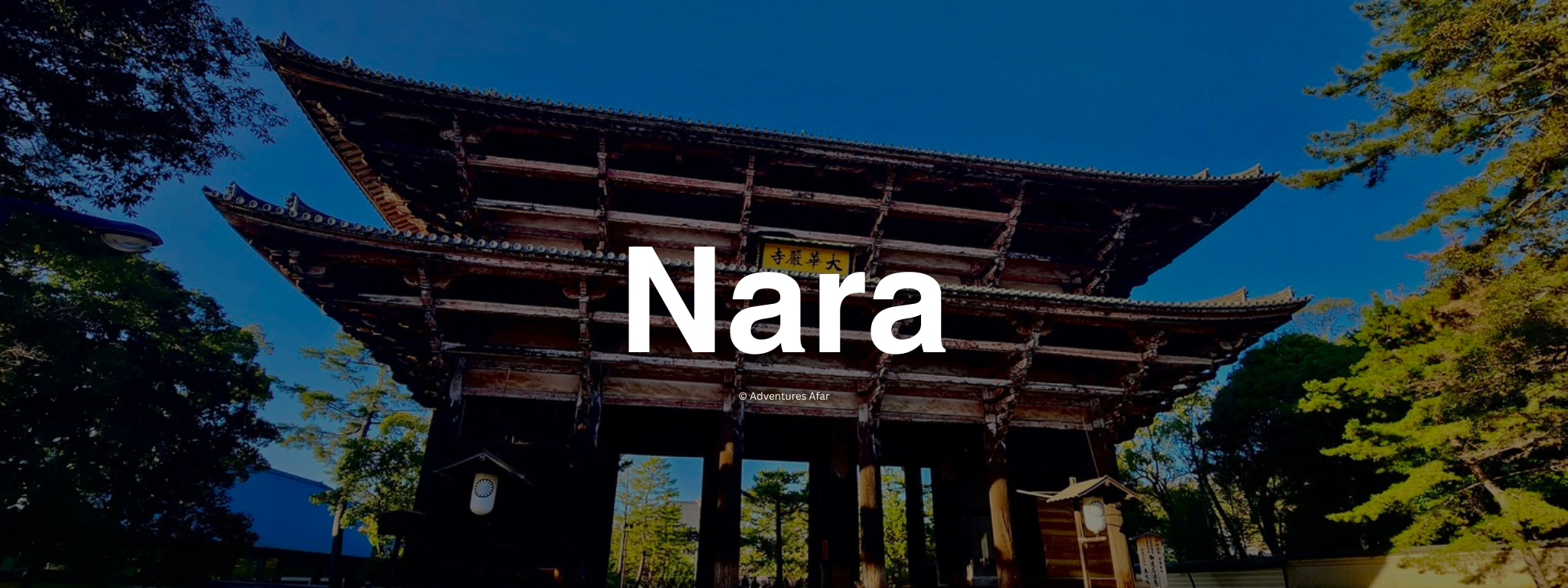
Ancient Temples and Sacred Deer
Just an hour south of Kyoto, Nara offers a gentler pace and an even deeper connection to Japan’s spiritual past. Once the nation’s first permanent capital, the city holds an extraordinary concentration of temples, gardens, and shrines, many of which date back more than a millennium. But for most visitors, it is the deer that make the first impression. Hundreds of deer roam freely through the parks, bowing politely in exchange for rice crackers.
This Adventures Afar guide contains affiliate links. If you book through these, we may earn a commission at no extra cost to you.
Unmissable Highlights
-
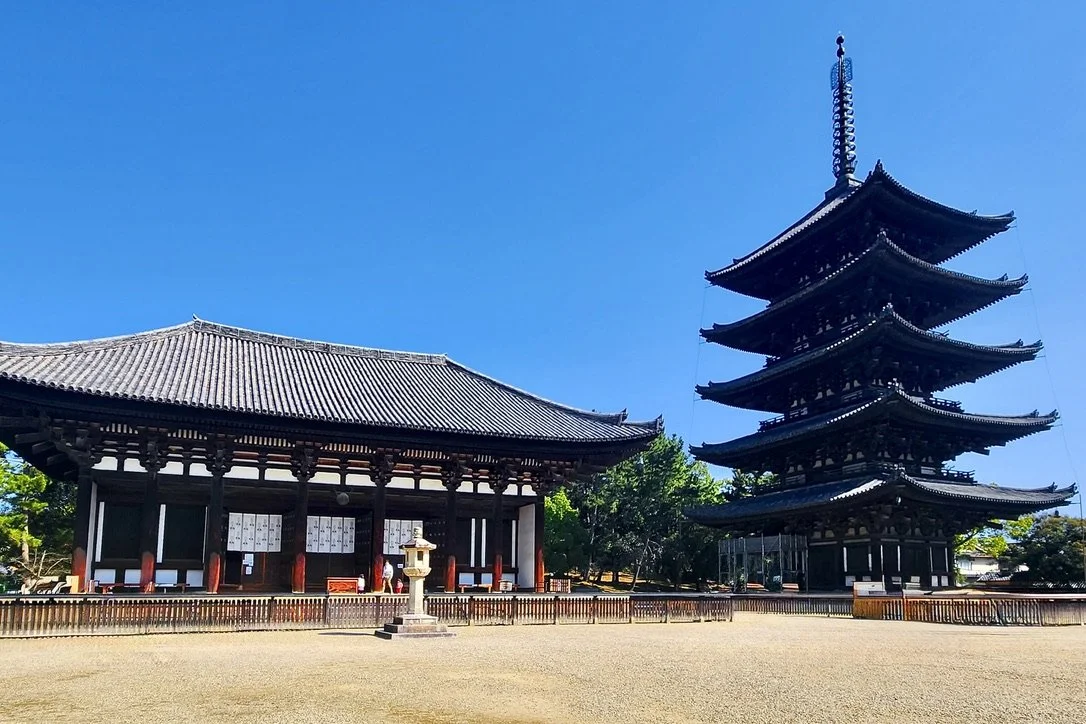
Kofuku-ji
One of the most significant landmarks in the city, Kofuku-ji was once the family temple of the powerful Fujiwara clan. Its towering five-storey pagoda is an iconic symbol of Nara, standing as the second tallest wooden pagoda in all of Japan. The temple grounds are home to several structures designated as National Treasures, including the Eastern Golden Hall and a museum housing a world-renowned collection of Buddhist sculptures. Its central location makes it the perfect gateway for those beginning their journey through the historic monuments of the ancient capital.
Did You Know? The current five-storey pagoda was rebuilt in 1426 after being destroyed by fire five separate times. It was constructed without a single metal nail, relying instead on sophisticated wooden joints that allow the structure to sway safely during earthquakes.
-
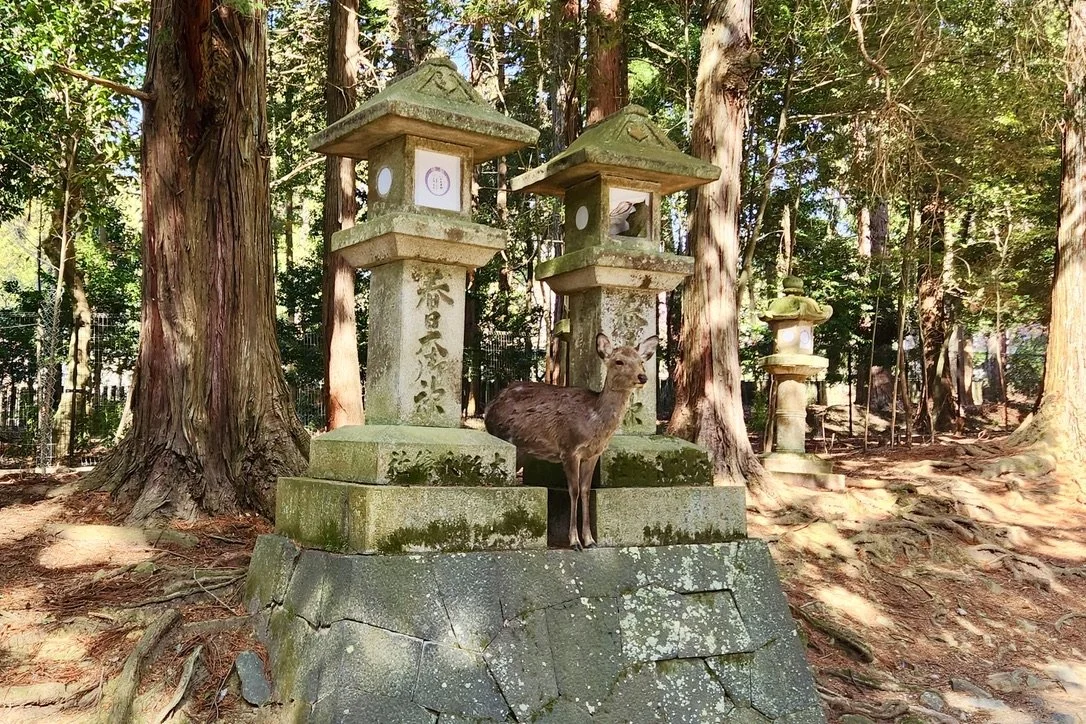
Nara Park
Spanning over 500 hectares at the foot of Mount Wakakusa, Nara Park is a vast green space where history and nature live in total harmony. While it contains some of Japan’s most important temples, it is best known for the 1,200 wild sika deer that roam the lawns. Visitors can purchase special rice crackers to feed these animals, which have famously learned to bow politely to ask for a treat. The park's wide paths lead through groves of cherry trees and ancient cedars, providing a scenic route between the city’s many UNESCO World Heritage sites.
Did You Know? According to local legend, a deity once arrived at the nearby Kasuga Shrine riding a white deer. Because of this, the deer were considered sacred for centuries, and killing one was a capital offence punishable by death until 1637.
-
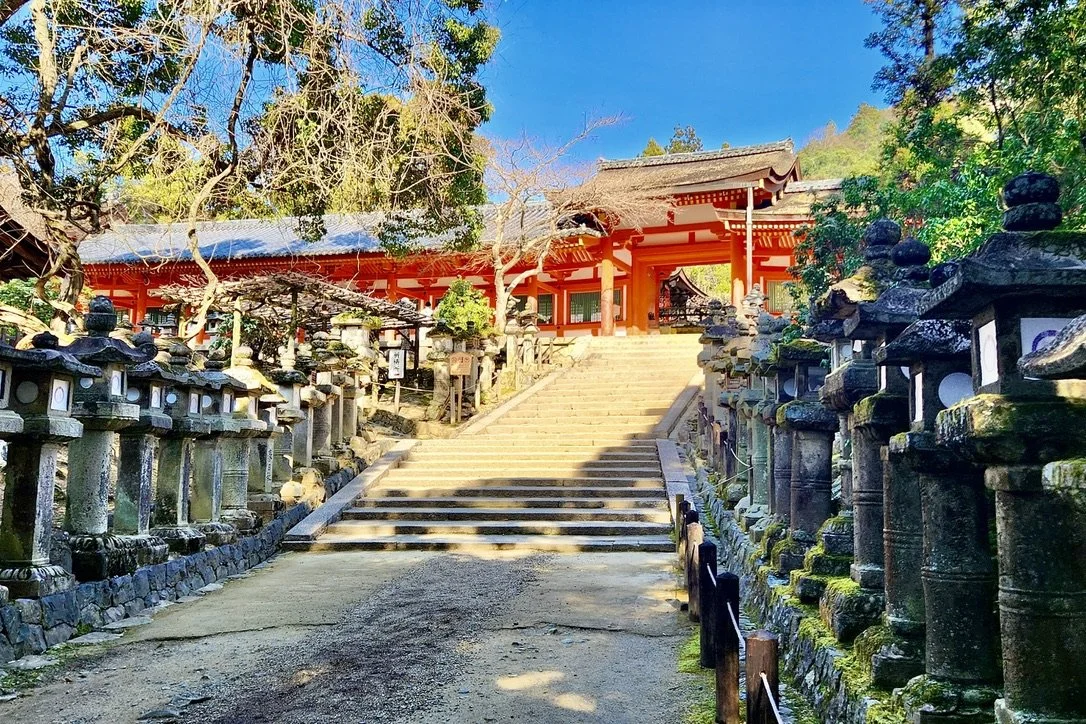
Kasugataisha Shrine
Tucked away in a primeval forest where the trees have been protected for over a millennium visitors will find Kasugataisha, Nara’s most celebrated Shinto shrine. The shrine is famous for its thousands of lanterns, with hundreds of bronze lamps hanging from the vermilion corridors and stone lanterns lining the woodland paths. Dedicated to the protectors of the city, the sanctuary features a unique architectural style known as kasuga-zukuri. During the biannual Mantoro festivals, every single lantern is lit, creating a mesmerising display of flickering light against the dark forest backdrop.
Did You Know? The shrine is home to over 3,000 lanterns in total. Many were donated by samurai and wealthy merchants centuries ago, and some of the oldest stone lanterns are covered in thick layers of moss that have grown undisturbed for hundreds of years.
-
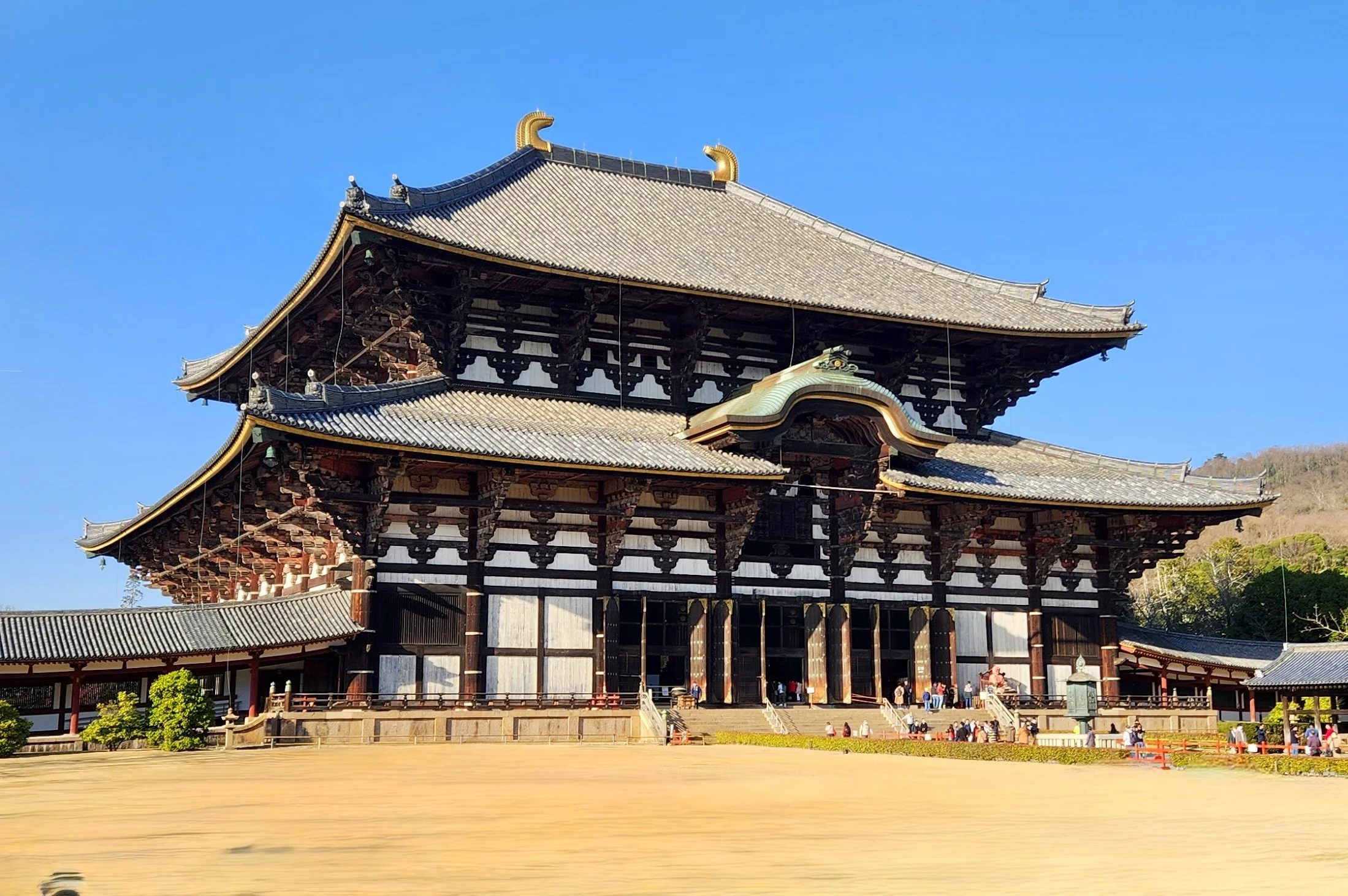
Todai-ji
A cornerstone of the UNESCO World Heritage list, Todai-ji is a monumental achievement of ancient engineering. Its central feature is the Daibutsuden, or Great Buddha Hall, which held the record as the world’s largest wooden building for centuries. Inside, visitors are met by the Daibutsu, a colossal bronze statue of the Buddha standing nearly 15 metres tall. The sheer scale of the temple, with its massive Nandaimon gate and fierce guardian statues, was designed to reflect the power of the early Japanese state and its devotion to Buddhist teachings.
Did You Know? One of the massive wooden pillars in the Great Buddha Hall has a hole through its base that is exactly the same size as the Great Buddha’s nostril. It is said that anyone who can squeeze through it will be granted enlightenment.
Recommended
Multi-Day Itineraries
Put this guide into practice with these hand-picked small group journeys,
featuring both iconic landmarks and immersive cultural experiences.
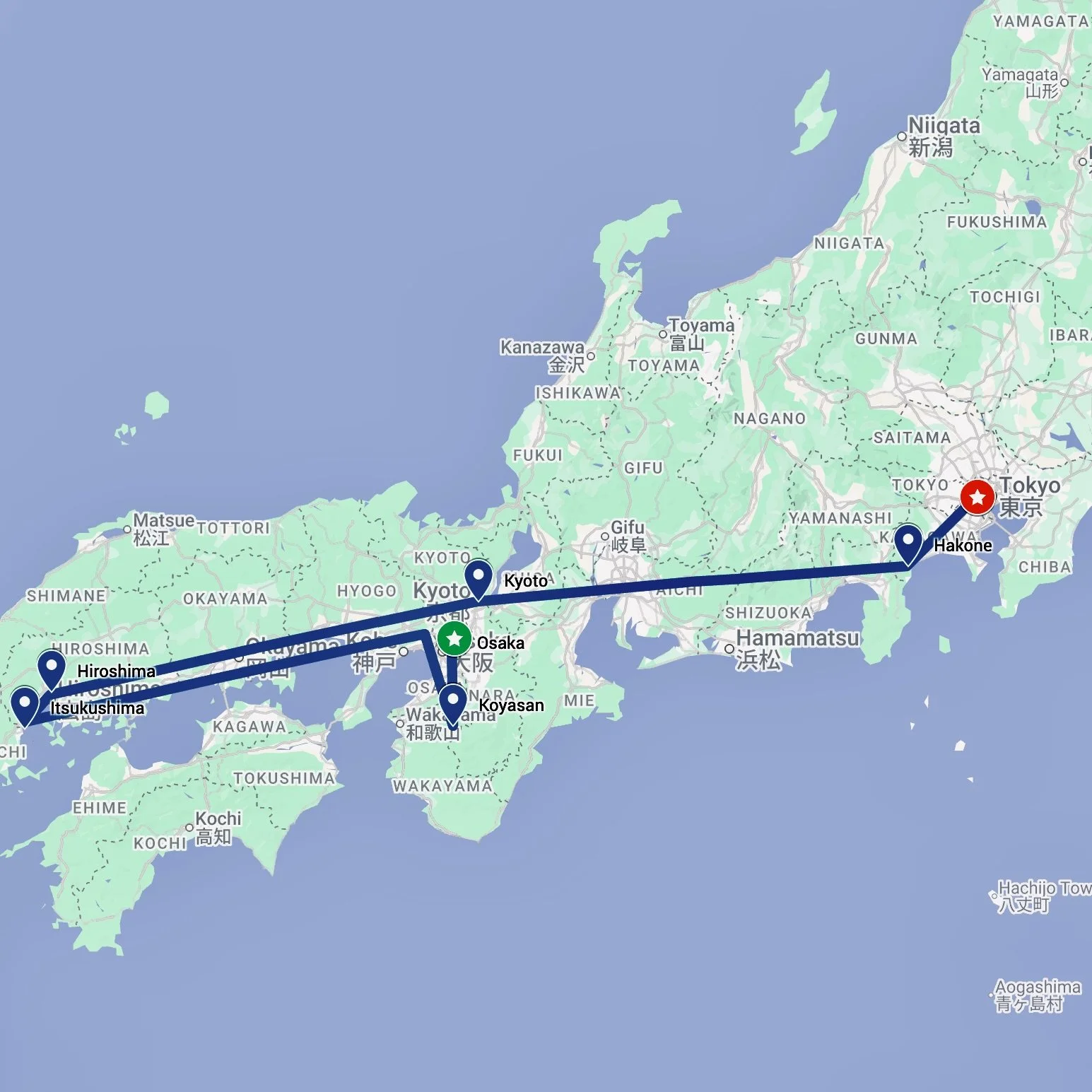
Discover the many faces of Japan, beginning in Osaka and ending in Tokyo. Visit the mountain temples of Koyasan, the historic streets of Kyoto, and the poignant sites of Hiroshima and Miyajima before witnessing Mount Fuji and the neon lights of Tokyo's vibrant districts.
Iconic Japan
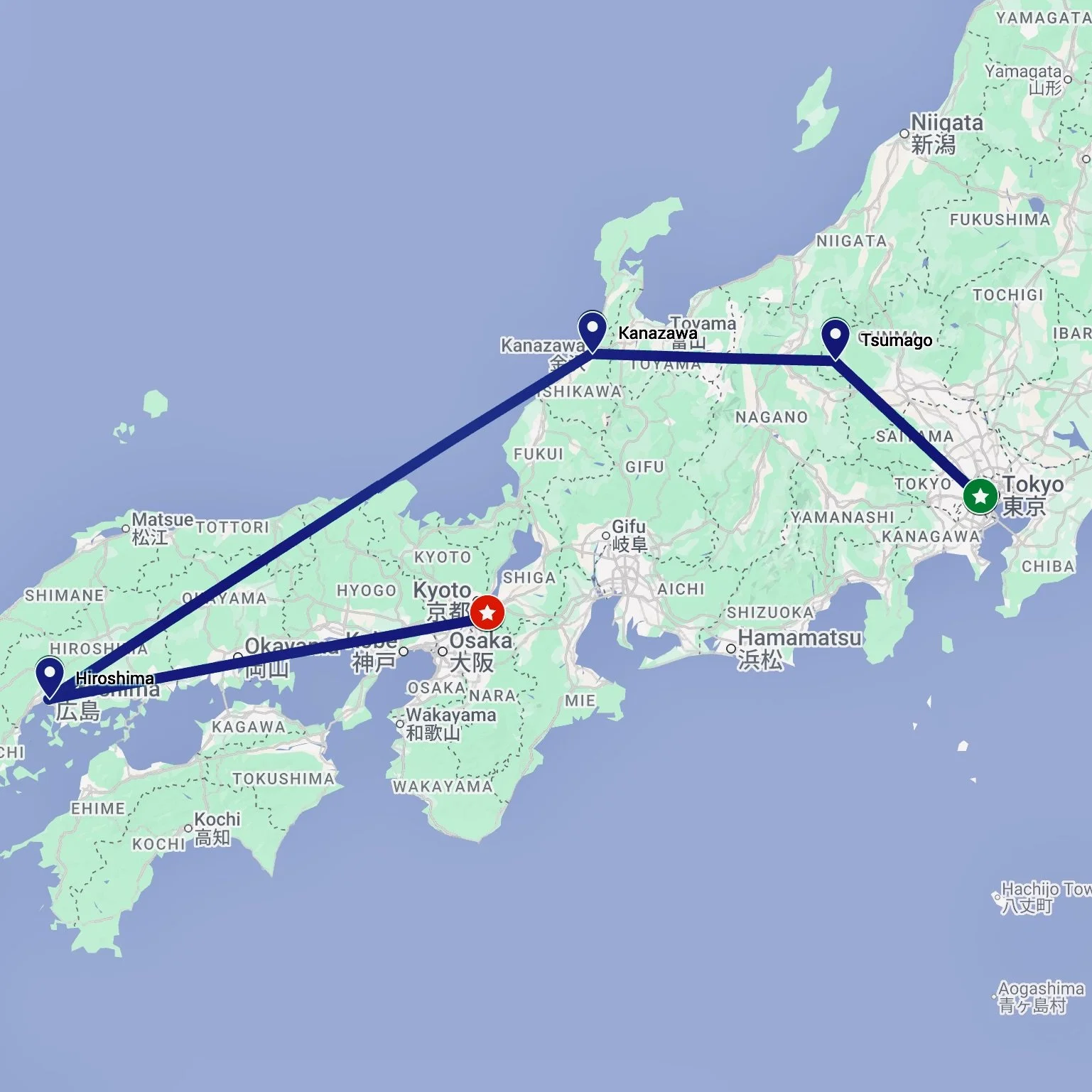
Immerse yourself in Japan’s living history, from Tokyo’s neon-lit streets to the quiet temples of Kyoto. Visit the samurai traditions of Hagi, the scenic beauty of Hakone and Mount Fuji, and the landmarks of Hiroshima and Osaka while enjoying regional Japanese cuisine.
-
Getting to Nara is remarkably simple from Japan's major hubs. Most international visitors fly into Kansai International Airport (KIX), which is about 90 minutes away by airport limousine bus or train. From central Kyoto or Osaka, the train is by far the fastest way to travel. You can take the JR Nara Line from Kyoto Station or the Kintetsu Railway, which drops you off at Kintetsu-Nara Station, slightly closer to the main park and temples.
If you are coming from Tokyo, you will take the Shinkansen (bullet train) to Kyoto first and then hop on a local express train to Nara. Taking the train is often faster than flying when you consider the travel time to airport gates and security checks, and it is a much greener way to travel. Nara’s two main stations, JR Nara and Kintetsu-Nara, are well-serviced by both high-speed and local lines, making it an easy addition to any Japanese itinerary.
-
Nara is a very pedestrian-friendly city, and most of the major attractions are clustered around Nara Park within walking distance of the train stations. Naramachi merchant district is also perfect for exploring on foot to soak in the historic atmosphere. If you want to venture to the scenic Kibi Plain or the southern temples, renting a bicycle is a brilliant alternative and a great way to see the city at your own pace.
If you would prefer to save your energy, the Nara Kotsu bus network is excellent. Look for the yellow "Nara City Loop" buses that circle the main tourist spots for a flat fare. You can pay using a rechargeable IC card like Suica or Pasmo, or buy a one-day bus pass at the station if you plan on making multiple trips.
For a more private option, taxis are plentiful and incredibly clean, though they are significantly more expensive than public transport. While ride-sharing apps like Uber are available, they mainly work by hailing licensed local taxis.
-
Having a solid data connection is a lifesaver for navigating Nara's bus routes and translating restaurant menus. While you can pick up a physical SIM card at airports, many travellers now prefer the convenience of an eSIM. It allows you to get connected almost as soon as you land without having to swap out your physical card or hunt for a store.
An eSIM like Ohayu is a great choice for staying online during your trip. It is usually more cost-effective than using your home provider's roaming service and gives you the freedom to use Google Maps and translation apps whenever you need them. You can easily set it up on your phone before you even arrive, so you are ready to go the moment you step off the train. Just make sure your phone is eSIM compatible before you buy one.
-
In Nara, as in much of Japan, cash is still frequently used, especially at smaller shops, temples, and independent cafes. You will definitely need some yen for temple entry fees and buying deer crackers! That said, most major hotels, department stores, and larger restaurants will accept Visa, Mastercard, and Amex. You will also see many locals paying with QR codes or IC cards, but for visitors, a mix of physical cash and card is usually the most reliable way to go.
ATMs are easy to find, particularly at 7-Eleven convenience stores, which accept most international cards and have English menus. While you can exchange USD or EUR at banks, you will often find better rates and more convenience by simply withdrawing yen from an ATM. It is a good idea to keep a few 1,000 yen notes and some coins handy for vending machines and smaller purchases as you explore the park.
-
You will find that English signs and menus are very common in the main tourist areas of Nara, particularly around Nara Park and the main train stations. Staff at major attractions and hotels usually have a good enough proficiency in English to help with most enquiries. However, as you move into the smaller backstreets of Naramachi or visit more local eateries, English becomes a bit more limited.
Most restaurants have menus with photos, which makes ordering a lot easier, but it is always a smart idea to download a language translator app onto your phone before you arrive. Using the camera function to translate a menu or a sign can save a lot of confusion. Even if the English isn't perfect, the locals in Nara are famously polite and helpful, so a few basic Japanese phrases and a smile will go a long way in making your interactions much smoother.
-
Yes, the tap water in Nara is perfectly safe to drink and follows some of the highest health standards in the world. You can refill your bottle from the tap in your hotel or at public fountains without any concern. Not only is the water clean and safe, but drinking from the tap is a far more responsible choice for the environment than buying plastic bottled water.
To help reduce single-use plastic, it is a great idea to bring a reusable water bottle with you as you explore the city. While you don't need a filter for safety, some people prefer them if they are sensitive to the taste of chlorine. You can also look for accommodation that offers free water refill stations in common areas. With the thousands of vending machines across Japan, using your own bottle is a small but impactful way to travel more sustainably.
-
Nara is spectacular in the spring and autumn, with the most popular months being late March through to May, and October to November. If you visit in early April, the cherry blossoms at Nara Park and around the base of Mount Wakakusa create a soft pink backdrop that is hard to beat. Alternatively, November brings deep oranges and reds to the temple gardens, making it a dream for photography. For a truly unique experience, visit in the first two weeks of March to witness the Omizutori fire festival at Todai-ji, where priests brandish massive torches to signal the end of winter.
It is wise to avoid certain dates if you want to dodge the heaviest crowds. Golden Week, which runs from late April to early May, is a string of public holidays that sees domestic tourism skyrocket. Similarly, the New Year period from late December to early January often leads to temple closures and packed transport. Summer (June to August) can be incredibly humid and hot, so unless you are specifically coming for the August lantern festivals, the cooler shoulder seasons offer a much more pleasant experience for walking between the shrines.
-
While many people only visit Nara as a quick day trip from Kyoto, staying for at least two full days allows you to connect more deeply with the city's ancient roots. Most visitors spend about six hours ticking off the Big Buddha and the deer park before rushing back to the station. However, to travel more responsibly and satisfy your curiosity, a longer stay lets you wander into the quieter corners of Naramachi, the old merchant district, where the wooden architecture and small museums tell a much more intimate story.
With three days, you can spend one full day in the main park area, a second exploring the southern temples and the atmospheric Kasuga Primeval Forest, and a third taking the short train ride to Horyu-ji to see the world's oldest wooden buildings. By not rushing, you get to see Nara after the day-trippers have left, when the temples are quiet and the local restaurants are filled with residents rather than tourists. This slower pace is not only more relaxing but also gives you a far more authentic glimpse of life in Japan’s first permanent capital.
-
Nara is consistently rated as one of the safest cities in the world for travellers. Crime rates are very low, and you can feel comfortable walking around most areas even late at night. That said, it is always a good idea to check your government's local travel advisory before you fly to stay informed on any general updates. While violent crime is rare, you should still keep an eye on your belongings in crowded tourist spots like Nara Station or the busy approach to Todai-ji.
Scams are almost non-existent here, but you might occasionally encounter people asking for "donations" for religious causes that aren't always legitimate and it is perfectly fine to politely decline. Common sense is key. Avoid drinking in excess and ensure you are familiar with local laws, particularly regarding the strict zero-tolerance policy on drugs.
Most importantly, always have a comprehensive travel insurance policy. Even in a safe city like Nara, having cover for unexpected medical issues or travel delays means you can explore with total peace of mind.
For more practical tips and expert advice on staying safe during your trip, visit our dedicated page on Travel Safety.
-
When you are exploring Nara's sacred sites, dressing respectfully is a great way to show appreciation for the local culture. While there isn't a strict dress code, it is best for everyone to keep their shoulders and knees covered when visiting temples and shrines. This means avoiding very short shorts, miniskirts, or sleeveless tops. Neat, modest clothing is the norm for the local population, and following suit helps you blend in and shows respect for these active places of worship.
If you are lucky enough to be invited into a Japanese home or a traditional guesthouse, the most important rule is to remove your shoes at the entrance. You will usually see a raised floor or a dedicated mat where you can leave your footwear. Because of this, always wear clean, hole-free socks!
On a general note, try to keep your voice down on public transport and avoid eating or smoking while walking through the streets. These small gestures of consideration are a big part of the social harmony that makes Japan so welcoming.
-
Nara is a city designed for walking, so your most important item is a pair of comfortable shoes. You will be taking them off frequently at temple entrances and some restaurants, so choose a pair that is easy to slip on and off to save yourself a lot of time fussing around with laces. For clothing, pack layers that cover the shoulders and knees, especially for temple visits. Lightweight trousers or longer skirts are ideal. Avoid packing very revealing items like crop tops or singlets if you plan on visiting religious monuments.
If you are visiting in the winter, particularly between December and February, it can get surprisingly chilly, so bring thermal layers and a good coat. June and July are the wettest months, so a compact umbrella or a light raincoat is essential.
Since Nara doesn't have a beach, you won't need swimwear unless your hotel has a pool or you are visiting a nearby onsen. For onsen visits, remember that most are enjoyed without clothes, though you’ll be given a small "modesty towel" to use as you move between the baths.
-
Nara has a unique culinary history that reflects its status as an inland city. One of the most famous local specialities is kakinoha-zushi, which is sushi wrapped in persimmon leaves. Historically, the leaves were used for their antibacterial properties to preserve the fish during transport from the coast. It is a fantastic, portable snack that you can find at many stalls near Nara Park. Another must-try is Miwa Somen, incredibly thin wheat noodles that are a local pride of the Miwa area and can be enjoyed hot in the winter or chilled in the summer.
For a sweet treat, head to the Naramachi district to try warabi-mochi, a jelly-like confection dusted with roasted soybean flour. It is a staple of the local community and a refreshing snack after a long day of walking. If you are near the Todai-ji area, look for shops selling chagayu, a traditional tea-infused rice porridge that was once the staple breakfast for monks. These dishes aren't just food, they are a link to Nara's past and a way for travellers to experience the resourcefulness and traditions of the region.