
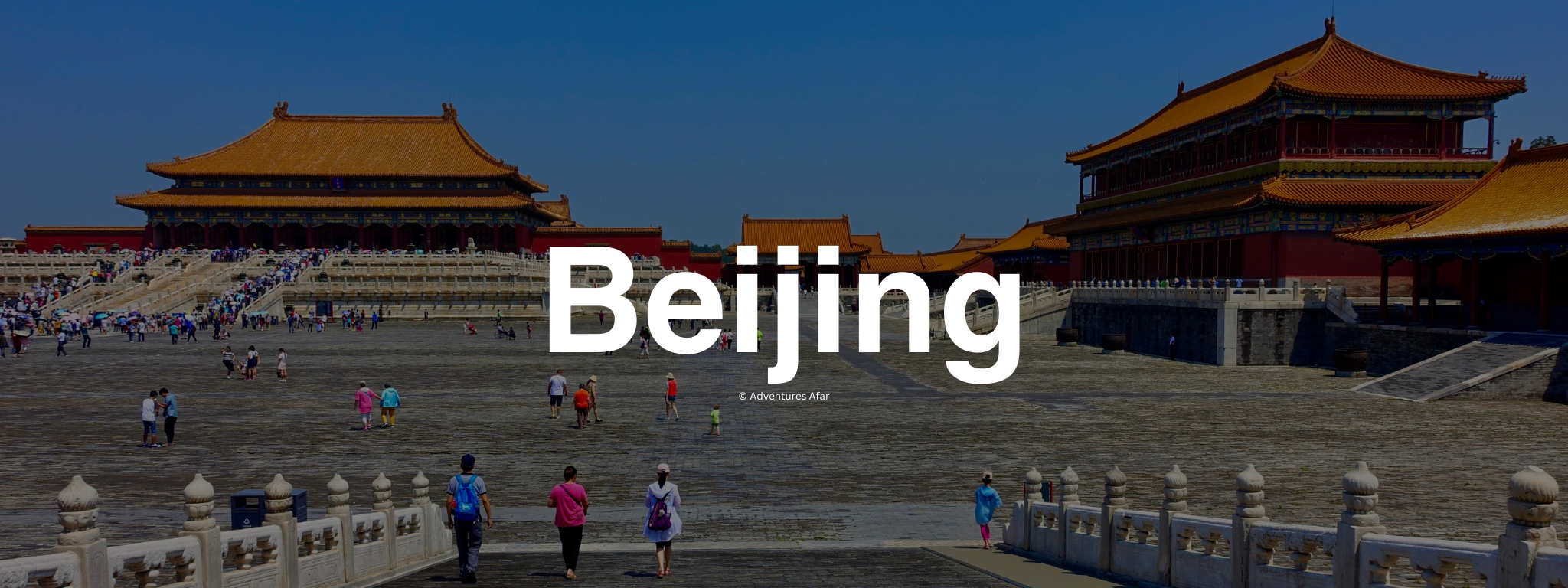
Imperial Grandeur and Modern Energy
China’s capital city is where vast imperial legacies meet the bustle of modern life. Unlike many of the country’s metropolises dominated by endless high-rise blocks, Beijing carries a notably open feel with its skyline shaped instead by ancient temples, grand palace roofs and leafy parklands. For travellers, it is a place of contrasts, both overwhelming and unforgettable, where monumental history collides with the rhythms of everyday life.
This Adventures Afar guide contains affiliate links. If you book through these, we may earn a commission at no extra cost to you.
Unmissable Highlights
-
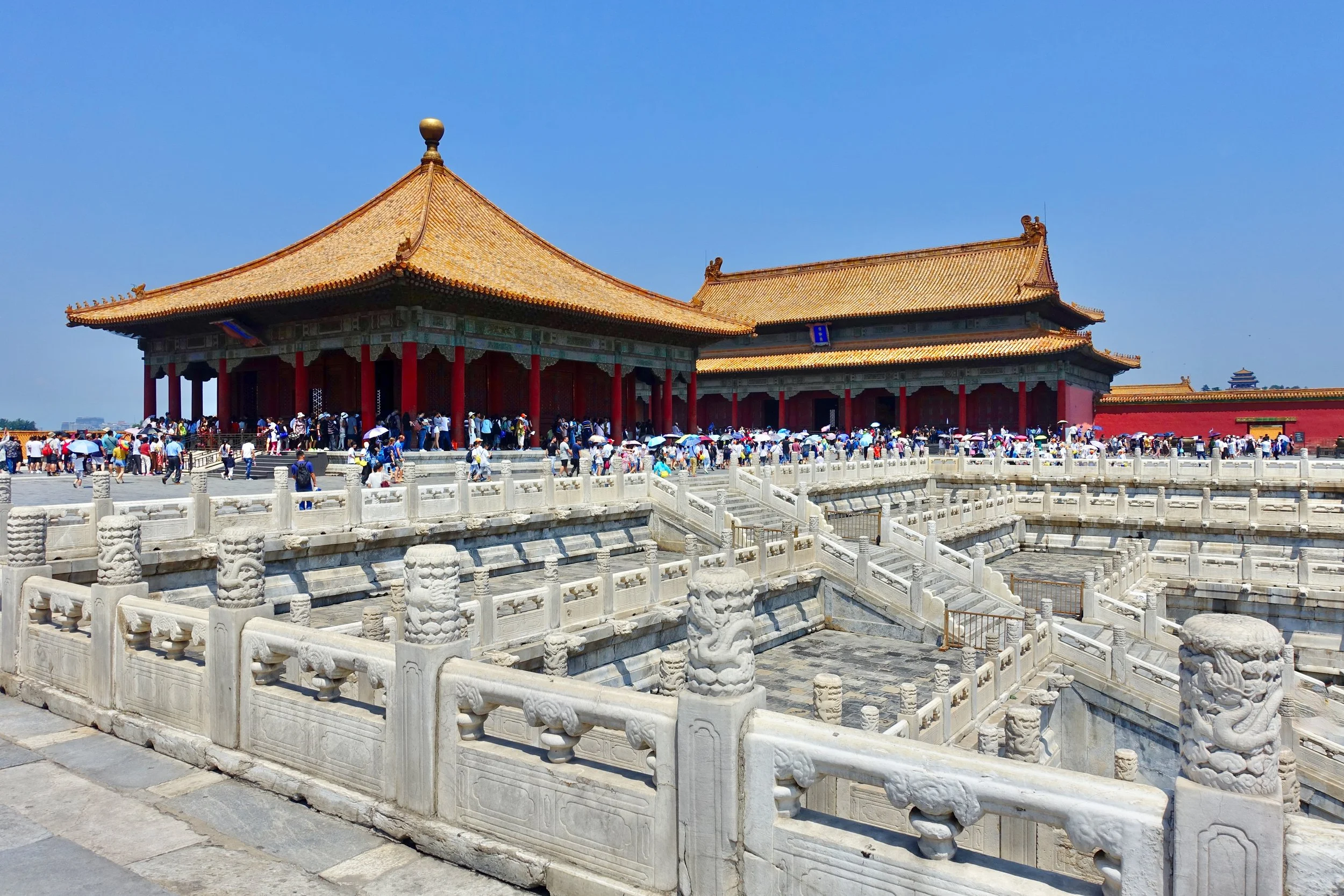
Forbidden City
No visit to Beijing feels complete without stepping inside the Forbidden City, the former home of emperors for almost five centuries. Beyond Tiananmen Square, a ceremonial gate opens to a vast world of crimson walls, golden roofs and wide marble courtyards. Visitors enter through the Meridian Gate in the south and walk northwards through the entire complex, passing through ornate halls and open courtyards. Whether pausing before the Hall of Supreme Harmony or admiring fine stone carvings, the craftsmanship of the Ming and Qing eras is striking. Those with extra time can explore the Palace Museum, though many simply wander and soak up the atmosphere.
Did you know? The Forbidden City houses more than 9,000 rooms, though only a small selection are open to the public. Entry requires advance booking, often several days ahead, especially during the peak summer months or public holidays.
-
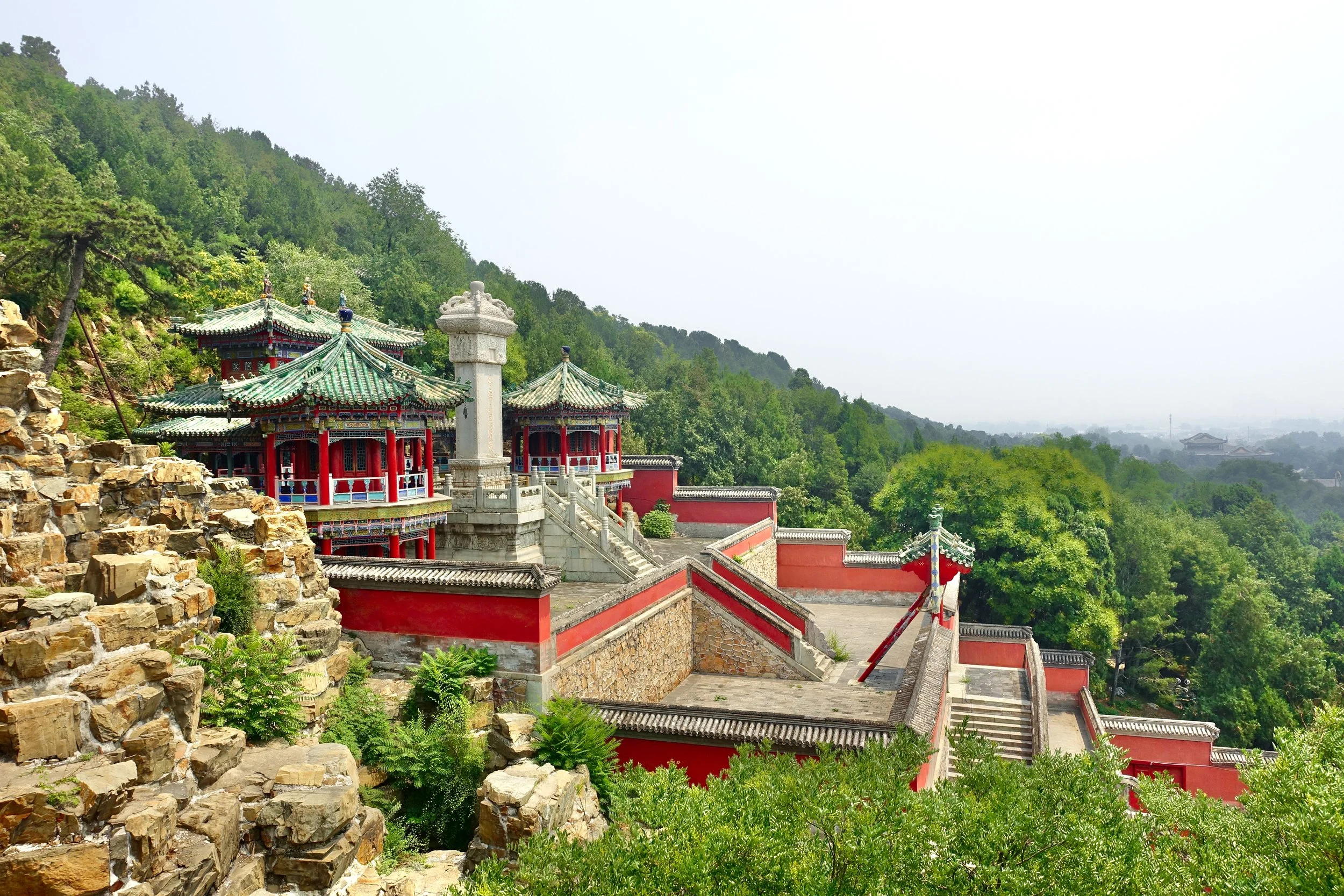
The Summer Palace
On the edge of Beijing, the Summer Palace offers a very different imperial experience. Centred around the vast Kunming Lake, the palace combines pavilions, temples and bridges set against wooded hills. Unlike Chengde’s summer retreat, the scale and preservation here are striking, with highlights including the Long Corridor, painted with thousands of intricate scenes, and the graceful Marble Boat that floats at the lake’s edge. A boat ride across Kunming Lake provides sweeping views of the complex, especially beautiful in the late afternoon light.
Did you know? Kunming Lake was created by expanding a natural reservoir using nearly 100,000 labourers who excavated the area by hand. The vast amount of earth they removed was used to build Longevity Hill, the highest point in the palace grounds. This incredible feat of engineering reflects the immense scale of Qing dynasty landscape design and imperial ambition.
-
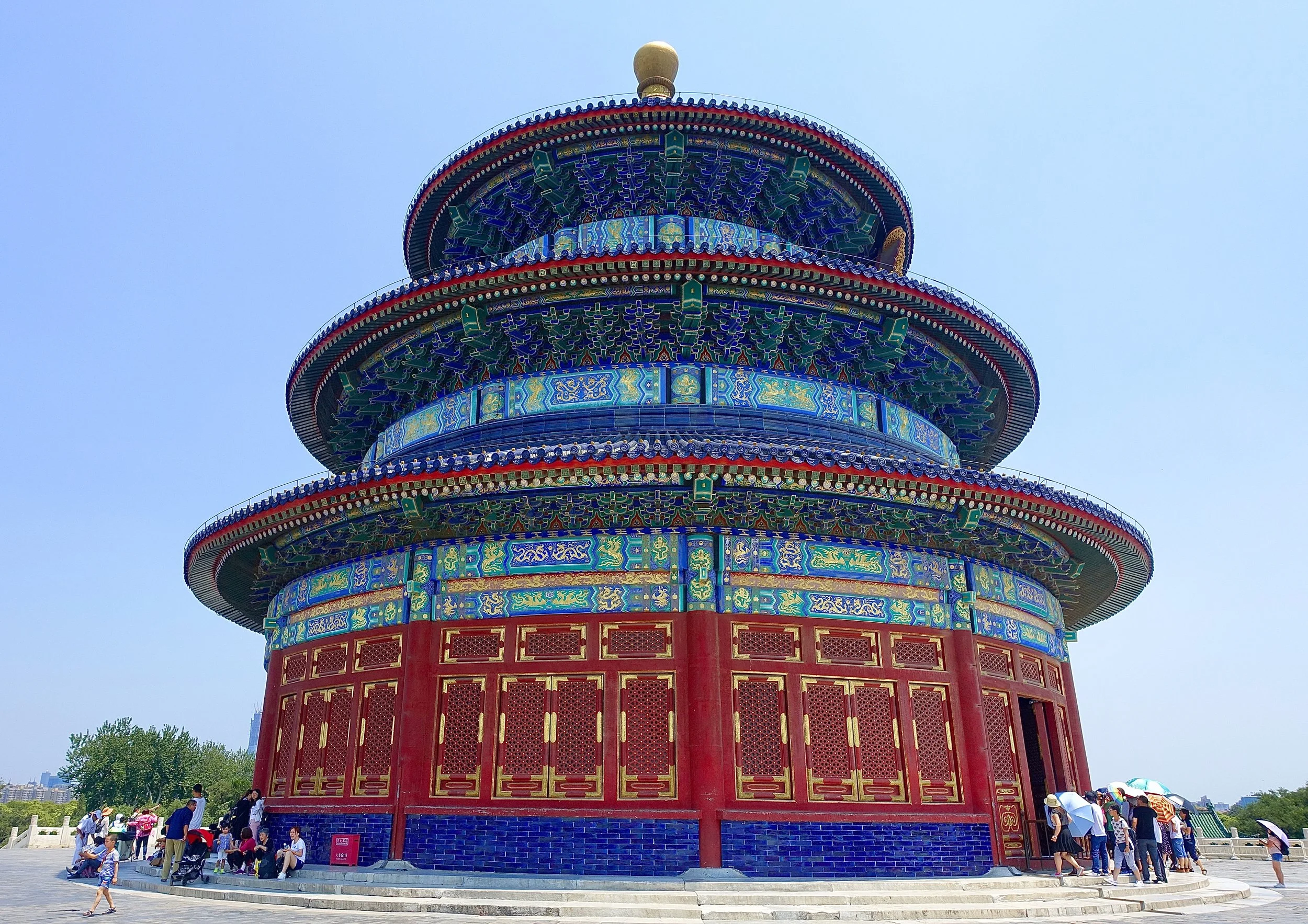
Temple of Heaven
South of the city centre lies the Temple of Heaven, a striking ensemble of Ming architecture set within expansive parklands. The iconic Hall of Prayer for Good Harvests, with its circular triple roof of blue tiles, is among the most photographed structures in Beijing. Yet it is the surrounding gardens that create a sense of calm, providing an antidote to the intensity of the Forbidden City. Locals gather here for tai chi, music and board games, making it one of the best places to experience daily life in the capital.
Did you know? Spanning roughly 270 hectares, the Temple of Heaven complex is nearly four times larger than the Forbidden City. As the "Son of Heaven," the Emperor did not dare build his own earthly residence larger than this sacred site dedicated to the divine. Today, it remains the world’s largest existing building complex designed for offering imperial sacrifices.
-
The Great Wall of China
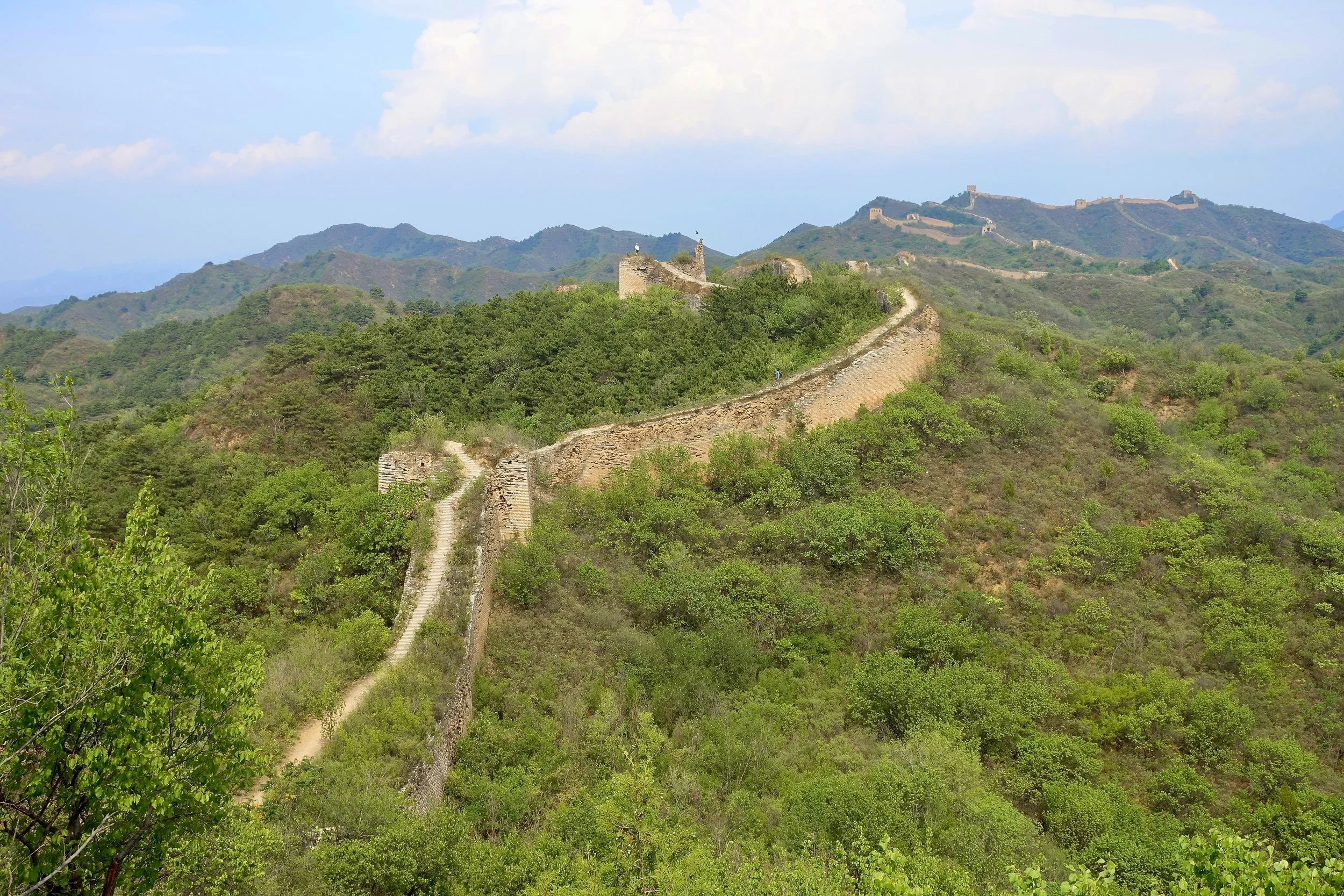
Winding across rugged peaks and deep valleys, the Great Wall of China represents one of the most ambitious engineering feats in human history. This impressive monument consists of numerous fortifications built over centuries to protect various Chinese dynasties. While the restored section at Badaling attracts the largest crowds due to its proximity to Beijing, travellers seeking a more tranquil experience often prefer the well-preserved battlements of Mutianyu or the dramatic, crumbling architecture at Jinshanling. These diverse sections highlight the contrast between meticulously maintained tourist areas and wild, overgrown stretches where nature has begun reclaiming the ancient stone.
Did you know? While often called a single structure, the wall is actually a vast network of disparate fortifications. Some historical sections were even constructed using a surprising organic mortar made from sticky rice flour, which helped the bricks withstand powerful earthquakes.
Recommended
Multi-Day Itineraries
Put this guide into practice with these hand-picked small group journeys,
featuring both iconic landmarks and immersive cultural experiences.
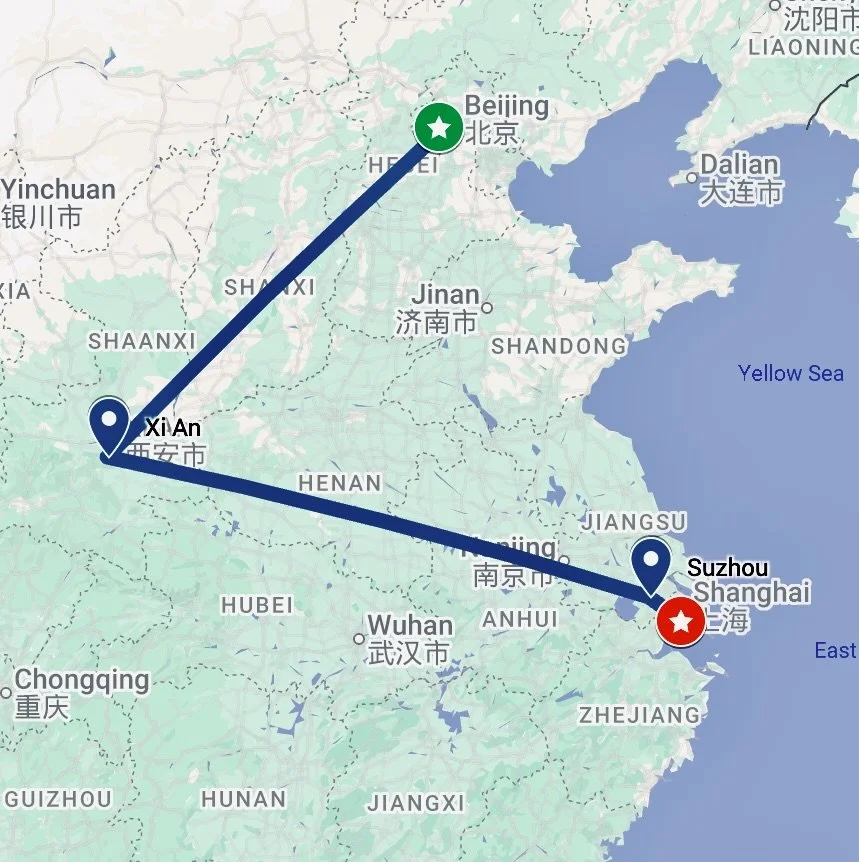
Visit the Great Wall of China from Beijing and the Terracotta Warriors in Xi'an before exploring the gardens of Suzhou and spectacular skyscrapers in Shanghai. This itinerary features essential Chinese landmarks and cultural destinations for travellers who value exploration.
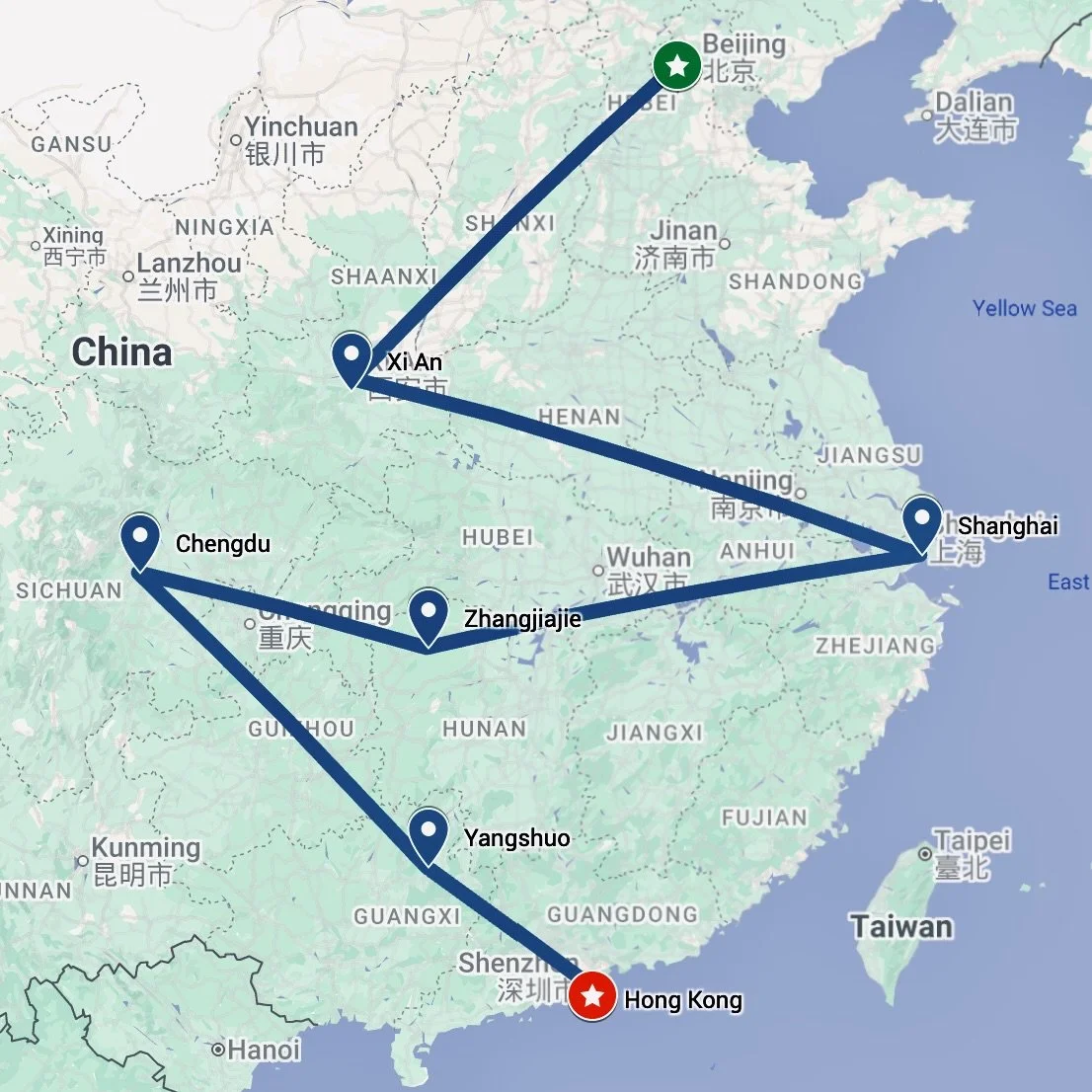
Explore the Great Wall of China from Beijing and the Terracotta Warriors in Xi'an before visiting Shanghai’s futuristic skyline, Zhangjiajie’s misty peaks, and pandas in Chengdu. This National Geographic Journey also visits Yangshuo’s karst landscapes and ends in vibrant Hong Kong.
-
Beijing has four distinct seasons, but September and October are widely considered the "golden" months. The weather is crisp, the skies are often clear, and the autumn colours at the Great Wall are simply breathtaking. Late March to May is also lovely for spring blossoms, though you might encounter the occasional dust storm.
Try to avoid the "Golden Week" (the first week of October) and Chinese New Year (usually late January or February) at all costs. These are the biggest public holidays in China, and popular spots like the Forbidden City will be incredibly crowded, with transport booked out weeks in advance. July and August are best avoided too as there are not only the school holiday crowds, but because the city swelters in humid heat, which makes sightseeing a bit of a marathon.
-
Most people try to "do" Beijing in a few days, hitting the Forbidden City, the Great Wall, and the Temple of Heaven. However, to truly embrace responsible, curious travel, we recommend staying for four to seven days. Beijing is massive, and its charm lies in the layers you discover when you aren't rushing.
A longer stay allows you to spend a full, unhurried day at a less-restored section of the Great Wall like Mutianyu or Jiankou, rather than the tourist-heavy Badaling. You’ll also have time to get lost in the Hutongs, visit the edgy 798 Art District, or spend a quiet morning watching locals practice Tai Chi in the parks. Giving yourself a week ensures you see the icons without feeling like you’re just ticking boxes on a list.
-
Beijing is generally one of the safest mega-cities in the world for travellers. Violent crime is extremely rare, but like any major capital, you should stay alert for petty theft in crowded spots. Always check your own government’s travel advisory before you arrive for the latest updates.
The most common "scams" are the Tea House or Art Student scams, where friendly locals invite you for a drink or to see a gallery, only for you to be hit with a massive bill. A good rule of thumb: if a stranger’s invitation feels a bit too polished, politely decline. Use common sense. Don't overdo the Baijiu (local spirit), respect local laws, and always ensure you have comprehensive travel insurance to cover any unexpected hiccups.
For more practical tips and expert advice on staying safe during your trip, visit our dedicated page on Travel Safety.
-
Beijingers are generally laid-back, but showing respect goes a long way. When visiting temples or religious sites, it’s best to keep your shoulders and knees covered. While casual Western-style clothing is fine for daily sightseeing, avoid anything too revealing, like crop tops or very short shorts, to stay respectful of local sensibilities.
If you’re lucky enough to be invited into a local home, it’s customary to remove your shoes at the door and most hosts will provide slippers for you. When meeting people, a simple nod or a slight bow is polite. Also, keep in mind that "saving face" is important. If something goes wrong, staying calm and polite will get you much further than getting angry or loud in public.
-
Your packing list depends entirely on the season and agenda. If you’re coming in winter (December to February), pack serious layers. Think thermal base layers, a heavy coat, gloves, and a hat are essential as the wind can be biting. For summer, lightweight, breathable fabrics are a good idea, along with a sturdy umbrella for the occasional July downpour.
Regardless of when you visit, comfortable walking shoes are non-negotiable as you’ll be clocking up thousands of steps at the Forbidden City and the Great Wall. If you plan on visiting temples, wear shoes that are easy to slip on and off.
Leave the "revealing" swimwear at home. If you’re heading to a public pool or hotel spa, modest swimwear is the norm here and will help you feel more at ease with the locals.
-
You haven't truly been to Beijing until you’ve sat down for Peking Duck. It’s more than just a meal, it’s a culinary tradition where the crispy skin is dipped in sugar and the meat is wrapped in thin pancakes with hoisin sauce and scallions. For a more casual bite, try Zhajiangmian, thick wheat noodles with fermented soybean paste, a staple that has fueled Beijingers for generations.
For a real food adventure, head to the Muslim-Quarter called Niujie for incredible snacks, or the Nanluoguxiang area for modern twists on traditional treats. While the famous Wangfujing Snack Street is quite touristy, it’s still worth a look for the atmosphere. Don't forget to try Jianbing, a savoury breakfast crepe, from a street stall. It's the ultimate local comfort food and a great way to support small independent vendors.
Essential Insights
-
Beijing is incredibly well-connected, acting as the heart of China's transport network. You’ll likely arrive at either Beijing Capital International Airport (PEK) or the newer, star-shaped Beijing Daxing International Airport (PKX). Both are world-class hubs with efficient express trains whisking you into the city centre in about 20–30 minutes.
If you’re arriving by rail, the city has several major hubs. Beijing South (Beijingnan) and Beijing West (Beijingxi) primarily service the sleek high-speed trains, while Beijing Railway Station handles a mixture of high-speed and slower, classic overnight sleepers. For those following a responsible travel path, the high-speed rail is often faster than flying when moving between city centres. The journey from Shanghai to Beijing, for instance, takes just over 4 hours, beating the airport faff any day!
While Beijing is landlocked, you can take a bus or train to nearby Tianjin if you're looking for international ferry connections to Japan or South Korea.
-
Getting around Beijing is an adventure in itself, and the Beijing Subway is your best friend. It’s clean, fast, and has English signage everywhere. For payment, most locals use Alipay or WeChat Pay via a transport QR code, which you can easily set up with an international credit card before you arrive. If you prefer plastic, you can grab a Yikatong Card at most stations for a small deposit. It works on both subways and the extensive bus network.
For late nights, Didi (China’s version of Uber) is the way to go. You can access it directly within the Alipay app. It’s pre-paid through the app, so there’s no awkward cash handling with the driver.
If you love exploring on foot, look at staying in the Hutong areas near Houhai or Nanluoguxiang. These historic alleys are wonderfully pedestrian-friendly and put you within walking distance of many temples and local eateries.
-
Staying connected in China requires a little prep. You can buy a local physical SIM card at the airport, however, you’ll need your passport to register for one. Therefore, most people decide an eSIM is the easiest route. A popular choice is Ohayu as it offers data plans that often bypass the "Great Firewall", meaning you might not even need a VPN to access Gmail, Google, or Instagram.
However, if you use a local SIM or the hotel Wi-Fi, you will definitely need a reliable VPN installed before you arrive to access most international sites. Always download your VPN and a good translation app like Pleco or Google Translate with the Chinese pack while you’re still at home to avoid any connectivity headaches once you land.
-
Beijing is virtually a cashless society. Almost everyone pays for everything, from luxury malls to street-side steamed buns, using Alipay or WeChat Pay. As a traveller, you can now link your international Visa or Mastercard to these apps, which is a total game-changer.
While most major hotels and high-end restaurants accept international credit cards, many smaller shops do not.
Cash is still technically accepted, but it’s becoming rarer. Keep some RMB (Yuan) as a backup, but don't rely on it for everything. ATMs are plentiful in the city for withdrawing local currency, and while exchanging USD or EUR is possible at banks, it’s often a slow, bureaucratic process. You’re better to stick to your phone and a backup card.
-
In major tourist hubs, hotels, and the subway, you’ll find plenty of English signs and announcements. However, once you step off the beaten path or into a local restaurant, English proficiency drops quite a bit. Don't let that deter you! Most locals are incredibly patient and used to communicating via gestures or translation apps.
Download a translator like Waygo, which is great for menus, or use the conversation feature on Google Translate. Learning a few basic phrases like "Nǐ hǎo" (Hello) and "Xièxiè" (Thank you) will earn you plenty of smiles.
A pro tip: always have your hotel’s name and address written in Chinese characters (a screenshot or a business card works perfectly) to show taxi drivers. It saves a lot of confusion!
-
No, you shouldn't drink the water straight from the tap in Beijing. While it's perfectly fine for showering, the tap water can contain minerals and contaminants that aren't kind to a traveller's stomach.
To stay hydrated responsibly, bring a reusable water bottle with a built-in filter. Many high-end hotels and modern hostels now offer free filtered water refill stations, so look for those when booking.
If you do need to buy water, opt for the large 5-litre jugs to refill your smaller bottle. This is a simple way to significantly reduce your single-use plastic footprint while you explore the city.