
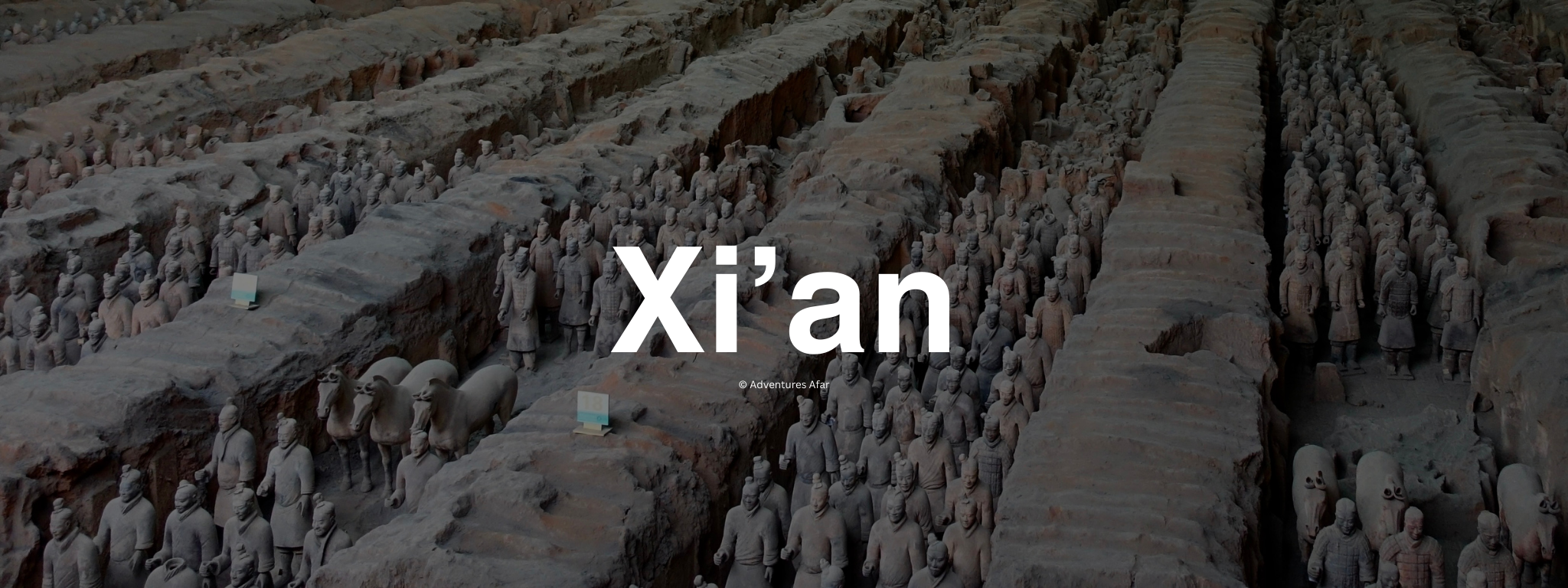
Ancient Tombs and Night Markets
The ancient capital of China and the starting point of the Silk Road, Xi’an is a city where history is written into every brick and courtyard. Known globally for the Terracotta Warriors, it also offers lively markets, atmospheric alleyways, and a city wall so broad it doubles as a cycling track. What makes Xi’an truly compelling is the balance between its headline attractions and quieter corners.
This Adventures Afar guide contains affiliate links. If you book through these, we may earn a commission at no extra cost to you.
Unmissable Highlights
-
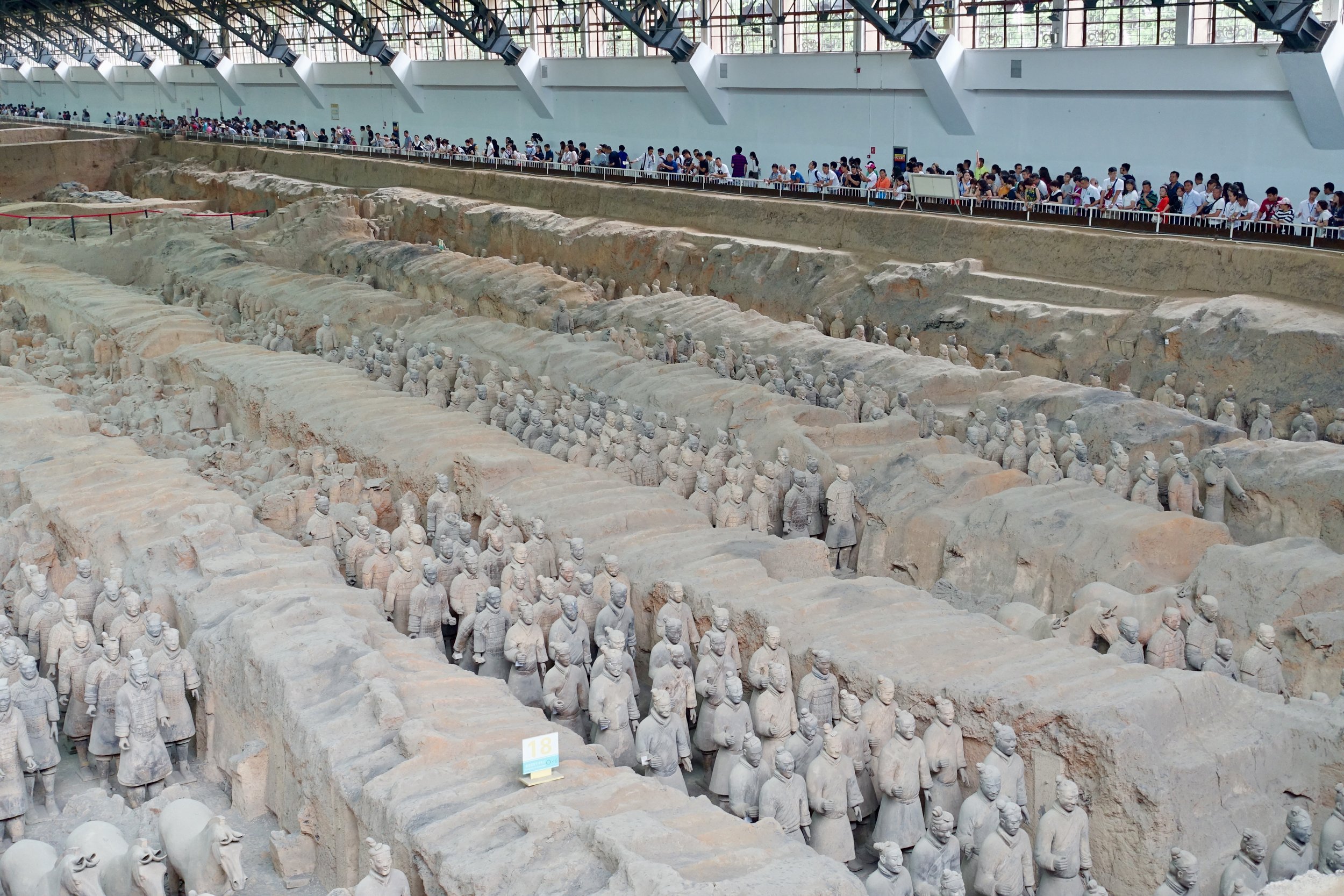
Terracotta Warriors
For many, this archaeological wonder is the primary reason to visit Xi’an. The site was famously discovered in 1974 by local farmers, revealing thousands of life-sized statues created to guard the tomb of Emperor Qin Shi Huang. While vast hangars now cover the excavation pits, seeing the sheer scale of the army in person is a highlight for any traveller researching imperial history. Visitors can peer into the trenches to see warriors, horses, and chariots in various states of restoration. It is a powerful reminder of the immense labour dedicated to the afterlife during the Qin Dynasty.
Did you know? When first unearthed, these figures were painted in brilliant reds, blues, and greens. However, the ancient lacquer reacted almost instantly to the dry air, causing the colours to flake and disappear in seconds, which is why the warriors appear stone-grey today.
-
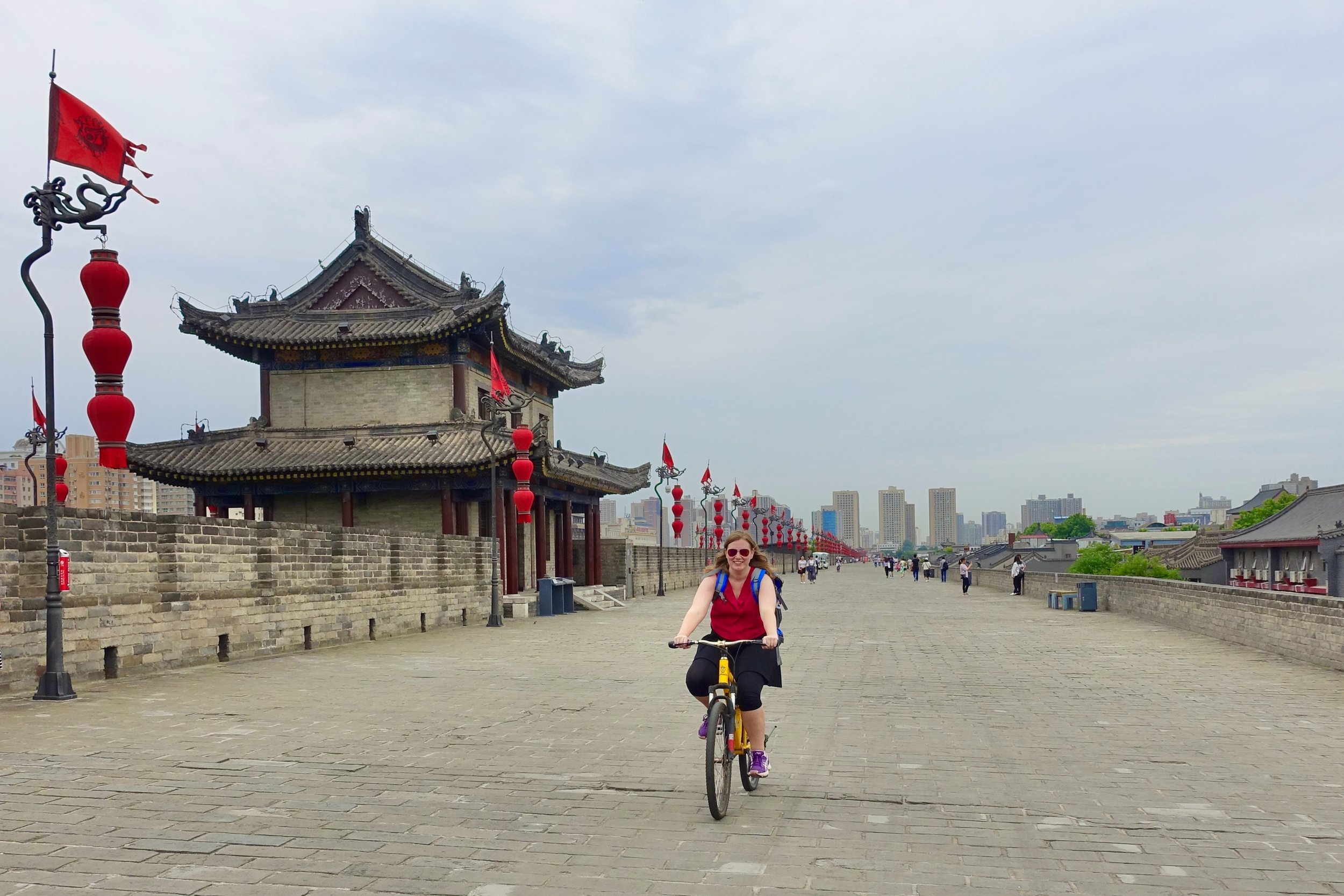
Cycling the City Wall
Encircling the old city centre, this Ming-era fortification stretches for 14 kilometres and remains one of the best-preserved structures of its kind. Hiring a bicycle is the most popular way to explore the flat, wide ramparts, offering a unique vantage point to compare the ancient heart of the city with the modern skyline. Cycling the entire loop takes around two hours, providing a sense of the city's historical scale. For a more relaxed experience, walking a shorter section near the South Gate allows you to appreciate the intricate gatehouses and watchtowers that once guarded the capital.
Did you know? The wall was constructed using a traditional mixture of glutinous rice soup and slaked lime. This "sticky rice mortar" is incredibly strong and binded the bricks so tightly that the structure has survived countless earthquakes and centuries of harsh weather.
-
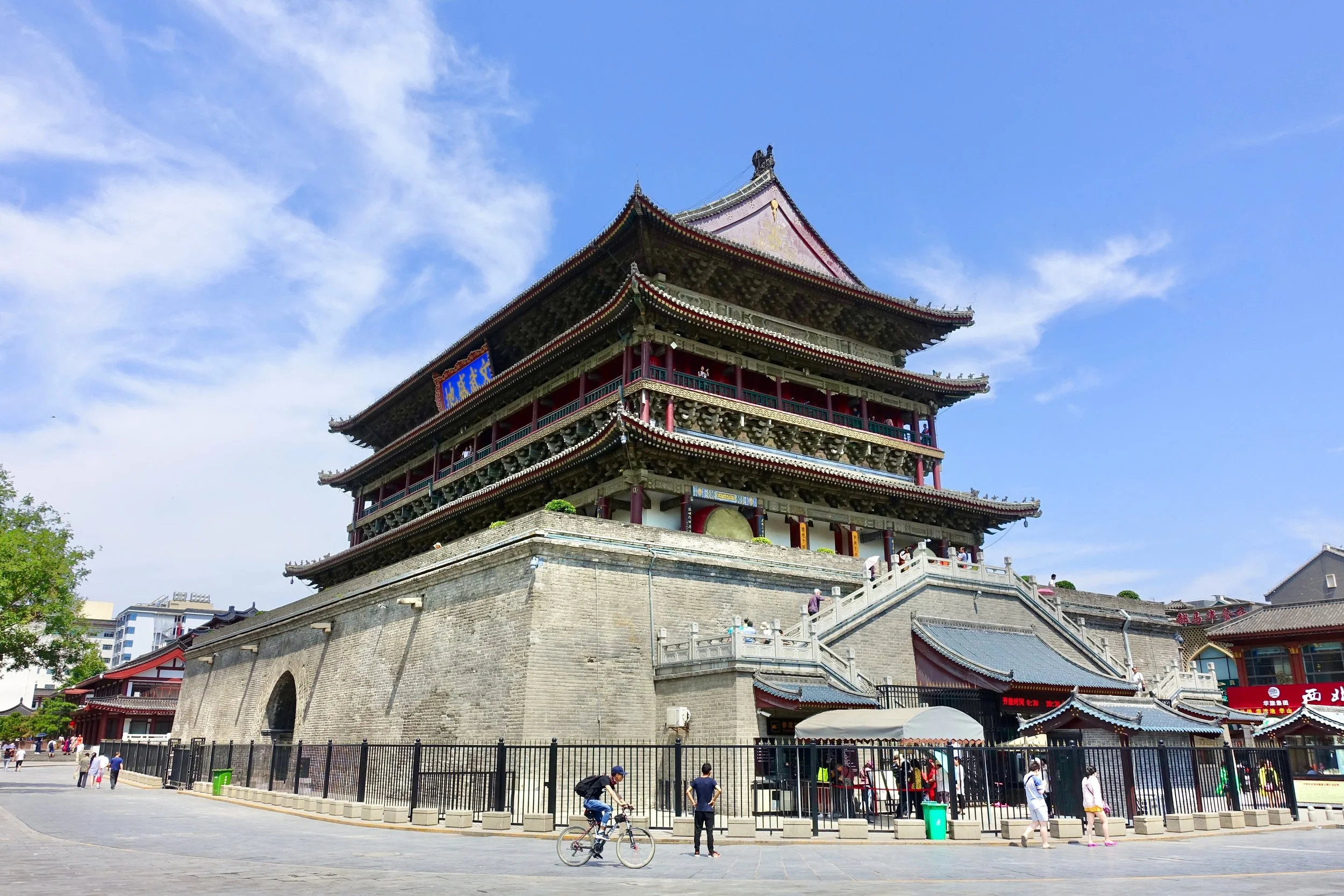
Drum Tower
Rising above the city centre, the Drum Tower is a fourteenth-century landmark that provides a striking introduction to the heritage of Xi’an. Visitors can climb its wooden staircases to admire the ornate architecture and a collection of historic drums. The building is especially atmospheric at night when the whole structure is softly lit, creating a glowing centrepiece above the bustling markets. From the upper galleries, you can look down onto the entrance of the Muslim Quarter, watching the city transition from a historic site to a vibrant, modern social hub as the sun sets over the rooftops.
Did you know? The tower houses 24 smaller drums that represent the solar terms of the traditional Chinese agricultural calendar. Historically, these were used to signal the time and warn the community of emergencies, such as fires or approaching enemy forces.
-
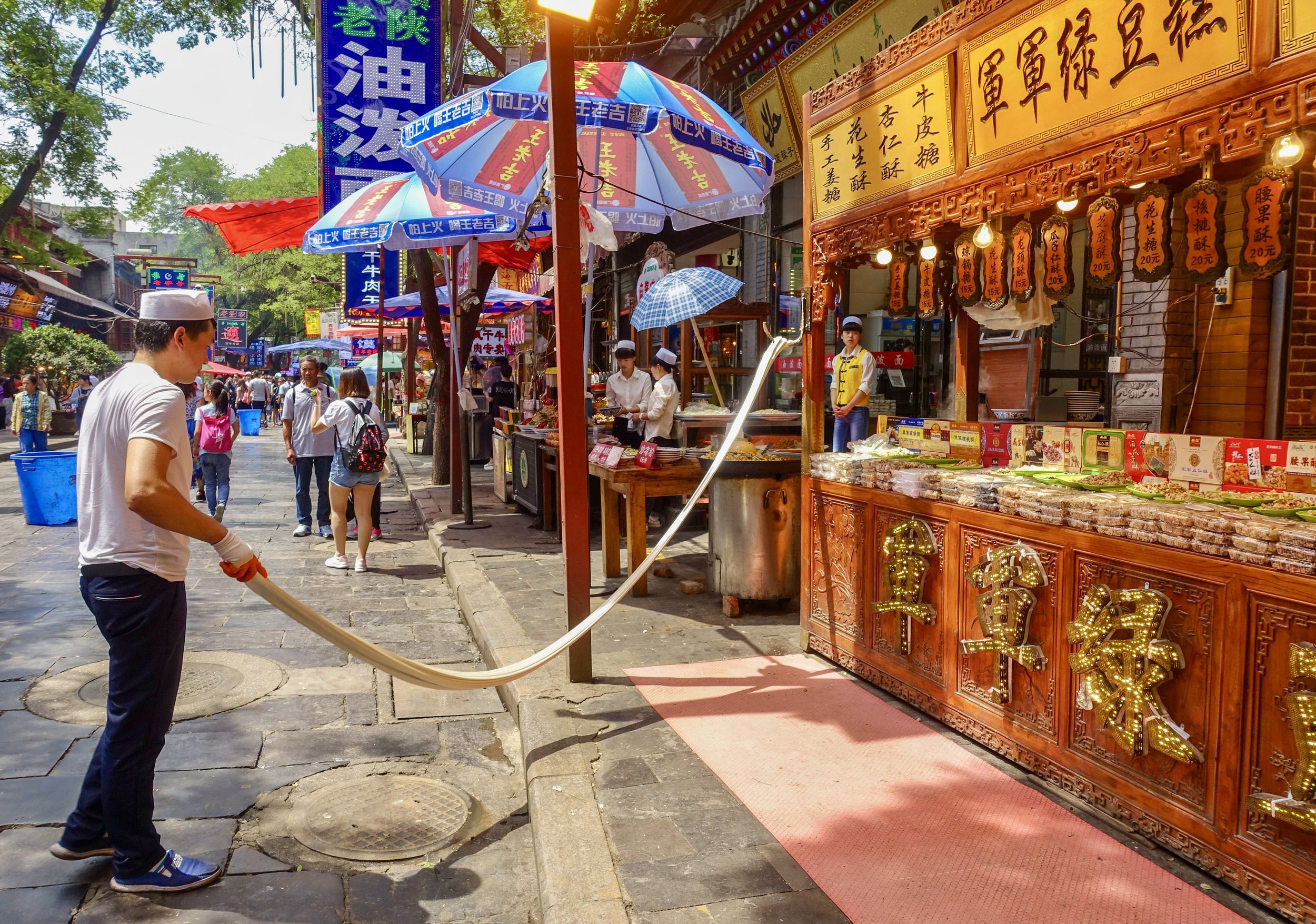
The Muslim Quarter
As evening falls, the narrow alleys of the Muslim Quarter transform into a vibrant night market filled with the aromas of grilled lamb and toasted sesame. Sampling local street food like roujiamo (Chinese burgers) or hand-pulled noodles is an essential culinary experience that reflects the city’s unique position at the end of the Silk Road. The area is a labyrinth of butcher shops, spice stalls, and hidden courtyards where the Hui community has lived for centuries. It is an ideal place for curious travellers to immerse themselves in a culture that blends Middle Eastern and Chinese traditions seamlessly.
Did you know? This area is home to the Great Mosque, founded in 742 AD. Unlike most mosques, its architecture is almost entirely Chinese style, featuring beautiful gardens and pagodas instead of the domes and minarets typically found elsewhere in the world.
Recommended
Multi-Day Itineraries
Put this guide into practice with these hand-picked small group journeys,
featuring both iconic landmarks and immersive cultural experiences.
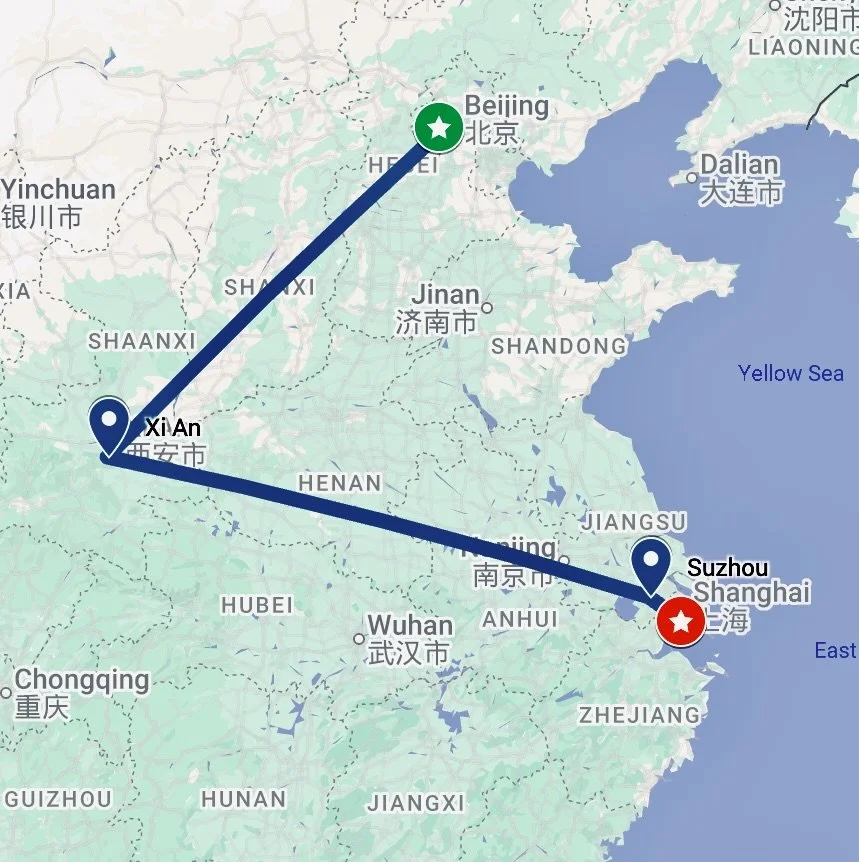
Visit the Great Wall of China from Beijing and the Terracotta Warriors in Xi'an before exploring the gardens of Suzhou and spectacular skyscrapers in Shanghai. This itinerary features essential Chinese landmarks and cultural destinations for travellers who value exploration.
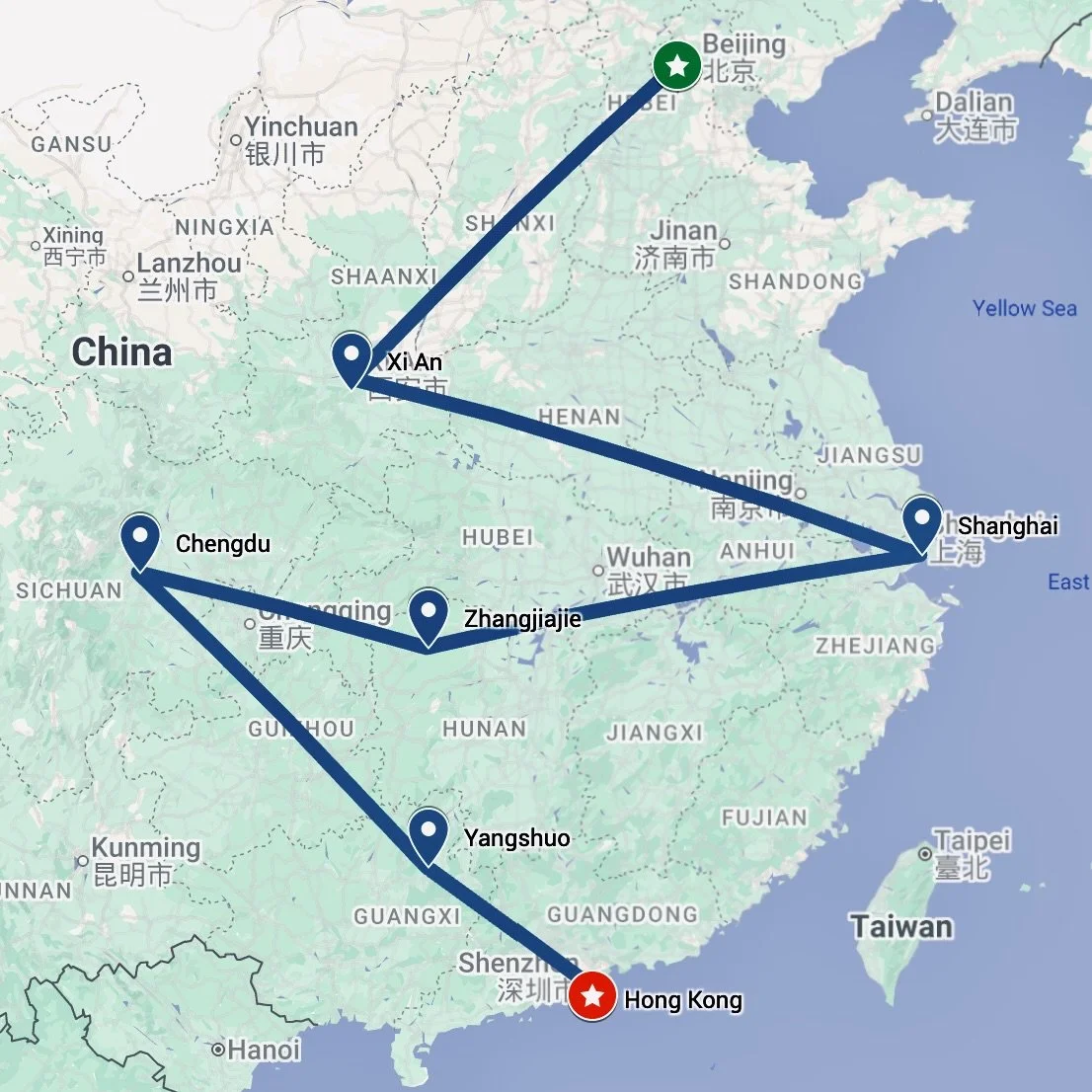
Explore the Great Wall of China from Beijing and the Terracotta Warriors in Xi'an before visiting Shanghai’s futuristic skyline, Zhangjiajie’s misty peaks, and pandas in Chengdu. This National Geographic Journey also visits Yangshuo’s karst landscapes and ends in vibrant Hong Kong.
-
Many visitors arrive via Xi'an Xianyang International Airport (XIY). However, the most efficient way to travel from other Chinese cities is via the high-speed rail network. Xi'an North Railway Station is a major hub with bullet trains servicing Beijing, Shanghai, Chengdu, and Pingyao in approximately three to six hours. These rail routes are significantly faster than flying when you factor in the journey to the city centre and airport security.
For a more traditional experience, the central Xi'an Railway Station still serves older overnight trains for those on a slower itinerary.
-
The Xi'an Metro is exceptionally clean and efficient, with English signage making it very easy to reach the airport, Bell Tower and the city walls. You can pay using a transport QR code on Alipay or by purchasing single-journey tokens at the station machines.
Public buses are very affordable, though they can be crowded during rush hour.
For areas further afield, Didi is the leading rideshare app and features an English interface that links to international cards.
Central Xi'an, especially the area within the city walls, is very pedestrian-friendly. Choosing to explore on foot or by renting a bicycle on the city wall is a fantastic way to see the sights while minimising your environmental impact.
-
Staying connected in Xi'an is easy with a local SIM card, but for most, an eSIM is the most convenient choice. Ohayu offers reliable eSIM packages for China that allow you to have data the moment you land without swapping physical cards.
Be aware that you will need a reliable VPN to access international sites like Gmail, Google, and Instagram. It is vital to install and test your VPN before you arrive in China, as the official app stores often block them once you are inside the country.
-
Cash is rarely used in Xi'an today, as almost all transactions are handled via Alipay or WeChat Pay. You can link your international Visa or Mastercard to these apps, allowing you to pay for everything from museum tickets to street food with a simple QR code scan.
While ATMs that accept international cards are available at major banks, they can be temperamental, so carrying a small amount of cash as a backup is a good idea. Exchanging USD or EUR can be a long and bureaucratic process at local banks, so withdrawing cash directly from an ATM is usually the more efficient option.
-
English is commonly found on menus and signage in major tourist areas, but the general proficiency level among locals is quite low. Most people you encounter in shops or on the street will speak little to no English, though younger people may know some basic phrases.
It is highly recommended to have a language translator app downloaded onto your phone with an offline Chinese dictionary. This will be essential for translating menus and communicating with taxi drivers or hotel staff. Locals are usually very patient and happy to help if you use a translation tool to bridge the gap.
-
No, the tap water in Xi'an is not safe for drinking without being boiled first. To stay hydrated, use a reusable water bottle with an inbuilt filter to avoid purchasing single-use plastic.
Most hotels provide a kettle in the room for boiling water, and many guesthouses offer free water refill stations. Choosing accommodation that provides these refill facilities is a great way to support sustainable travel practices while ensuring you have access to safe, clean water throughout your stay.
-
The most pleasant times to visit Xi'an are during the spring months of March to May and the autumn window from September to early November. During these periods, the weather is mild and comfortable for cycling the city walls or walking through the outdoor archaeological sites. Spring is particularly beautiful as the city’s parks and temple gardens come into bloom.
It is best to avoid the Golden Week in the first week of October and the Lunar New Year period in January or February. These public holidays bring enormous crowds that can make visiting the Terracotta Warriors a stressful experience with exceptionally long queues. The summer months of July and August can be intensely hot and humid, while winter is often cold and grey with noticeably lower air quality.
-
While many visitors rush through Xi'an in just 48 hours, staying for four to five days allows for a much deeper connection with this former imperial capital. Two days is the absolute minimum needed to see the Terracotta Warriors and the main city wall, but a longer stay encourages the kind of travel that reveals the city's true soul.
With five days, you can venture beyond the main tourist trail to explore the Daxingshan Temple or take a day trip to the sacred peaks of Mount Huashan. It also gives you the time to wander through the quieter backstreets of the Muslim Quarter during the day, rather than just visiting for the evening food rush. Slowing down ensures you can support a wider variety of local businesses and experience the city at a more relaxed pace.
-
Xi'an is generally a very safe city for international travellers, though you should always consult your government’s local travel advisory for the latest updates. Petty crime like pickpocketing can occur in busy hubs such as the Bell Tower or the narrow alleys of the Muslim Quarter, so it is sensible to stay aware of your belongings.
Common scams include unlicensed "black taxis" that overcharge customers or unlicensed tour guides who may try to steer you towards expensive souvenir shops. Use common sense by staying within local laws and avoiding drinking in excess.
It is essential to have a comprehensive travel insurance policy to cover potential medical needs or travel delays, ensuring you are protected throughout your journey.
For more practical tips and expert advice on staying safe during your trip, visit our dedicated page on Travel Safety.
-
Xi'an is a city of deep religious and historical significance, so dressing respectfully is important. When visiting the Great Mosque, both men and women should ensure their arms and legs are covered, whereas at Buddhist temples shoulders and knees shouldn’t be on show. Avoid wearing singlets, crop tops, or very short shorts in these sacred spaces. For general city exploring, smart-casual attire is the best choice.
If you are invited into a local home, it is a standard sign of respect to remove your shoes at the entrance. When visiting temples, remember to step over the raised thresholds rather than on them, and avoid pointing your feet towards statues of the Buddha or altars. Being mindful of these small traditions shows the local population that you value and respect their culture.
-
Pack versatile layers that can handle temperature shifts, especially in spring and autumn. If visiting in winter, you will need a heavy coat, thermals, and a scarf to combat the biting cold. For the humid and rainy summer months, lightweight, breathable fabrics are best, and a compact umbrella or high-quality wet weather gear will be invaluable for outdoor sightseeing.
Since Xi'an is a city made for walking and cycling, bring a pair of sturdy, comfortable shoes that have already been broken in. If your accommodation has a pool, modest swimwear is perfectly acceptable.
-
Xi'an is a paradise for food lovers, and is famous for its unique blend of Han Chinese and Hui Muslim flavours. You must try roujiamo, often called a Chinese burger, which consists of spiced meat tucked into a freshly baked flatbread. Another staple is liangpi, a refreshing dish of cold skin noodles seasoned with chilli oil and vinegar.
The Muslim Quarter is the heart of the city’s food scene, where you can find yangrou paomo, a hearty lamb stew where you crumble your own bread into the bowl. Sampling these dishes in the lively night markets is important for the local community, as many of these recipes have been passed down through families for over a thousand years.