

Karst Peaks and Riverside Charm
Nestled among some of the most dramatic limestone scenery in China, Yangshuo is a town where natural beauty takes centre stage whether shrouded in mist or sunshine. Surrounded by soaring karst peaks and set along the banks of the Li River, it draws travellers seeking both adventure and tranquillity. Boat journeys from Guilin, bamboo rafting on quiet rivers and cycling through rural lanes all reveal different perspectives of the landscape. By night, illuminated hills frame the town, while days are shaped by markets, backstreets and slow riverside walks. Yangshuo offers a balance of scenery, culture and unhurried exploration.
This Adventures Afar guide contains affiliate links. If you book through these, we may earn a commission at no extra cost to you.
Unmissable Highlights:
-
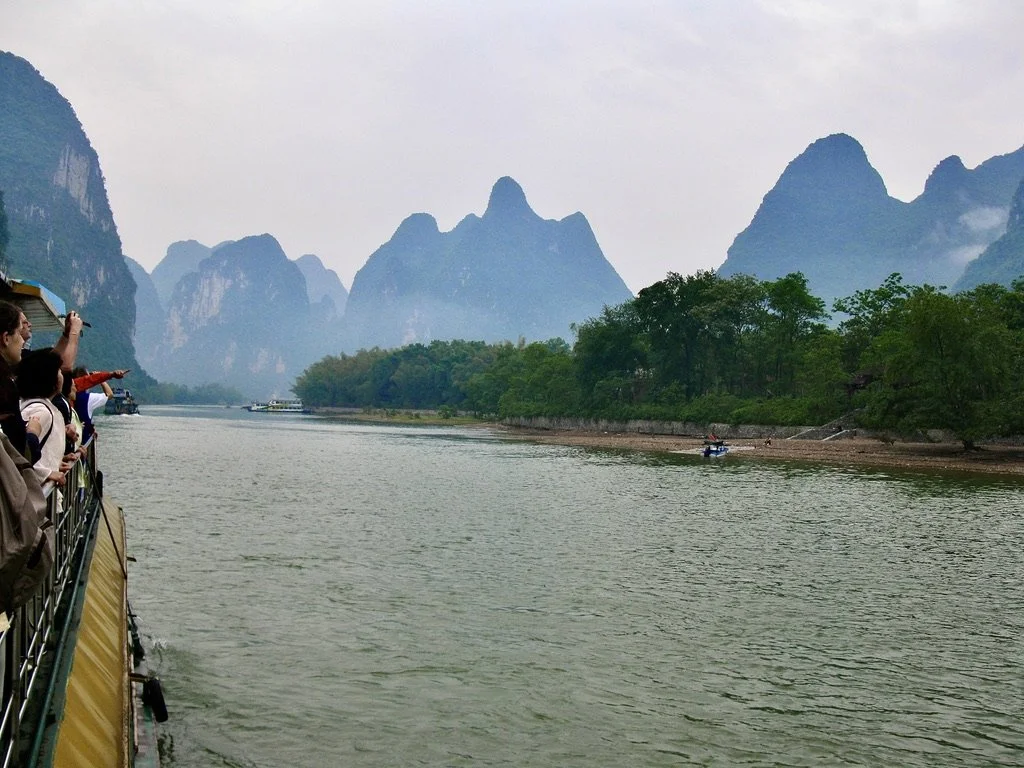
River Day Cruise
Travelling by boat from Guilin to Yangshuo is one of southern China’s most iconic scenic journeys. The cruise follows the Li River as it winds through a landscape of towering karst peaks, bamboo groves, and quiet riverside villages. Life unfolds gently along the banks, with fishermen casting nets and water buffalo cooling themselves at the water's edge. This unhurried pace allows ample time to absorb the scale and beauty of the surroundings. Arriving in Yangshuo by water feels like a fitting introduction to the region, offering a gradual and serene transition from the city into the heart of the countryside.
Did you know? The landscape between Xingping and Yangshuo is so celebrated that it features on the back of the Chinese 20-yuan note. This specific view, known as the Yellow Cloth Shoal, has epitomised natural beauty in China for centuries.
-
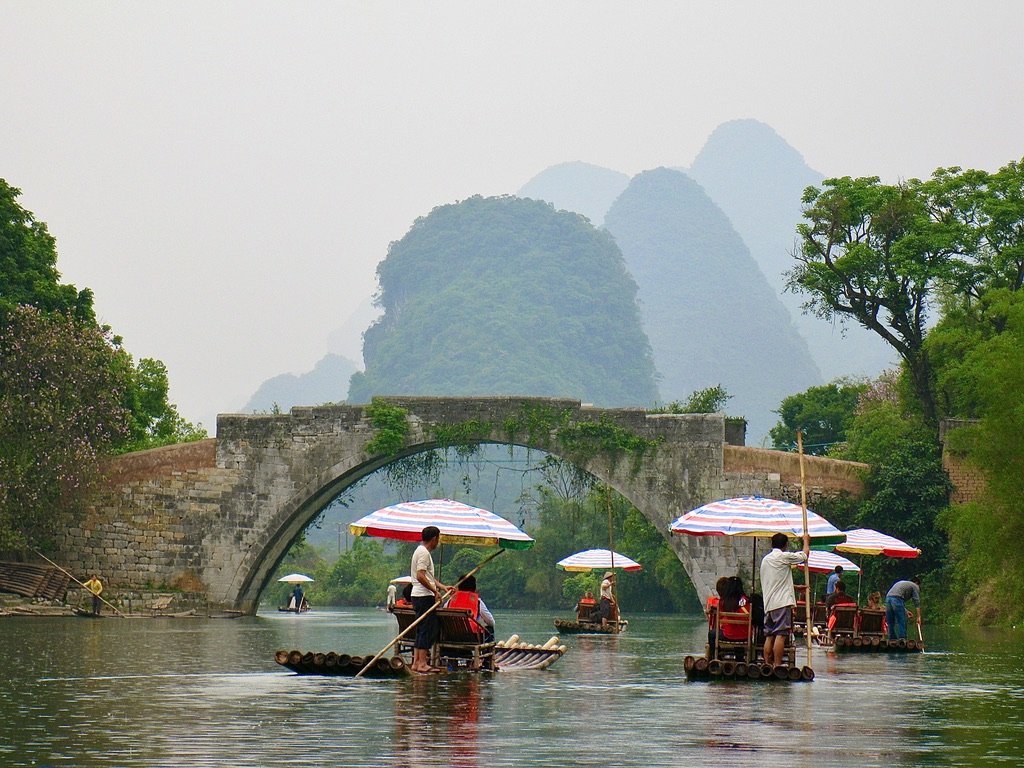
Bamboo Rafting
The Yulong River offers guests a calmer, more intimate way to experience the local scenery by bamboo raft. Sitting low to the water beneath a simple umbrella, travellers drift past rice paddies and dramatic limestone peaks that rise sharply on all sides. These rafts are handcrafted from traditional bamboo and guided with long poles, moving steadily along the shallow, crystal clear river. It is a peaceful alternative to the larger motorised boats and a chance to slow down completely. The gentle rhythm of the water and the closeness of the landscape make this one of the most memorable ways to explore Yangshuo.
Did you know? Unlike the motorised rafts on the Li River, Yulong River rafts are strictly non-motorised and punted by local boatmen. This tradition helps preserve the river's tranquillity and supports the village communities that manage the waterway.
-
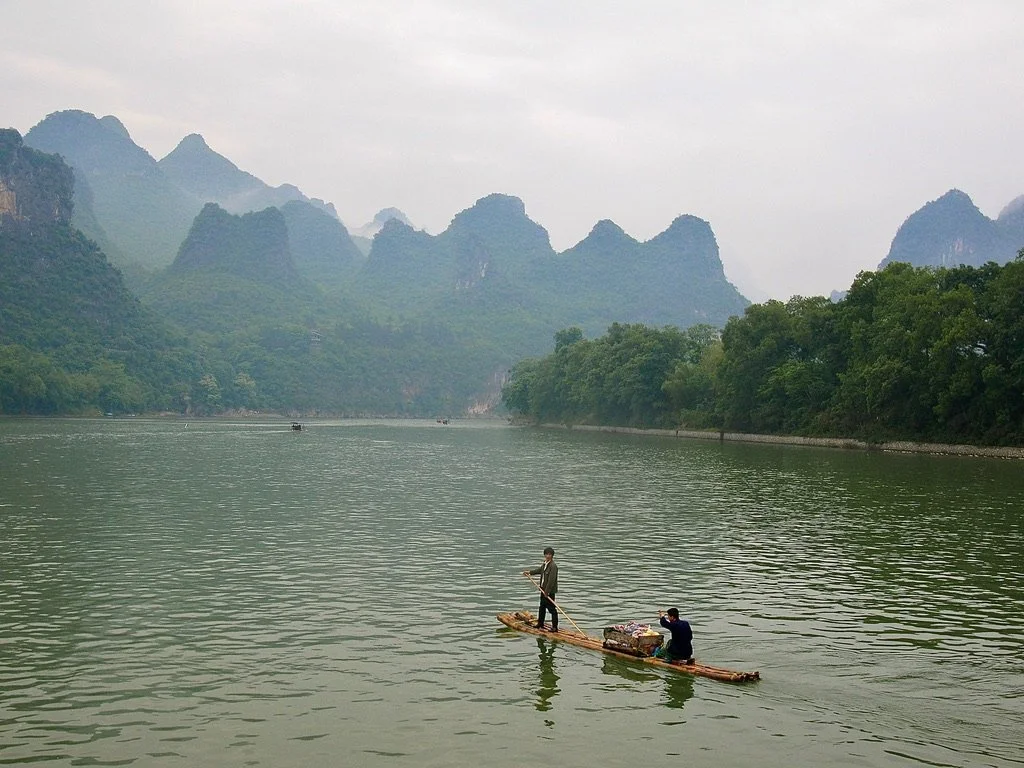
Countryside Roaming
Stepping beyond the town centre reveals a quieter side of Yangshuo that rewards unhurried exploration on foot or by bicycle. Narrow paths wind through lush farmland, past ancient stone villages, and beneath limestone peaks that feel even more imposing up close. Farmers tend their fields where water buffalo graze and daily life continues largely unchanged by modern speed. Wandering the countryside offers a deeper connection to the region’s seasonal traditions. Each turn brings a new perspective of the karst landscape, making these simple, self-guided journeys some of the most enriching moments of any visit.
Did you know? West Street has been a hub for travellers for over 1,400 years, while the nearby karst peaks made Yangshuo one of the first places in China to develop rock climbing for international visitors. Today, it remains a world-class destination for climbers of all abilities.
-

Illuminated Karst Hills
As evening falls, Yangshuo takes on a distinctly different atmosphere that blends natural beauty with a gentle, lively energy. The karst hills surrounding the town are often illuminated, their outlines glowing softly against the night sky and reflecting across the water. The streets fill with a relaxed buzz as visitors and locals gather for dinner or evening walks along the riverside. From rooftop terraces, the scenery feels almost theatrical, as though the limestone landscape itself is part of the town’s nightlife. It is a time when the town feels both vibrant and serene, perfectly showcasing the area's unique charm after sunset.
Did you know? Yangshuo is home to "Impression Liu Sanjie," the world’s largest natural theatre. Directed by Zhang Yimou, the show uses the actual Li River as its stage and twelve real karst peaks as a dramatic moonlit backdrop.
Recommended
Multi-Day Itineraries
Put this guide into practice with these hand-picked small group journeys,
featuring both iconic landmarks and immersive cultural experiences.
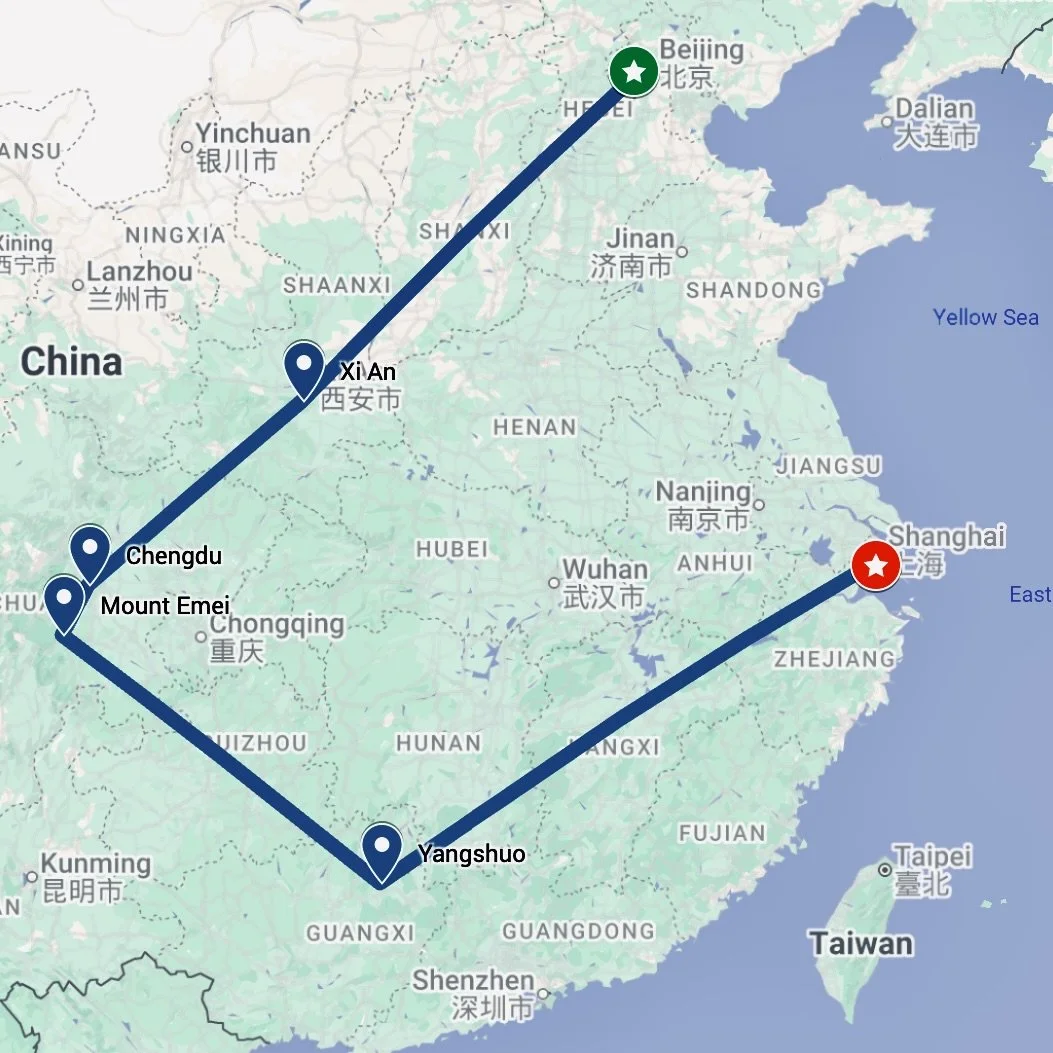
Discover China’s iconic landmarks and natural wonders. Hike the Great Wall in Beijing and witness the Terracotta Warriors in Xi'an. Visit the Leshan Giant Buddha, explore Emei Shan monasteries, and experience Yangshuo’s rural scenery before concluding your adventure in vibrant Shanghai.
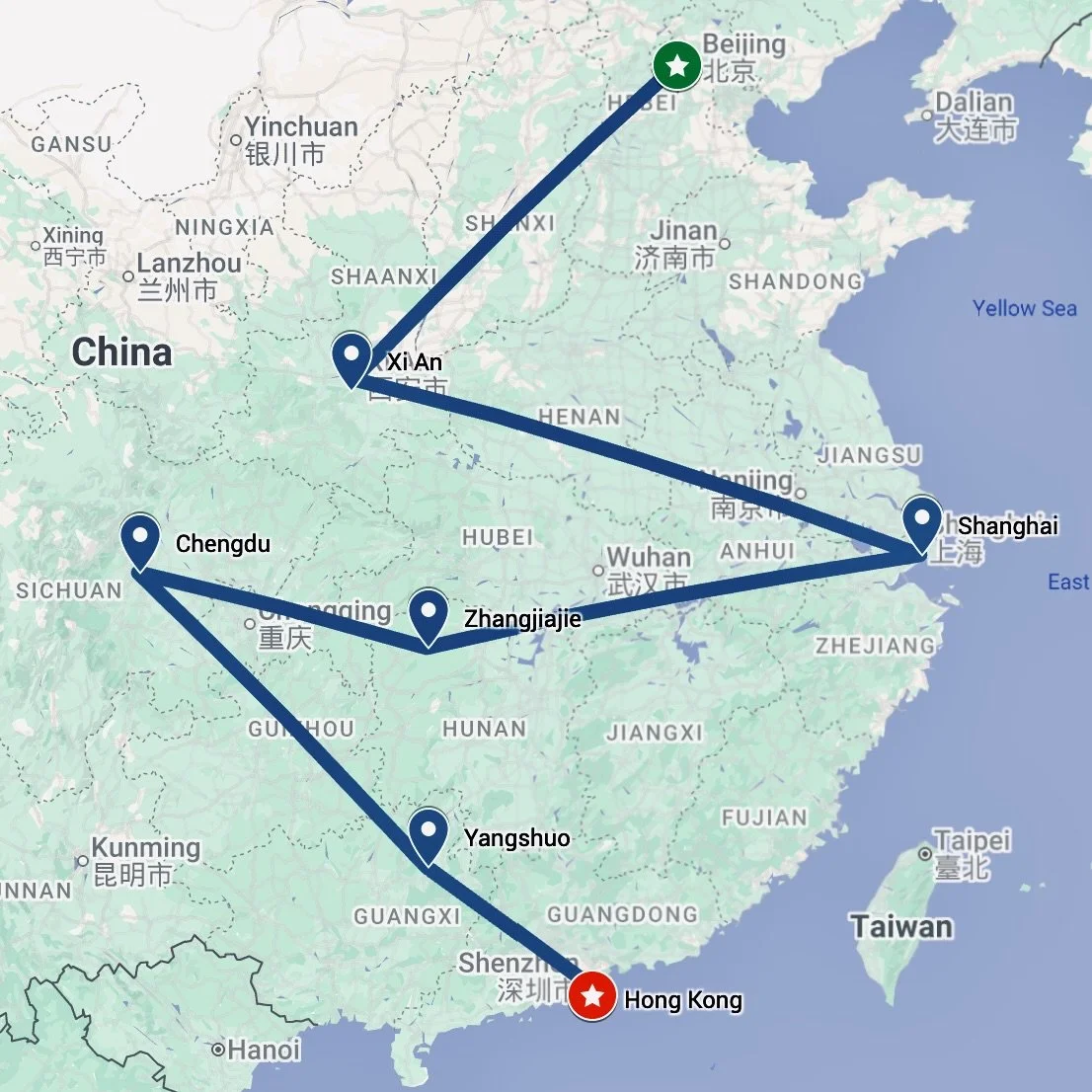
Explore the Great Wall of China from Beijing and the Terracotta Warriors in Xi'an before visiting Shanghai’s futuristic skyline, Zhangjiajie’s misty peaks, and pandas in Chengdu. This National Geographic Journey also visits Yangshuo’s karst landscapes and ends in vibrant Hong Kong.
-
The most pleasant months to visit Yangshuo are March to May and September to November. Spring offers a lush, misty atmosphere that makes the karst mountains look like a traditional Chinese ink painting, though you should expect more frequent rain. During autumn, the weather is dry and the temperatures are mild, which is perfect for cycling through the rice paddies or rock climbing.
It is wise to avoid Golden Week in early October and the Lunar New Year in January or February. During these times, the town becomes incredibly congested, prices for accommodation skyrocket, and the Yulong River can be crowded with rafts. The summer months of June to August are very hot and humid, and heavy rains can lead to the Li River flooding, which occasionally cancels boat tours.
-
Many travellers only visit Yangshuo as a quick day trip from Guilin, but staying for three to five days allows for a much more rewarding experience. Three days is the absolute minimum to see the main sights like the Li River and Moon Hill, but a longer stay encourages an unhurried pace and increased support of local communities.
With five days, there is enough time to venture further into the countryside to explore lesser known villages like Jiuxian or take a cooking class in a traditional farmhouse. Slowing down gives you the opportunity to find quiet spots away from the busy West Street and appreciate the natural pace of rural life.
-
Yangshuo is a very safe destination for international visitors, but you should always read your government's local travel advisory for the most up to date information. Petty crime is rare, though it is sensible to keep an eye on your belongings in busy areas like West Street. Some travellers have reported minor scams involving "art students" or "tea ceremonies" that end in a high bill, so be cautious if invited to a second location by strangers. Use common sense by not breaking local laws and avoiding drinking in excess.
While the town is laid back, it is essential to have a comprehensive travel insurance policy in place. This is especially important if you plan on participating in outdoor activities like rock climbing, hiking, or renting scooters.
For more practical tips and expert advice on staying safe during your trip, visit our dedicated page on Travel Safety.
-
Yangshuo has a relaxed, backpacker friendly vibe, but modest dress is still important to show respect for the local population. When sightseeing or walking around town, smart casual clothing is ideal. If you are visiting religious monuments or local temples, ensure your shoulders and knees are covered. Avoiding singlets, crop tops, and very short shorts is appreciated by the community.
If you are lucky enough to be invited into someone’s home, it is a standard sign of respect to remove your shoes at the door. When out in the countryside, a friendly "ni hao" goes a long way. Being mindful of your volume and behaviour in quiet villages ensures that travellers remain welcome in these traditional areas.
-
Pack light, breathable clothing for the humidity, but bring a sturdy pair of walking shoes or trainers for the uneven trails in the countryside. If you are visiting in winter, particularly from December to February, you will need plenty of warm clothes as the damp cold can feel quite biting. For the wetter months between April and August, high quality wet weather gear or a durable umbrella is a must.
If you intend to swim in hotel pools or participate in water activities, modest swimwear is expected to avoid offending conservative locals. A reusable water bottle and a good hat for the strong sun are also essential items for your day pack.
-
The most famous local dish is beer fish (piyu), which is typically made with fresh carp from the Li River braised in a savoury sauce of local beer, tomatoes, and peppers. This dish is a proud part of Yangshuo's identity and can be found at almost every restaurant in town. Trying it is a great way to support the local fishing and farming communities.
Explore the smaller side streets away from West Street for Guilin rice noodles, a cheap and delicious breakfast staple. For a more authentic experience, visit the local morning markets where you can find fresh pomelos and water chestnuts. Sampling these regional flavours is not only a highlight for the taste buds but also an important way to connect with the agricultural heritage of the region.
Essential Insights
-
Many travellers fly into Guilin Liangjiang International Airport (KWL) and then take a bus or private car to Yangshuo. However, the high-speed rail network is a fantastic alternative. Yangshuo Railway Station is located in nearby Xingping and services high speed trains from major hubs like Hong Kong. Taking the high-speed train between cities is often faster and more comfortable than flying once you factor in airport transfers.
For a more scenic arrival, many choose the five hour boat cruise down the Li River from Guilin. While this is a slower method, it offers an incredible introduction to the karst landscape and is a relaxed way to travel.
-
The best way to get around Yangshuo is on two wheels. Renting a bicycle or an e-bike is very affordable and allows you to navigate the narrow paths through the rice paddies where cars can’t go. Most hotels can arrange rentals and provide simple maps of the countryside routes. For longer distances, local buses run regularly between Yangshuo and nearby towns like Xingping or Fuli.
Didi is the main rideshare option and is very convenient for reaching attractions further afield. The app features an English interface and links to international cards. Traditional taxis are also available, but ensure the meter is used or agree on a price beforehand.
Much of the town centre is very pedestrian friendly, making it easy to visit West Street and the riverside paths on foot.
-
While you can buy a local SIM card at the airport or in town, an eSIM is generally the easiest option for travellers. Ohayu offers reliable eSIM packages for China that allow you to stay connected the moment you arrive without needing to find a physical shop.
You will need a VPN to access international websites and apps like Gmail, Google, and Instagram. It is vital to download and test your VPN before you enter China, as the official websites are blocked within the country. Having a reliable connection is essential for using translation apps and navigating the local bus routes.
-
Mobile payment is king in Yangshuo, with Alipay and WeChat Pay being used for everything from market snacks to hotel bills. You can link your international Visa or Mastercard to these apps, which makes daily transactions seamless. ATMs that accept international cards can be found on West Street and at major bank branches.
While cash is still accepted, it is becoming less common, so having your mobile payment apps set up before you arrive is a priority. Exchanging USD or EUR at a bank is a time-consuming process, so withdrawing local currency from an ATM is a much better back up plan. Most larger hotels and upscale restaurants will accept international credit cards, but smaller vendors will not.
-
As Yangshuo has been a popular destination for international travellers for decades, English is more widely spoken here than in many other parts of rural China. You will find English menus and signs in most restaurants and guesthouses around West Street, and many shop owners speak basic conversational English.
However, once you head out into the smaller villages in the countryside, proficiency drops significantly. It is always a good idea to have a language translator app on your phone to help with more complex questions. Learning a few basic phrases in Mandarin will always be met with a smile and is a great way to show respect to the locals you meet.
-
No, the tap water in Yangshuo is not safe to drink. To minimise your use of one time use plastic, use a reusable water bottle with an inbuilt filter. This allows you to stay hydrated while exploring the countryside without constantly buying plastic bottles.
Many guesthouses and hotels provide free water refill stations or a kettle in the room for boiling water. Choosing accommodation that offers these refill options is a simple way to reduce the environmental impact of your visit to this beautiful region.