
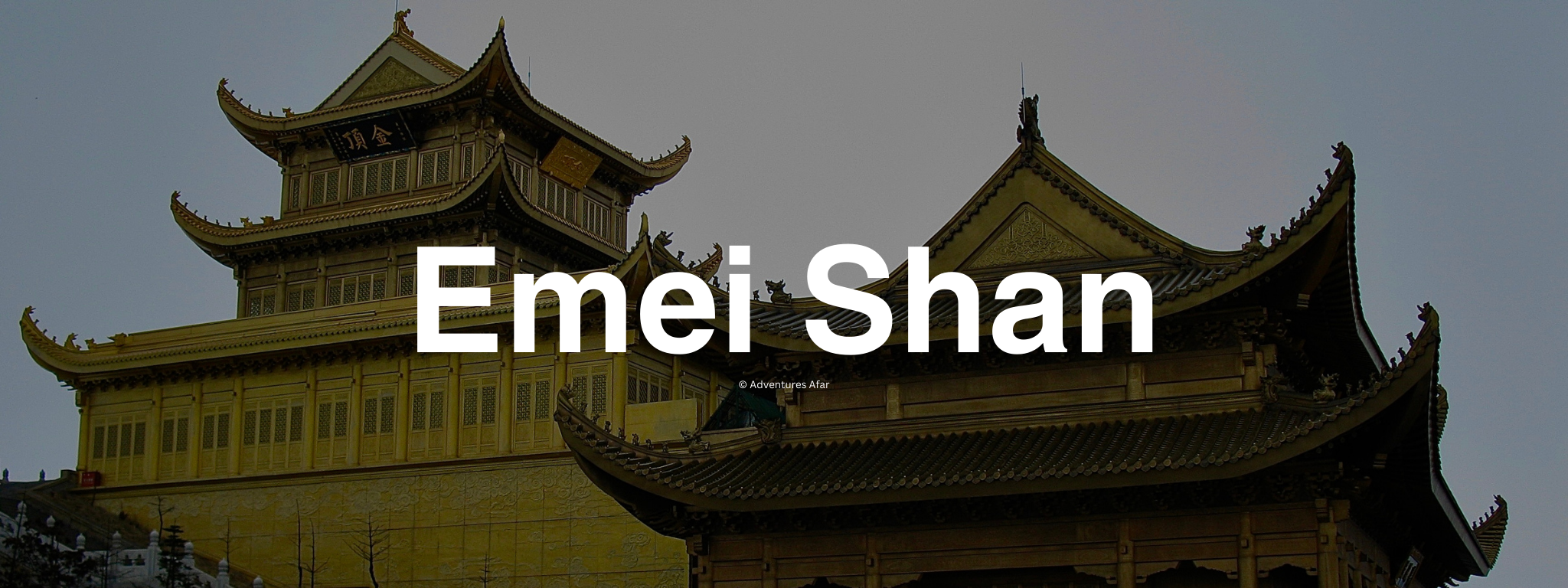
Golden Temples and Sacred Peaks
Emei Shan offers a rare blend of spiritual depth, natural beauty and cultural significance in its role as a UNESCO World Heritage site. As one of China’s four sacred Buddhist mountains, it draws visitors seeking temple life, forest scenery and moments of quiet reflection. Ancient monasteries sit among waterfalls on the lower slopes, while the Golden Summit delivers unforgettable views above the clouds. Whether you arrive as a pilgrim, a hiker or a curious traveller, Emei Shan rewards the visit with serenity, perspective and a strong sense of place within Chinese history.
This Adventures Afar guide contains affiliate links. If you book through these, we may earn a commission at no extra cost to you.
Unmissable Highlights
-
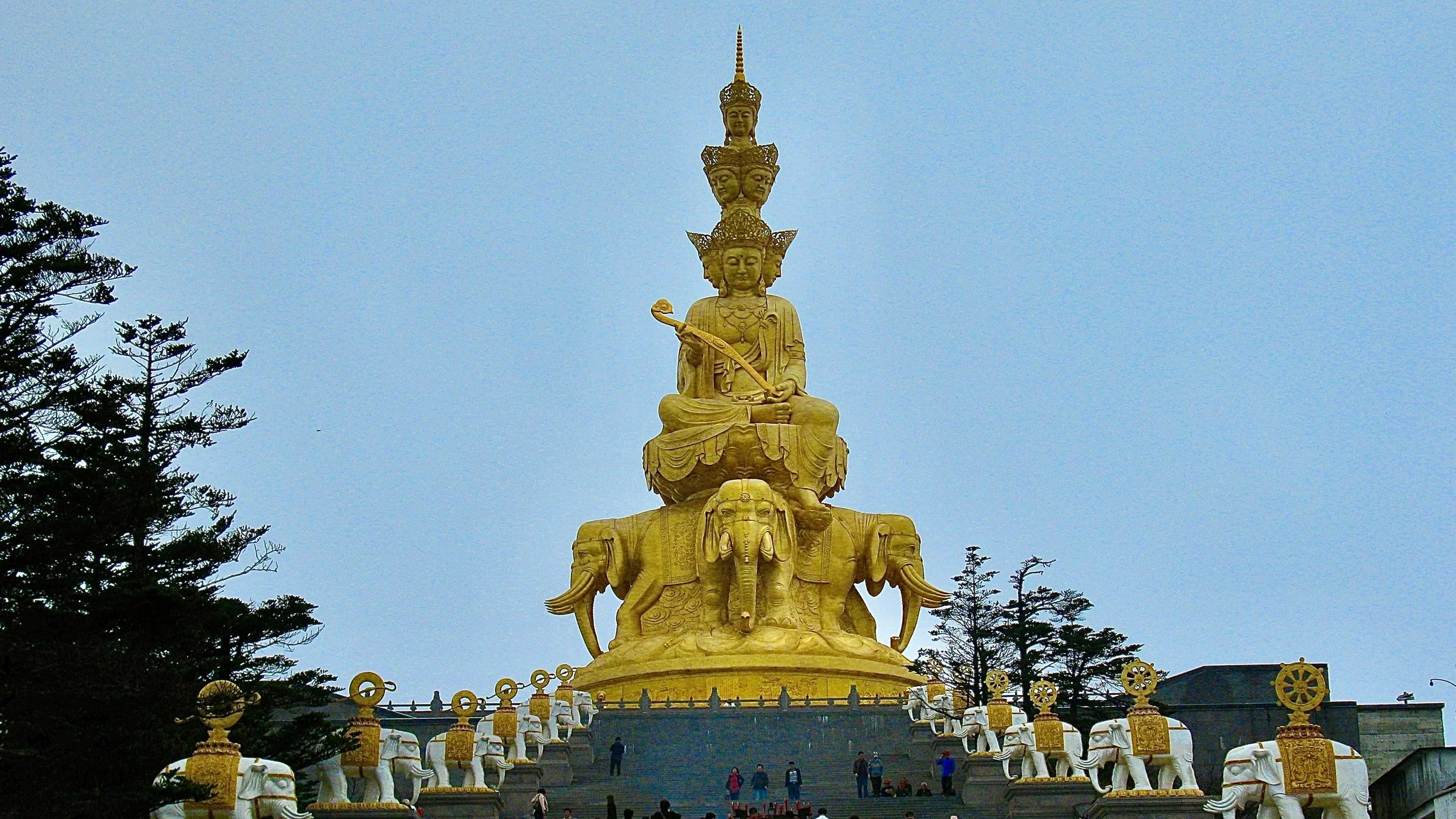
Emei Shan's Golden Summit
The ascent to the 3,077-metre Golden Summit is a feat of both ancient engineering and physical endurance. While cable cars ease much of the climb, the final stretch still involves hundreds of steep stone steps. Reaching the peak is worth the effort as the immense, multi-faced statue of Samantabhadra presides over golden roofs that glow against a shifting sea of clouds. On clear days, views stretch endlessly toward the Tibetan Plateau while chanting monks and drifting incense create an atmosphere of profound reverence and stillness.
Did you know? The summit is famous for the "Buddha’s Halo," a rare optical phenomenon where the sun projects your shadow onto the clouds below, encircled by a rainbow-like ring. This sight was once believed to be a sign of divine enlightenment.
-
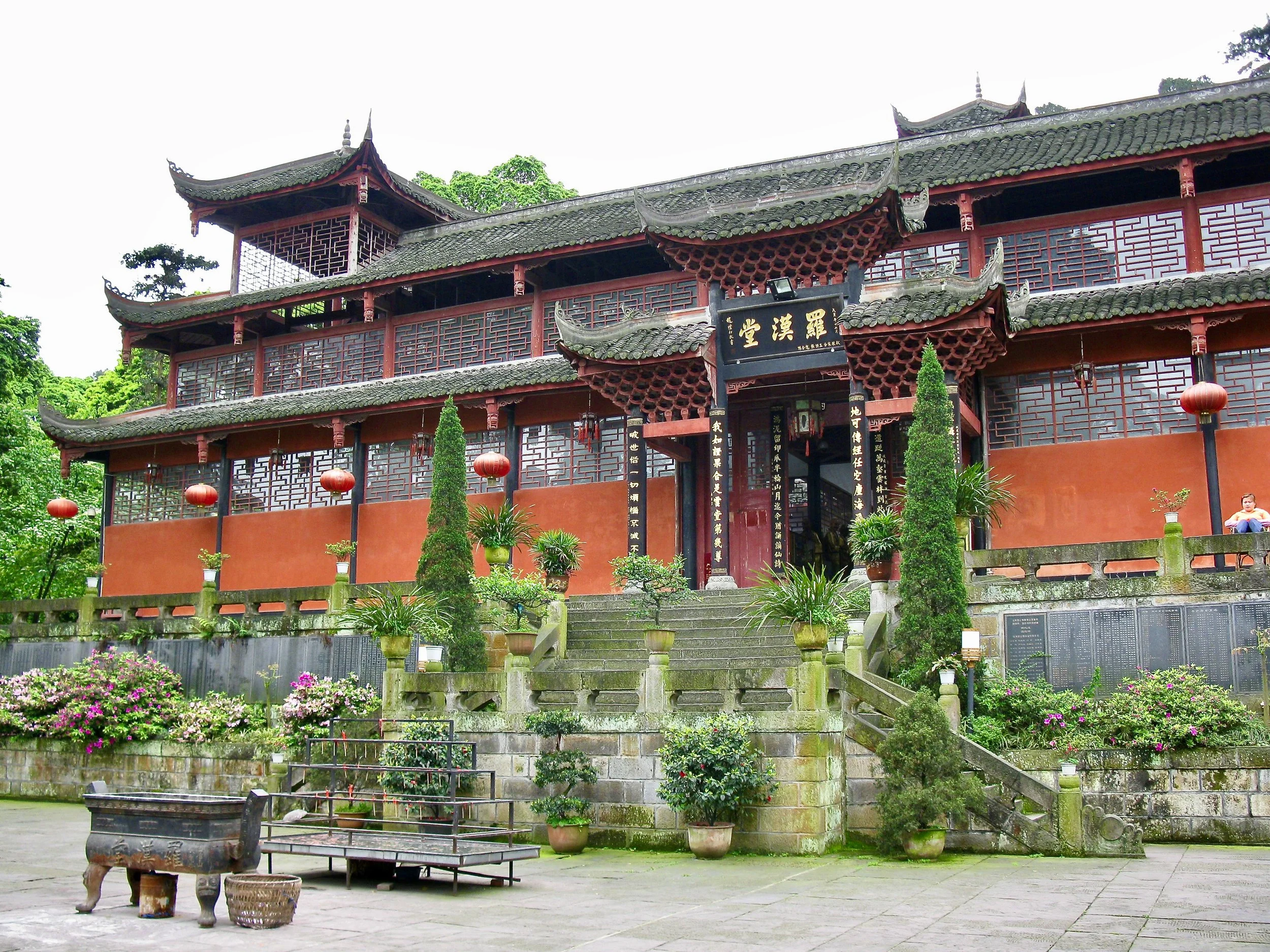
Sacred Buddhist Rituals
As one of China’s four sacred Buddhist mountains, Emei Shan is home to over 30 temples woven through dense forests and misty valleys. Along the lower slopes, monasteries like Baoguo and Wannian sit near the rushing streams and waterfalls of the Qingyin Pavilion. Incense scented air and melodic chanting create a calming rhythm for travellers drifting between grand halls and wooden pavilions. Stepping away from the main thoroughfares into secluded, forested corners reveals the stillness that has drawn pilgrims here for centuries.
Did you know? Devout pilgrims still perform the traditional ritual of bowing every three steps during the ascent. This profound act of devotion can take several days to complete, and honours the mountain’s status as the site of the first Buddhist temple built in China.
Recommended
Multi-Day Itineraries
Put this guide into practice with these hand-picked small group journeys,
featuring both iconic landmarks and immersive cultural experiences.
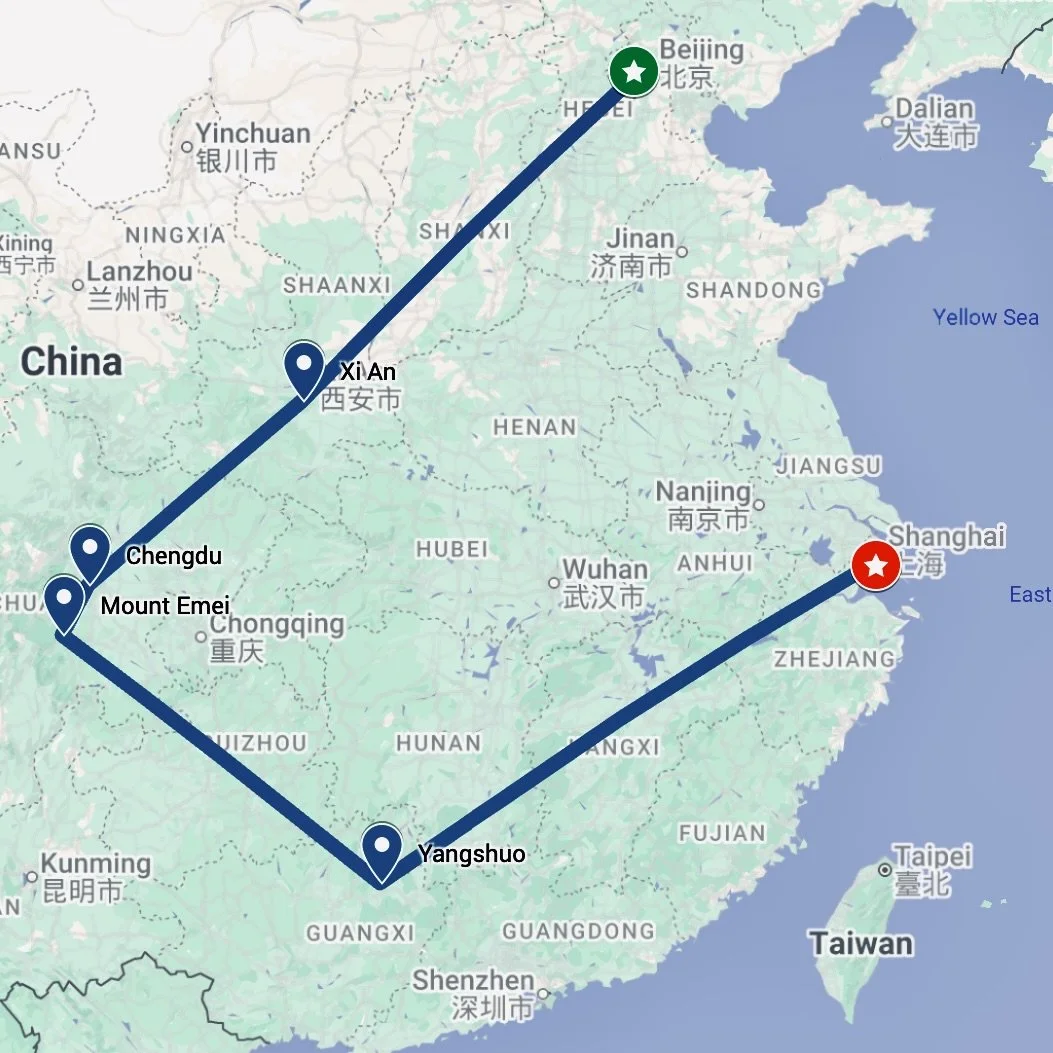
Discover China’s iconic landmarks and natural wonders. Hike the Great Wall in Beijing and witness the Terracotta Warriors in Xi'an. Visit the Leshan Giant Buddha, explore Emei Shan monasteries, and experience Yangshuo’s rural scenery before concluding your adventure in vibrant Shanghai.
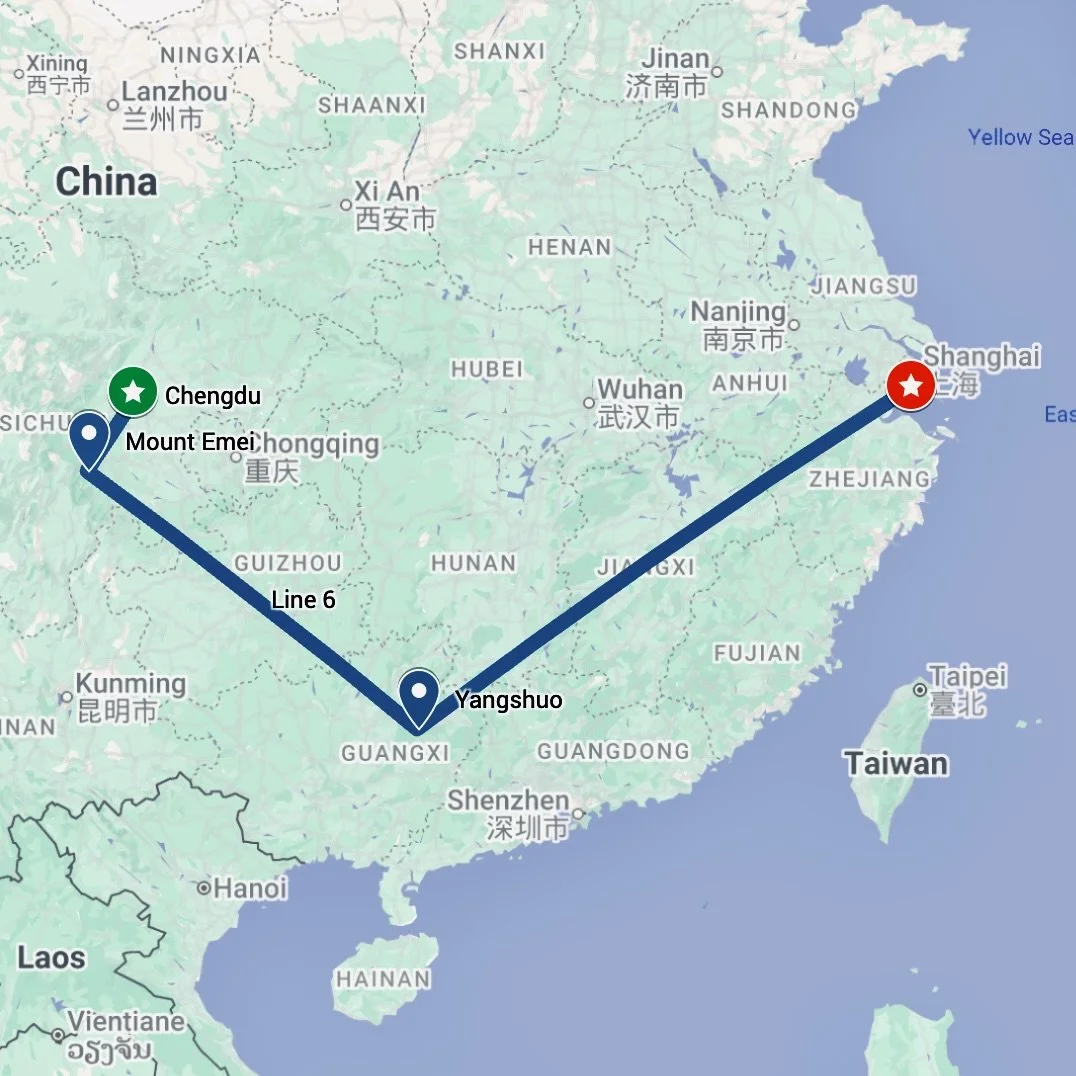
Explore China’s diverse landscapes departing from cosmopolitan Chengdu. Visit the Giant Buddha of Leshan and the ancient monasteries of Emei Shan. Immerse yourself in the scenery of Yangshuo with a bamboo raft journey before concluding in the vibrant city of Shanghai.
-
To experience Emei Shan with the clearest skies and most comfortable weather, aim for April to June or September to November. Spring is a highlight as the mountain’s famous azaleas bloom in massive carpets across the slopes. Autumn brings crisp, stable air and vibrant forest colours, which significantly increases your chances of witnessing the sea of clouds or the sunrise from the Golden Summit.
It is best to avoid the first week of October (Golden Week) and the Chinese New Year period at all costs. These public holidays bring huge numbers of pilgrims and tourists, leading to long queues for the cable cars and crowded trails. Summer (July and August) is often the rainy season; while it is a great escape from the heat of the plains, the mountain is frequently shrouded in a thick mist that can hide the views for days. Winter is beautiful and quiet, but the stone paths can be dangerously icy and require specialist spiked overshoes.
-
While many visitors rush the ascent in a single day using buses and cable cars, a two to three-day stay is ideal for a truly immersive experience. Staying on the mountain allows you to settle into the monastic rhythm and enjoy the peaks in peace once day-trippers have departed, ensuring you don’t miss the sunset and sunrise, considered among the most spiritual highlights of the climb. Additionally, choosing smaller mountain guesthouses supports a more responsible style of travel while deeply engaging with the region’s natural beauty and Buddhist heritage.
This extended timeframe grants you the freedom to explore lower forest trails and tranquil temples like Xianfeng, where few tourists venture. For the most dedicated explorers, this extra time allows for the legendary multi-day hike from the base to the summit. This approach transforms a standard sightseeing excursion into a genuine discovery of one of China’s most significant sacred landscapes.
-
Emei Shan is a very safe destination, but it is always wise to check your government's local travel advisory for any recent updates. The most common safety concern here is actually the local macaque monkeys. They are incredibly bold and will not hesitate to snatch food, plastic bags, or loose items from your hands. The best practice is to keep all food hidden in your backpack and avoid any direct eye contact or interaction with them.
Physically, the mountain demands respect. The stone steps can be very slippery after rain or mist, so good shoes and a steady pace are essential. Use common sense by staying on the marked paths, and following all local park regulations. Since you will be in a remote mountain environment, always ensure you have a comprehensive travel insurance policy that covers hiking and medical emergencies.
For more practical tips and expert advice on staying safe during your trip, visit our dedicated page on Travel Safety.
-
As Emei Shan is a highly sacred Buddhist site, showing respect for the religious community is vital. When visiting the temples or the Golden Summit, please ensure your shoulders and knees are covered. This applies to everyone, so it is best to avoid sleeveless tops or short shorts when you are on holy ground. Dressing modestly is a simple but meaningful way to show respect for the pilgrims and monks who call the mountain home.
If you are staying in a monastery guesthouse or entering a private temple hall, remember to remove your shoes at the door. You will often see devotees performing prostrations during your visit. It is polite to observe quietly and avoid walking directly in front of them or using flash photography. Being mindful of your noise level and your attire helps maintain the peaceful, meditative atmosphere that makes Emei Shan so special.
-
Your most important item will be a pair of sturdy, comfortable walking shoes with excellent grip for the numerous stone steps. Pack in layers, as the temperature at the Golden Summit can be ten to fifteen degrees cooler than at the base. Even in summer, a lightweight fleece or windbreaker is essential for the early morning or evening. Leave any revealing clothing like singlets or very short shorts at home, as they are not suitable for temple visits.
If you plan on visiting the hot springs at the mountain’s base, remember to bring your swimwear, though modest styles are the norm. For the rainy summer months, a high-quality raincoat or poncho is a must. If you visit in winter, you will need serious warm gear, including thermals, gloves, and perhaps a pair of ice grips for your shoes to handle the frozen sections of the trail safely.
-
A visit to Emei Shan is the perfect time to try a traditional Buddhist vegetarian feast. Many of the temples, such as Baoguo and Wannian, serve elaborate meals where tofu and local vegetables are transformed into dishes that mimic meat. It is a tradition that has supported the monastic community for centuries and is an insightful way to experience local culture. At the base of the mountain, Emei smoked duck is the local specialty, known for its deep, aromatic flavour.
For a more casual taste, try the bean curd jelly (doufu hua) found in the small eateries around the town. These dishes are important because they rely on the fresh mountain water and local produce grown on the surrounding slopes. Supporting these local food traditions helps preserve the culinary heritage of the region and ensures your travel spend directly benefits the local farmers and small business owners.
Essential Insights
-
Emei Shan is exceptionally well connected to Chengdu, making it one of the easiest sacred mountains to reach in China. Most travellers opt for the high speed rail, which is the most eco-friendly and efficient choice. Sleek, frequent trains run from Chengdu East (Chengdudong) or Chengdu South (Chengdunan) directly to Emei Shan Railway Station. The journey takes roughly ninety minutes and drops you just a short bus or taxi ride away from the mountain entrance.
If you are coming straight from the airport, look for the direct high speed services from Chengdu Shuangliu International Airport (CTU), though these are less frequent than city centre departures. Of note, the intercity rail is usually significantly faster and greener than flying between regional hubs.
For those who prefer the bus, coaches leave from Chengdu’s Xinnanmen Bus Station and take about two and a half to three hours. These usually arrive at the Baoguo Temple bus centre, right at the foot of the mountain.
-
Navigating the mountain is a blend of bus rides, cable cars, and traditional hiking. The official sightseeing buses are the primary way to move between different levels, running from the base up to Leidongping, the highest point accessible by road. From Leidongping, you must walk about thirty minutes through the forest to reach Jieyin Hall. This is where the Golden Summit Cable Car departs, whisking you to the peak in about five minutes. If you have the energy, you can skip the cable car and hike this final three kilometre stretch, which involves a steep climb of about two hours.
For those who truly want to discover the mountain’s hidden corners, it is possible to hike from the base to the summit. This is a legendary trek of over sixty kilometres, usually spread over two or three days. The path is a continuous series of well maintained stone steps that lead you through mist-shrouded forests and past ancient monasteries. If the full climb sounds too daunting, a great middle ground is to take the bus halfway and hike between Wannian Temple and the higher stations.
Down at the mountain’s base, local taxis and Didi are the easiest way to get around town. You can book a Didi through the Alipay app, which handles the payment automatically. The area around Baoguo Temple is also highly pedestrian friendly, with shops, restaurants, and guesthouses all within easy walking distance.
-
Connectivity on the mountain is generally quite good, but you’ll need to navigate China’s internet restrictions. While you can get a local SIM at the airport in Chengdu, an eSIM is often the most convenient choice. Ohayu is a reliable eSIM option that you can set up before you arrive.
Keep in mind that to access international services like Google, Gmail, and Instagram, you will need a VPN installed on your devices before you enter the country. Some roaming eSIMs can bypass the Great Firewall, but having a VPN as a backup is always recommended for using hotel or monastery Wi-Fi. This ensures you can still use translation tools and maps to find your way around the mountain paths.
-
Emei Shan is almost entirely cashless, with Alipay and WeChat Pay being the standard for everything from park tickets to bowls of noodles. You can link your international Visa or Mastercard to these apps, which is by far the easiest way to manage your payments.
There are ATMs in the town at the base, but they disappear once you start heading up the mountain. Most of the guesthouses and small stalls on the trails only accept mobile payments or cash. It is a good idea to carry some cash as a backup for emergencies, but your phone will be your primary way to pay. Exchanging foreign currency in the local town is a slow, difficult process, so try to have your digital payment apps ready before you arrive.
-
You will find English signs at the main bus stations and major temples, but the level of English spoken by locals and monks is usually very low. Most people communicate in Mandarin or the local Sichuan dialect. While the locals are patient, having a few digital tools will make your journey much easier.
We recommend downloading a language translator app that offers offline translation. The ability to translate signs or menus through your phone's camera is particularly helpful on the mountain. Also, have a screenshot of your destination names or guesthouse address in Chinese characters. Showing these to a bus driver or a fellow hiker will help you navigate the mountain with much more confidence.
-
No, the tap water at Emei Shan is not safe for drinking directly. Even in the mountain monasteries, it is standard practice to boil water before use. To help reduce the amount of single-use plastic on the mountain, we recommend bringing a reusable water bottle with an inbuilt filter. This allows you to fill up from the taps in your guesthouse while ensuring the water is perfectly safe to consume.
If you don't have a filter, you can buy larger five-litre bottles at the base to refill your smaller flask, which is much better for the environment than buying many small bottles. Most temples and guesthouses provide large thermoses of boiled water for guests, so choosing accommodation with free water refill options is an easy way to stay hydrated responsibly while you explore the trails.