

Karst Scenery and Lakeside Strolls
Kunming is known for its mild climate, relaxed pace, and as the gateway to Yunnan’s most famous landscapes. Nicknamed the City of Eternal Spring, it attracts travellers who enjoy leafy boulevards, lakeside walks, and easy access to dramatic natural scenery. The city makes an ideal base for exploring the surrounding countryside, from karst stone formations to highland lakes. With its growing café culture and slower rhythm compared to China’s megacities, Kunming invites visitors to linger rather than rush.
This Adventures Afar guide contains affiliate links. If you book through these, we may earn a commission at no extra cost to you.
Unmissable Highlights
-
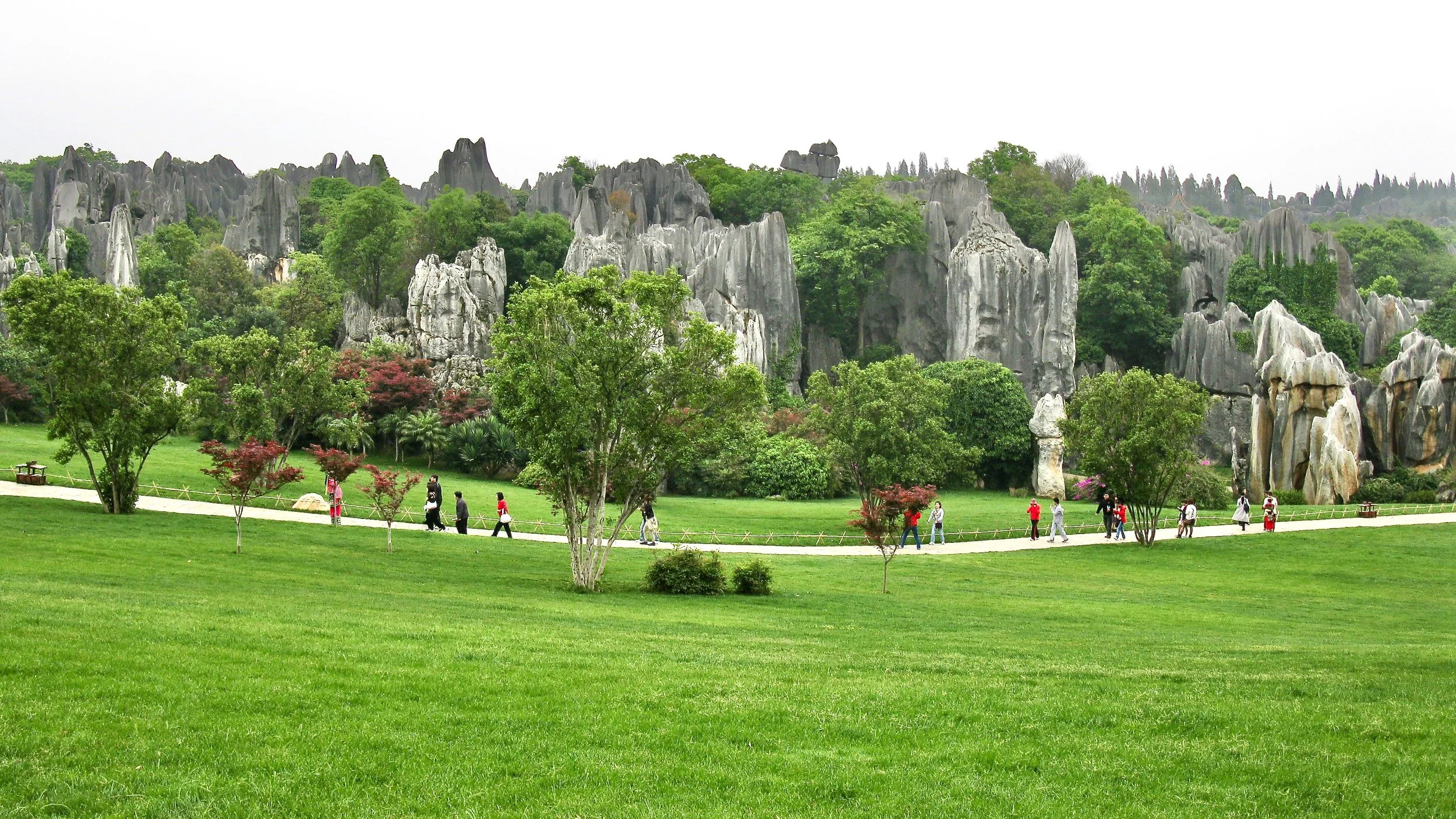
The Stone Forest
Just outside Kunming lies the Stone Forest, a surreal landscape of towering limestone pillars that rise dramatically from the earth. Covering hundreds of square kilometres, this UNESCO listed site feels both vast and otherworldly. Well marked trails wind between jagged spires, hidden caves, and reflective pools, while quieter paths lead to more peaceful corners away from tour groups. As light shifts across the grey rock, familiar shapes seem to emerge, from animals to castle like towers, making every walk feel like a journey through a natural sculpture gallery.
Did you know? The Stone Forest is more than 270 million years old and was formed by the erosion of limestone once buried beneath the sea. Constant seismic activity and water gradually carved these sharp pillars into shapes resembling petrified trees.
-
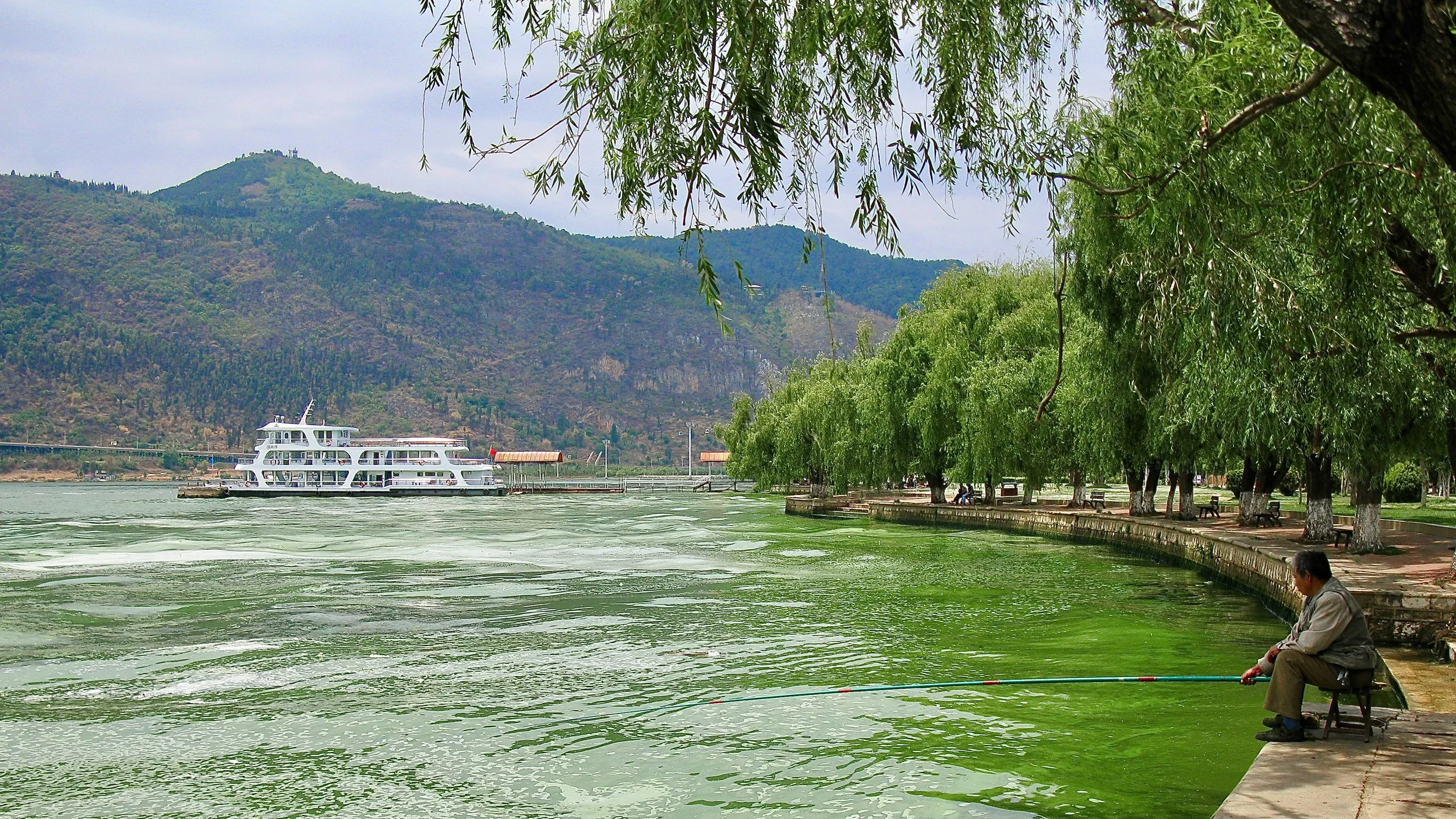
Dianchi Lake
Dianchi Lake stretches along Kunming’s southern edge, offering open water views and a welcome sense of space. In recent years, parts of the lake have taken on a striking bright green colour due to eutrophication, caused by nutrient runoff that encourages algae growth. While this highlights environmental challenges, the lakeside remains a popular spot for walking, cycling, and watching local life unfold. Parks and wetlands around the shore provide places to relax and admire the Western Hills backdrop.
Did you know? Dianchi Lake is one of China’s largest freshwater lakes but also one of its most environmentally challenged. Decades of pollution led to severe ecological issues, however, recent government restoration projects are beginning to improve the water quality.
Recommended
Multi-Day Itineraries
Put this guide into practice with these hand-picked small group journeys,
featuring both iconic landmarks and immersive cultural experiences.
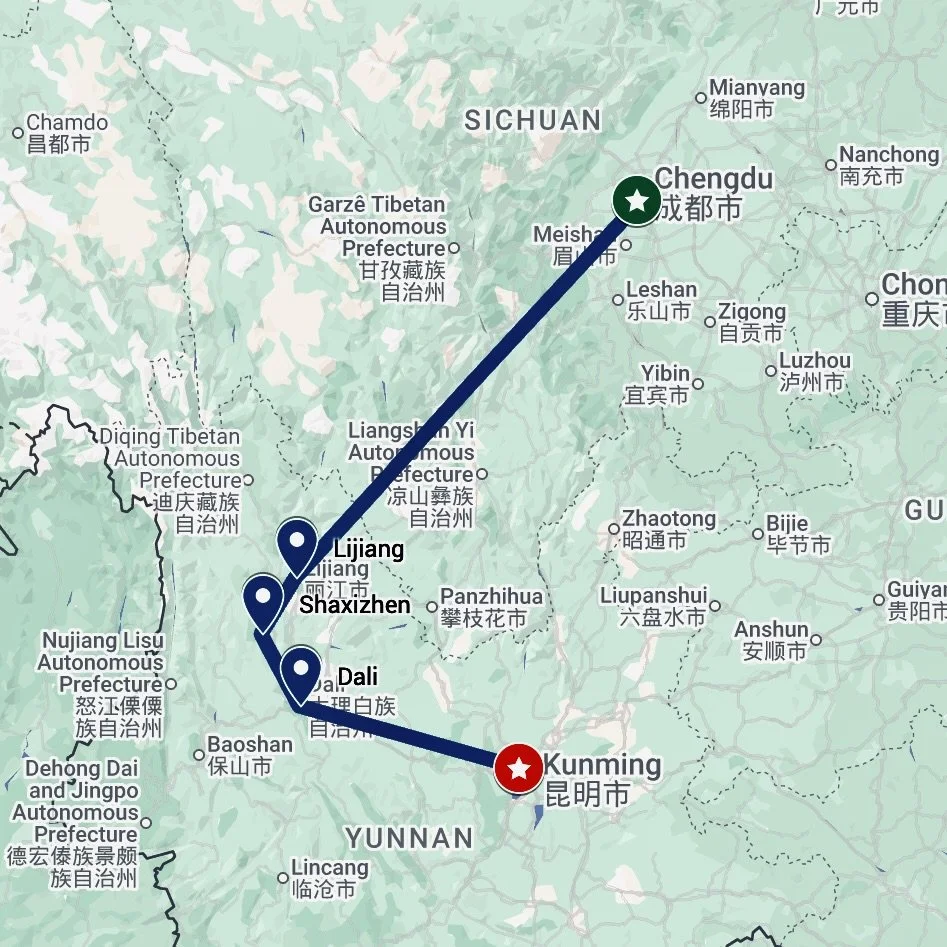
Explore China’s ancient wonders and hidden treasures. Discover the cultural landmarks of Chengdu including Tian'fu Square. Visit the historic streets of Shaxi and Dali before exploring Lijiang’s Black Dragon Pool. Your immersive journey through these lesser known gems concludes in Kunming.
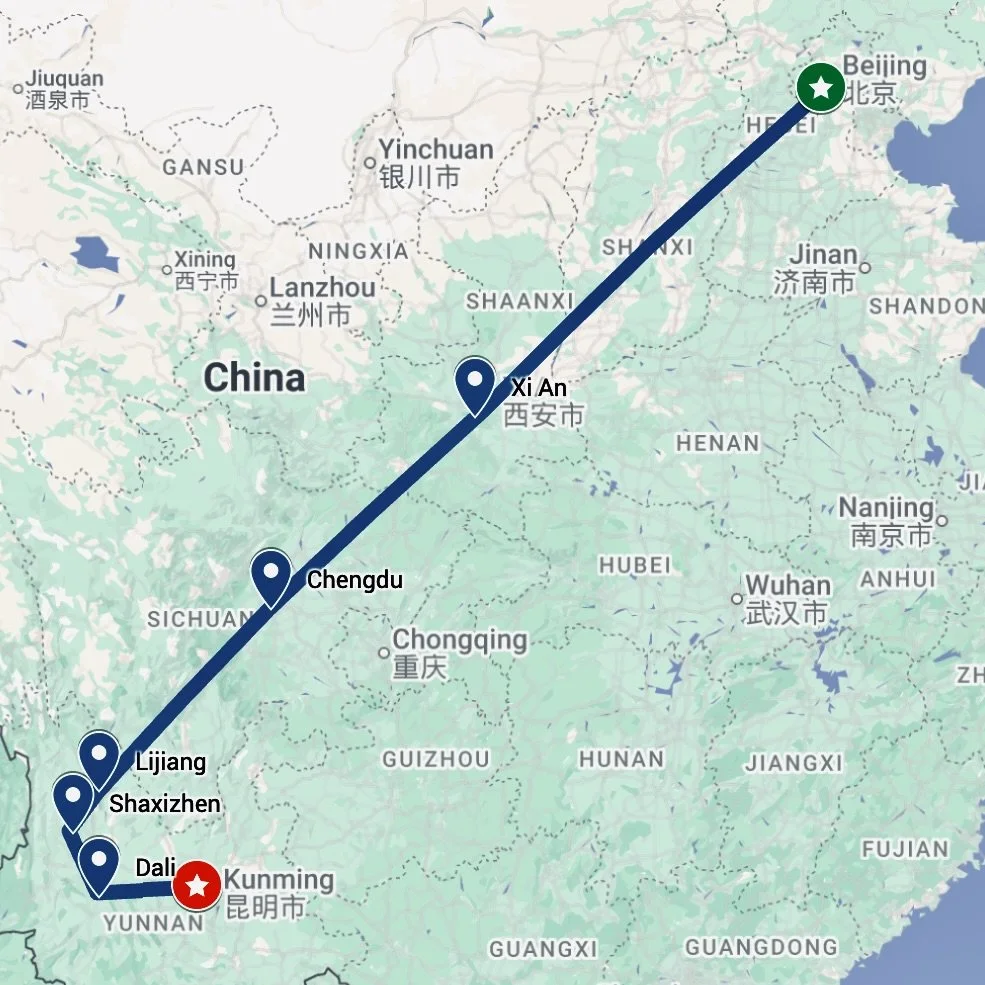
Visit China’s iconic landmarks and ancient traditions. Discover the Great Wall and Forbidden City in Beijing before witnessing the Terracotta Warriors in Xi'an. Explore Chengdu’s People's Park then wander through the historic old towns of Lijiang, Shaxi, Dali, and Kunming.
-
Kunming is famous for its mild climate, making it a viable destination all year round. However, the best months to visit are March to May and September to November. In spring, the city earns its nickname as flowers bloom everywhere, particularly the cherry blossoms at Yuantong Mountain and the canola fields in nearby Luoping. Autumn offers crisp, clear skies and the chance to see the Dongchuan Red Land at its most vibrant.
If you are visiting in winter, particularly from November to February, you can see the thousands of black-headed seagulls that migrate from Siberia to Dianchi Lake.
It is wise to avoid the Golden Week in early October and the Lunar New Year period in January or February. During these times, transport is difficult to book and major sites like the Stone Forest will become incredibly crowded with domestic tourists.
-
While many travellers only spend two days in Kunming before heading to Lijiang or Dali, staying for four to five days allows you to discover the city’s true character. Three days is the absolute minimum required to see the city centre and take a day trip to the Stone Forest. However, a longer stay encourages a more responsible and curious approach to travel.
With five days, you can explore the lesser-known neighbourhoods around Green Lake Park and the Old Street area, where you can watch locals playing chess and practicing calligraphy. It also gives you enough time for a journey south to the Yuanyang Hani or Shuipingzi Rice Terraces, or north to the Dongchuan Red Land without feeling rushed. Slowing down lets you appreciate the local lifestyle and allows you time to visit the smaller, family-run eateries and shops that define Kunming.
-
Kunming is generally very safe for international visitors, but you should always check your government’s local travel advisory for the most up to date information before you fly. Serious crime is rare, though it is sensible to remain aware of your surroundings in crowded markets or at the railway station, where pickpockets occasionally operate.
Be aware of common "tea house" or "massage" scams where friendly strangers invite you to a second location only for you to be hit with a massive bill. Use common sense by avoiding drinking in excess and staying on the right side of local laws.
It is essential to have a comprehensive travel insurance policy that covers medical emergencies and potential travel disruptions to give you peace of mind as you explore.
For more practical tips and expert advice on staying safe during your trip, visit our dedicated page on Travel Safety.
-
Kunming is a relaxed and friendly city but dressing modestly shows respect for the local community and the many ethnic minority groups that call the region home. When walking around the city or exploring the hutongs, smart-casual attire is perfect. For religious sites like Yuantong Temple or the Shuncheng Mosque, both men and women should ensure their shoulders and knees are covered. Avoid wearing singlets, crop tops, or very short shorts.
If you are invited into someone's home, it is a standard sign of respect to remove your shoes at the door. When interacting with locals, a polite and patient manner is always appreciated. If you see people performing rituals or prayers, avoid walking between them and the altar, and always ask for permission before taking close-up photographs of people to ensure you are being respectful of their privacy.
-
Pack light, breathable layers and wet weather gear or a sturdy umbrella for the rainy season between April and August when there is also intense humidity. Don't forget that Kunming gets surprisingly cold from December to February, when you will need a warm coat and thermal layers. Since the city sits at a higher altitude, the sun can be quite strong even on cool days, so a hat and good sunscreen are essential.
Sturdy, comfortable walking shoes are a must for exploring the Stone Forest or the Western Hills. You may need to remove your shoes at certain temple entrances, so easy-to-slip-on footwear is a practical choice.
If you plan to swim at your hotel or visit local hot springs, modest swimwear is the norm. While bikinis are fine by the pool, it is respectful to cover up when moving through public areas of the hotel.
-
The quintessential Kunming dish is over-the-bridge rice noodles (guo qiao mi xian). This dish is important to the local community not just for its flavour, but for the legend of a devoted wife who created the recipe to keep her husband's lunch warm. You will be served a large bowl of boiling hot broth with separate plates of meat, vegetables, and noodles to add yourself.
Explore the Dounan Flower Market or the Zhuanxin farmers market to try local snacks like erkuai (grilled rice cakes) and steam pot chicken. In the summer and autumn, Yunnan is famous for its wild mushrooms, and trying a mushroom hot pot is a highlight for many travellers. Eating at these local markets is a great way to support the regional farmers and experience the incredible biodiversity of the Yunnan province.
Essential Insights
-
Many travellers arrive at Kunming Changshui International Airport (KMG). There is also now a new railway line to Laos making Kunming a vital hub for overland travel to Southeast Asia.
For travel within China, the high-speed rail network is the most eco-friendly and often the most efficient choice. Kunming South Railway Station and the more central Kunming Railway Station connect the city to major hubs like Hong Kong, Chengdu, and Shanghai.
-
The Kunming Metro is a clean, fast, and easy way to reach major tourist attractions and the airport. For areas not covered by the metro, the bus system is extensive and very affordable. The most convenient way to pay for public transport is by using the Alipay or WeChat Pay transport QR codes, which save you from having to carry small change.
For a more private option, Didi is the leading rideshare app and has an English interface that links directly to your international card. Traditional taxis are also plentiful and usually run on a meter.
Areas like the Green Lake district and Nanping Pedestrian Street are very easy to explore by foot, allowing you to soak in the city's atmosphere at your own pace.
-
Staying connected in Kunming is straightforward with a local SIM card, which you can pick up at the airport. However, for most travellers, an eSIM is a more convenient choice as it allows you to stay connected the moment you land. Ohayu offers reliable eSIM packages for China that are easy to set up on your phone.
Be aware that international websites like Gmail, Google, and Instagram are blocked in mainland China. You will need a reliable VPN installed on your devices before you arrive if you wish to access these services. Most local apps and hotel Wi-Fi will work without a VPN, but having one is essential for staying in touch with friends and family back home.
-
Cash is becoming less common in Kunming as almost everyone uses Alipay or WeChat Pay. You can now link your international Visa or Mastercard to these apps, which makes paying for everything from street snacks to hotel bills incredibly simple. While ATMs that accept international cards are available in the city centre, they can be harder to find in rural areas.
Carrying a small amount of cash is a good backup, but most transactions will be via QR code. Exchanging USD or EUR at a bank can be a time-consuming process, so withdrawing local currency from an ATM is usually the better option. Credit cards are accepted in high-end hotels and large shopping malls, but do not rely on them for smaller local shops.
-
While you will find English signs in the airport, metro stations, and large hotels, English is not widely spoken by most people in Kunming. Proficiency levels can be quite limited once you move away from the main tourist service areas.
It is highly recommended to download a language translator app that has an offline mode and a camera translation feature. This will be invaluable for reading menus and communicating basic needs. Most locals are patient and helpful, and using a translation tool alongside a few basic Cantonese or Mandarin phrases will make your interactions much smoother and more enjoyable.
-
No, you should not drink the tap water in Kunming as it is not treated to a standard that is safe for consumption without boiling. To reduce plastic waste, use a reusable water bottle with an inbuilt filter.
Many hotels provide a kettle in the room for boiling water, and most guesthouses offer free water refill stations with purified water. Choosing accommodation that provides these facilities is a simple way to stay hydrated while minimising the environmental impact of your trip.