
Cliffside Monasteries and Sandstone Grottoes
In the northern reaches of Shanxi Province lies Datong, a historic gateway that blends imperial grandeur with rugged mountain landscapes. Once the thriving capital of the Northern Wei Dynasty and a vital outpost on the Silk Road, Datong served as a frontier town guarding China’s northern borders. Today, it is a premier destination for those seeking extraordinary Buddhist art at the Yungang Grottoes and the gravity-defying Hanging Monastery. Beyond the monuments, the city offers a fascinating look at ancient history through its restored city walls and proximity to wild, unrestored sections of the Great Wall.
This Adventures Afar guide contains affiliate links. If you book through these, we may earn a commission at no extra cost to you.
Unmissable Highlights
-
Hanging Monastery
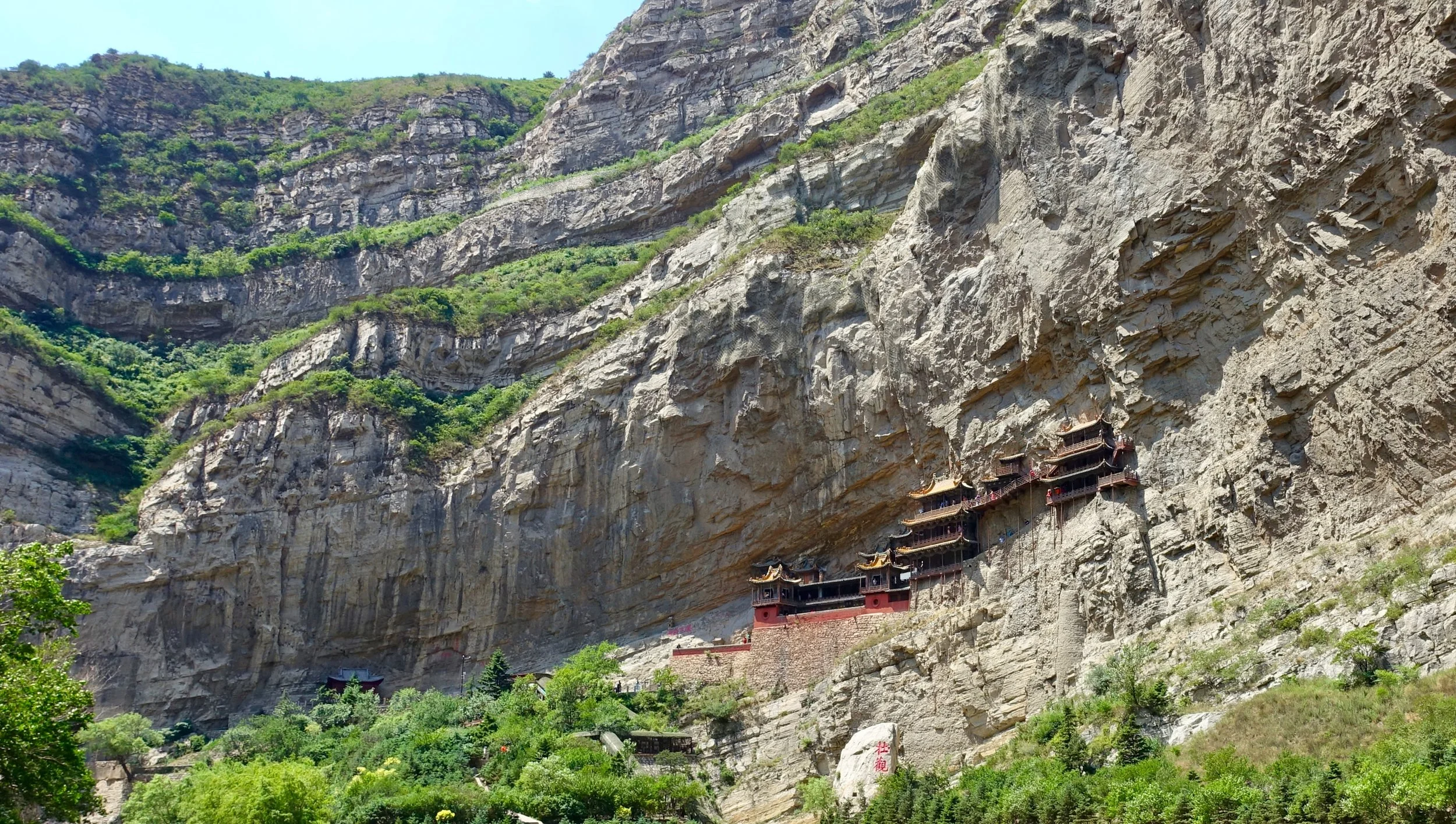
Located near Datong in Shanxi Province, the Hanging Monastery of Hengshan is a masterclass in ancient engineering and one of China’s most remarkable sights. Built over 1,500 years ago and anchored into a sheer cliff face, its timber halls appear to float precariously above the valley floor. Narrow walkways and creaking corridors add a thrill to the visit, while shrines uniquely uniting Buddhism, Taoism, and Confucianism reveal a rare spiritual harmony. To truly experience the mist-shrouded atmosphere, visit early before the tour bus crowds arrive.
Did you know? The Hanging Monastery is the only temple in China where Buddhism, Taoism, and Confucianism are worshipped together, as it was built into a remote cliffside to provide a neutral sanctuary where followers of all three faiths could seek safety and peace during times of religious conflict.
-
Yungang Grottoes
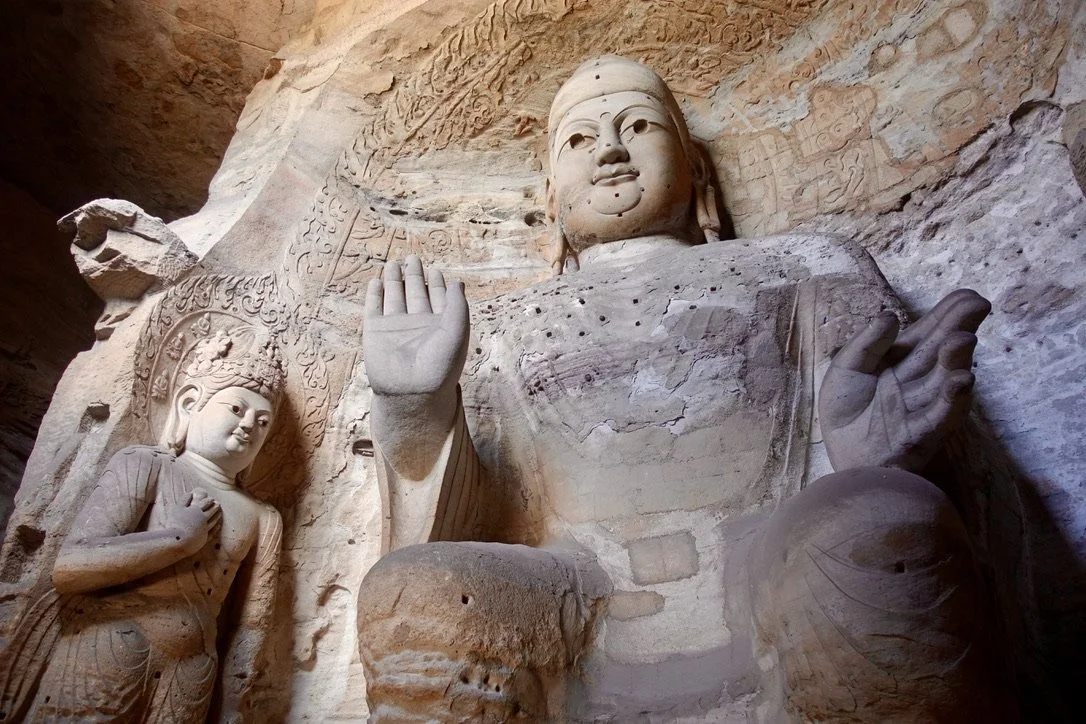
As a UNESCO World Heritage site inscribed in 2001, the Yungang Grottoes stand as one of China’s most extraordinary achievements of Buddhist art. Carved into sandstone cliffs over 1,500 years ago, more than 250 caves house roughly 50,000 statues, ranging from finely detailed miniature figures to breathtaking colossal icons. Faded traces of red and blue pigment still cling to the stone, hinting at the former vibrancy of this sacred complex. The scale and artistry rival Asia’s most famous cave temples, making a visit to this ancient sanctuary both humbling and unforgettable.
Did you know? The largest Buddha at the Yungang Grottoes stands over 17 metres tall and was carved directly into the living rock of the cliff face, originally designed so its eyes would meet the sunrise each morning.
-
Timing your visit to Datong is crucial because the northern climate can be quite extreme. The best months to visit are May, June, September, and October. During these windows, the weather is mild and clear, perfect for walking the city walls or climbing the narrow stairs of the Hanging Monastery. Autumn is especially beautiful as the rugged mountain scenery turns various shades of gold and ochre.
You should definitely avoid the first week of October (Golden Week) and the Chinese New Year period, as these public holidays bring enormous crowds to the grottoes and make transport difficult to book. It is also worth noting that winter (December to February) in this part of China is bitterly cold and windy. Unless you enjoy sub-zero temperatures and the sight of snow on the ancient stone Buddhas, it is generally better to stick to the shoulder seasons.
-
Many people treat Datong as a quick stopover, but to truly appreciate its frontier history and mountain vistas, staying for three to four days is recommended. While a two-day trip might let you tick off the Yungang Grottoes and the Hanging Monastery, it leaves very little room for curiosity or wandering. A longer stay allows you to slow down and explore the lesser-known neighbourhoods within the city walls or take a day trip to the ancient Great Wall sections at Deshengbu.
By spending more time here, you can support the local economy more effectively and discover the quiet beauty of the city's smaller monasteries and local markets. This approach to travel encourages a deeper connection with the destination rather than just a hurried glance at its most famous monuments. Datong is a place where history is layered, and those layers only reveal themselves when you stop rushing.
-
Datong is generally very safe for international travellers, with a low incidence of crime. However, it is always a sensible move to check your government's local travel advisory before you depart for the most current information. Most risks are limited to petty theft in crowded areas or at the train station, so keeping your valuables secure is always a good practice.
Be mindful of common travel scams, such as unofficial "guides" offering tours that turn out to be shopping trips, or taxi drivers who refuse to use the meter. Stick to official transport and always have a comprehensive travel insurance policy to cover any unexpected events. Practice common sense by not breaking local laws and avoiding drinking in excess, ensuring you remain aware of your surroundings at all times.
For more practical tips and expert advice on staying safe during your trip, visit our dedicated page on Travel Safety.
-
When visiting religious sites like the Yungang Grottoes or any monasteries, it is important to dress respectfully. Both men and women should ensure their shoulders and knees are covered. Avoid wearing low-cut tops, short shorts, or anything that might be seen as overly revealing. This is a simple way to show respect for the local population and the spiritual significance of these ancient monuments.
If you are invited into a local home, the custom is to remove your shoes before entering. Your host will often provide a pair of indoor slippers for you to use. Generally, people in Datong are quite traditional and polite, so a quiet and respectful demeanour will always be well-received. When exploring the city, a friendly nod is a great way to acknowledge locals, and staying mindful of your volume in sacred spaces is always appreciated.
-
As Datong involves a lot of exploring on uneven stone and mountain paths, a pair of sturdy, comfortable walking shoes is your most essential item. Pack modest clothing such as long trousers and shirts that cover your shoulders to ensure you are appropriately dressed for temple visits. Avoid packing singlets or very short shorts, as these are not suitable for most of the cultural sites in the area.
If you are visiting during the autumn or spring, pack layers that can be easily added or removed as the temperature changes. For those brave enough to visit in winter, you will need a heavy down coat, thermal base layers, and gloves to handle the biting northern wind. Since it is a relatively dry region, you won't need much wet weather gear outside of the summer months, but a light waterproof jacket is always a good backup.
-
Datong is famous for its hearty, warming northern flavours. You must try Dao Xiao Mian (knife-cut noodles), where the chef expertly shaves ribbons of dough directly into boiling water. It is a local staple that is both delicious and fascinating to watch being prepared. Given the city's proximity to the grasslands, lamb is also a major part of the diet. Roasted lamb skewers are a popular local choice and reflect the city’s historic frontier culture.
The night markets and the streets around the old city walls are the best places to find authentic local food. Trying these dishes is important because it connects you with the local agricultural traditions and the history of Shanxi Province. Eating at smaller, locally-owned restaurants ensures your money goes directly back into the community while giving you a much more authentic taste of Datong than you would find in a hotel dining room.
Essential Insights
-
Datong is a vital link in the northern transport network of Shanxi Province. Many visitors arrive via Datong Yungang Airport (DAT), which handles a variety of domestic flights.
Datong South Railway Station (Datongnan) is the modern hub for high speed trains, connecting travellers to Beijing in just over two hours. For those on a more relaxed schedule or a tighter budget, Datong Railway Station (the older station) still services traditional local trains and overnight sleepers.
The bus network from the main long-distance bus stations provides essential links to smaller nearby historical sites.
Choosing to travel by train or bus over a domestic flight is a fantastic way to see the changing landscape of the northern plateau while keeping your carbon footprint in check. The high speed train option is not only more environmentally friendly than flying but is often significantly faster when you account for the time spent getting to and from city centres.
-
A practical way to explore the city is through the extensive bus system. Routes are very affordable and cover the distance between the city centre and major sites like the Yungang Grottoes. Payment is usually made via the transport QR codes in Alipay or WeChat Pay, which is much simpler than carrying exact change for every trip.
For longer journeys, such as out to the Hanging Monastery, Didi is the standard ride share option. It is pre-paid through the app with your linked international card, so you never have to worry about cash or language barriers with the driver.
To save money, consider grouping your sightseeing so that you visit the more distant sites on one day and spend the others exploring the walkable city interior. If you are staying within the old city walls, you will find this area is remarkably pedestrian friendly, with many temples and traditional courtyards easily accessible on foot.
-
Staying connected in Datong is relatively straightforward, but you will need to prepare before you arrive. You can buy a local SIM card at the airport or in the city centre with your passport, but for many, an eSIM is the most hassle-free option. Ohayu is a popular choice for travellers looking for a data plan that can be set up before they even land.
Please remember that many international websites and apps, including Google, Gmail, and Instagram, are restricted in China. You will need a reliable VPN installed on all your devices before you arrive if you wish to access these services. Some eSIM plans can help bypass these restrictions, but having a VPN is still a good safety net for using hotel Wi-Fi.
-
Datong, like most of China, is largely a cashless society where QR codes are the primary way to pay. You can link your international Visa or Mastercard to Alipay or WeChat Pay, which allows you to pay for everything from a bus fare to a museum ticket with your phone. This is far more common than using a physical card or cash.
While ATMs are available in the city centre, they don't always accept every type of foreign card, so it is wise to have a couple of alternatives ready. Major international hotels will usually accept Visa and Mastercard, but small shops and market vendors will not.
Keeping some local currency (Yuan) as a backup is a good idea, but exchanging USD or EUR at a local bank can be a time-consuming process and is best avoided unless absolutely necessary.
-
You will find English signs at major tourist attractions and in the main train stations, but English is not widely spoken by the general public. Most locals speak Mandarin or a local dialect, and while they are often very helpful, the language barrier can be quite high.
We strongly recommend downloading a language translator app that can work offline. Being able to translate menus or street signs through your phone's camera is incredibly useful. It is also a great idea to have your hotel's address and the names of the grottoes or monasteries written in Chinese characters on your phone. Showing these to a driver or a local will make your journey much smoother and help avoid any confusion.
-
No, you should not drink the tap water in Datong. To stay hydrated while minimising your use of single-use plastic, try using a reusable water bottle with an inbuilt filter. These are excellent for removing contaminants and keeping you safe on the go.
If a filtered bottle isn't an option, you can purchase large five-litre water bottles to keep in your room and use them to refill a smaller flask each day. This is a much better alternative to buying dozens of small plastic bottles over the course of your trip. Many accommodation options now offer free water refill stations in their common areas, so try to prioritise these when choosing where to stay.