
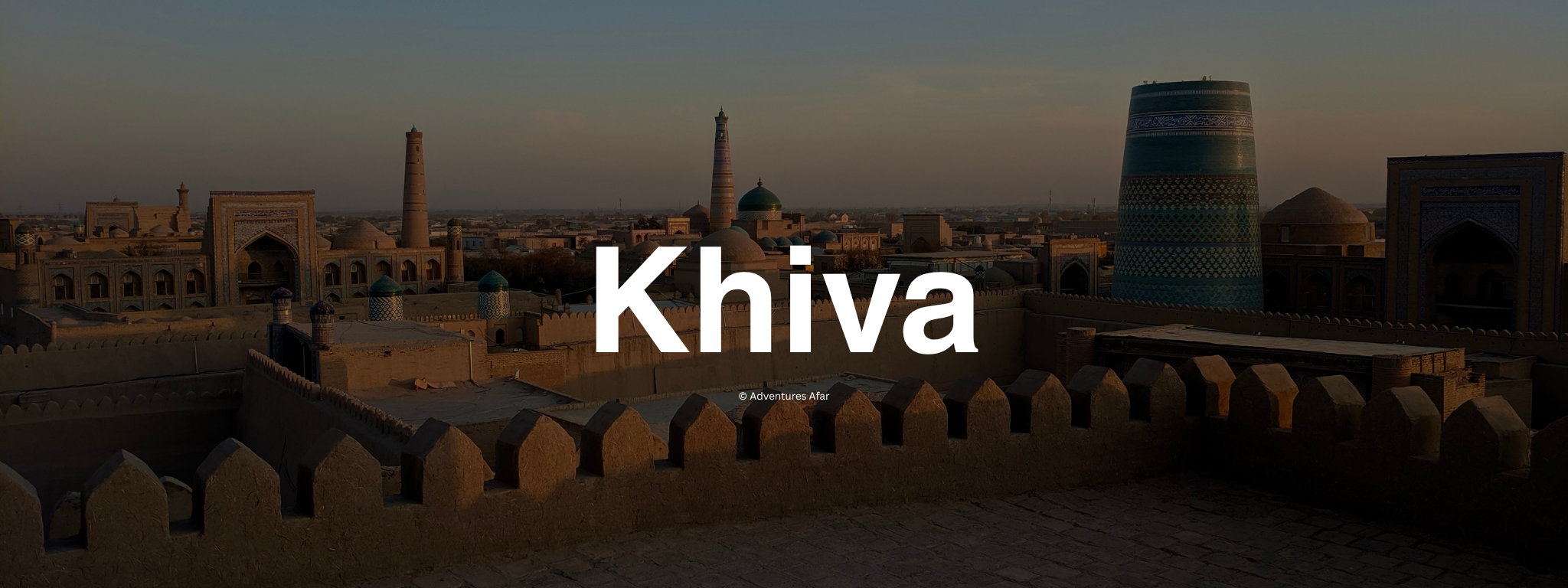
Towering Minarets and Mudbrick Citadels
The spectacular open-air museum city of Khiva offers travellers an unforgettable step back into the golden age of the Silk Road. Encircled by colossal mud-brick ramparts, the beautifully preserved inner citadel of Itchan Kala stands as an officially designated UNESCO World Heritage site, completely packed with turquoise-tiled minarets, grand madrasas, and intricate mosques. Visitors can explore the maze of narrow lanes to admire traditional woodcarving workshops and spectacular clay architecture that glows amber at sunset. Serving as a crucial gateway to the historic desert fortresses of the surrounding Kyzylkum, this evocative oasis city is a rewarding stop for anyone eager to discover authentic Central Asian history and witness living architectural marvels up close.
This Adventures Afar guide contains affiliate links. If you book through these, we may earn a commission at no extra cost to you.
Unmissable Highlights
-
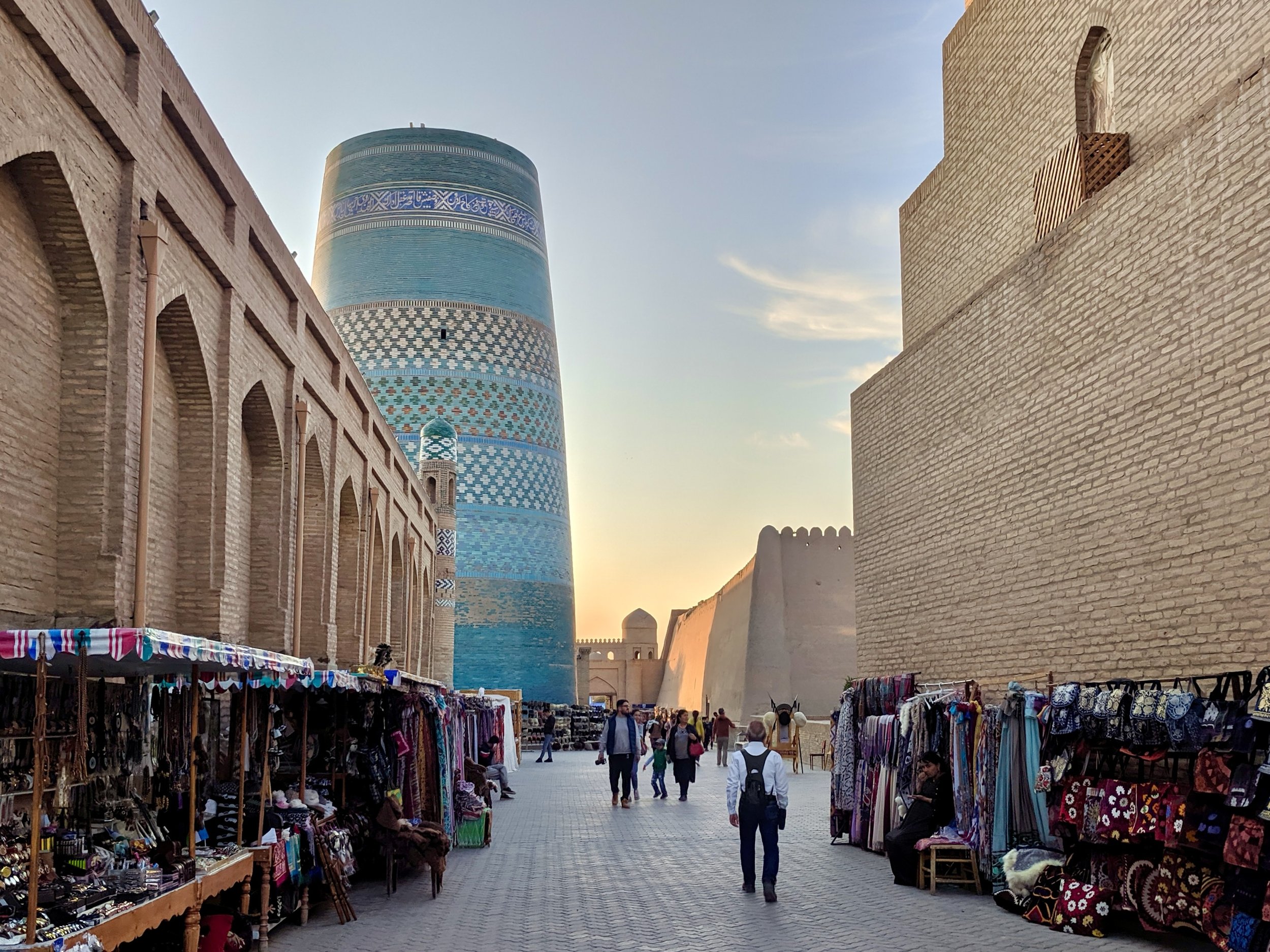
Kalta Minor Minaret
Standing proudly beside the grand Muhammad Amin Khan Madrasa, the vibrant Kalta Minor Minaret is an instantly recognisable icon of the ancient walled city of Itchan Kala, an officially inscribed UNESCO World Heritage site. Commissioned in 1851, this colossal structure was originally engineered to become the tallest watchtower in the entire Islamic world, with a planned height reaching over 70 metres. However, construction abruptly ground to a halt at just 29 metres following the sudden death of the khan in battle. Fully enveloped in brilliant turquoise, green, and deep blue majolica tiles, it is the only minaret in the country entirely covered in glazed ceramic ornamentation.
Did You Know? Local folklore claims the project was abandoned because the architect fled the city after learning the khan planned to execute him to ensure he could never build a taller tower for a rival ruler in Bukhara.
-
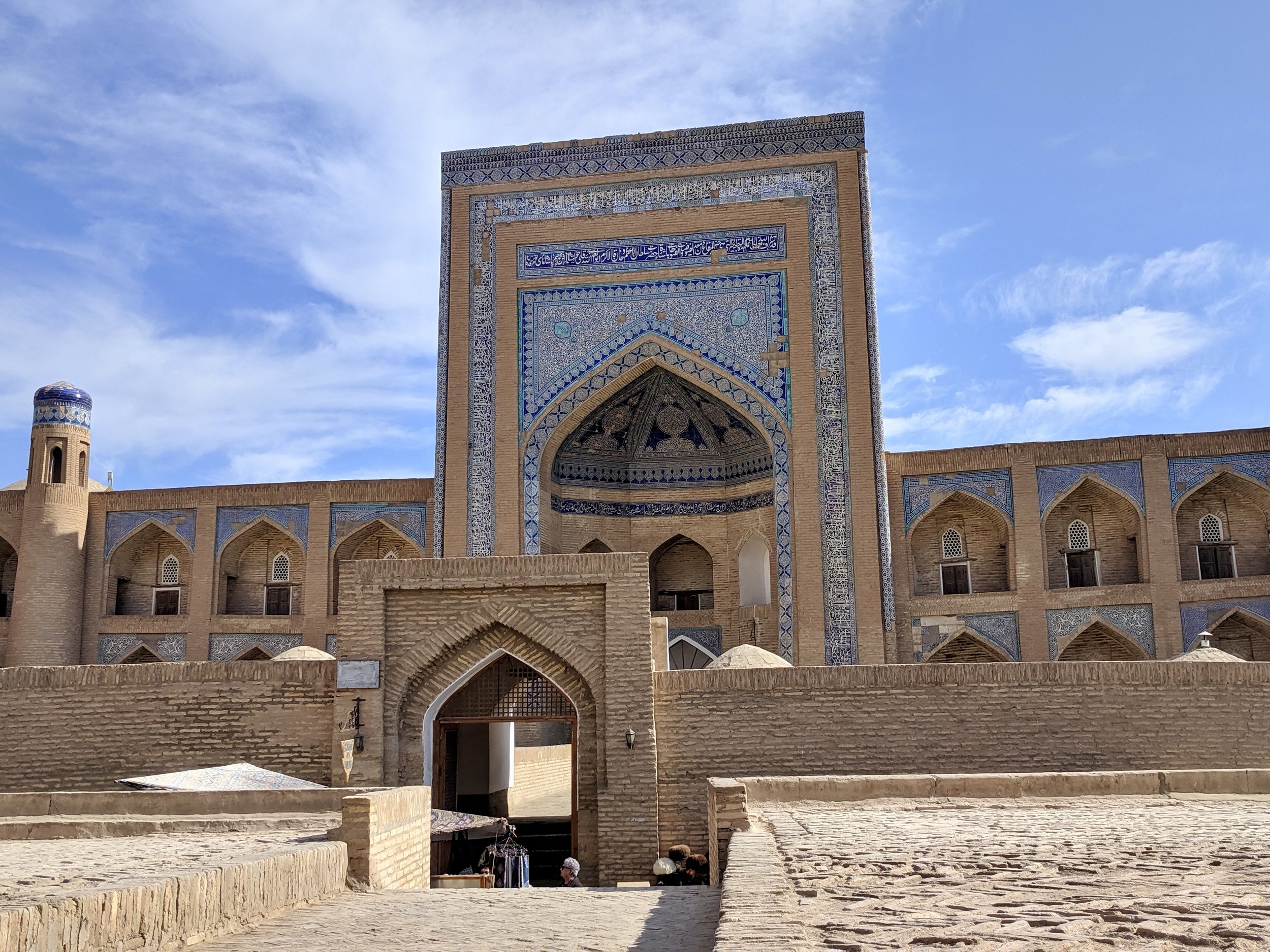
Allakuli Khan Madrassah
Constructed during the golden age of the Khiva Khanate in the 1830s, the imposing Allakuli Khan Madrasa stands as a masterful example of late Islamic architecture in Central Asia. The massive educational structure features a highly ornate main portal adorned with vibrant blue, white, and black majolica tilework that immediately catches the eye of anyone passing by. It is situated directly within the ancient mud-brick walls of the historic Itchan Kala, which is officially inscribed on the UNESCO World Heritage List. Visitors exploring the spacious inner courtyard can view the preserved double-storey cells where students historically lived, slept, and studied Islamic theology.
Did You Know? To finance the construction of this massive school and its nearby trading house, the ruling khan ordered the demolition of a portion of the ancient city wall, forcing local merchants to pay a special tax on their imports.
-
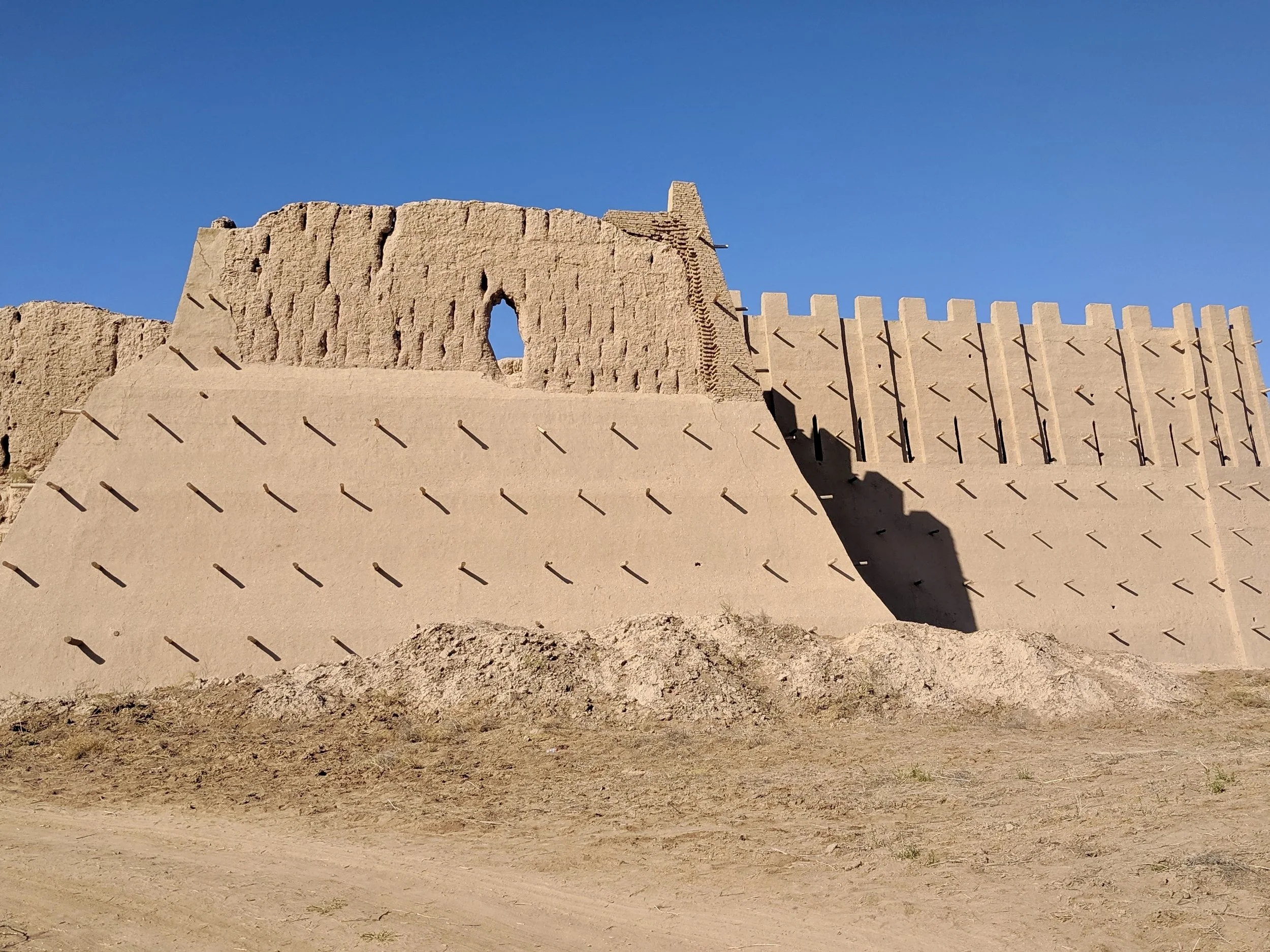
Khorezm Fortresses
Rising dramatically from the shifting sands of the Kyzylkum Desert, the magnificent Khorezm Fortresses showcase a vast defensive network that archaeologists frequently call the land of a thousand castles. This ancient collection of clay bastions dates back over two millennia to the powerful Khorezmian Empire. Built to shield fertile oasis farming communities from nomadic raids, the colossal mud-brick walls reflect a highly advanced level of structural engineering. The weathered ramparts provide an evocative look into a lost civilisation that served as a vital cradle for the Zoroastrian religion.
Did You Know? The secret behind the incredible survival of these clay walls against brutal desert winds is an ancient engineering technique utilising pakhsa, a mixture of heavily compressed clay and sun-dried bricks that hardens over centuries to a stone-like consistency.
Recommended
Multi-Day Itineraries
Put this guide into practice with these hand-picked small group journeys,
featuring both iconic landmarks and immersive cultural experiences.
Samarkand, Bukhara & the Ancient Silk Road
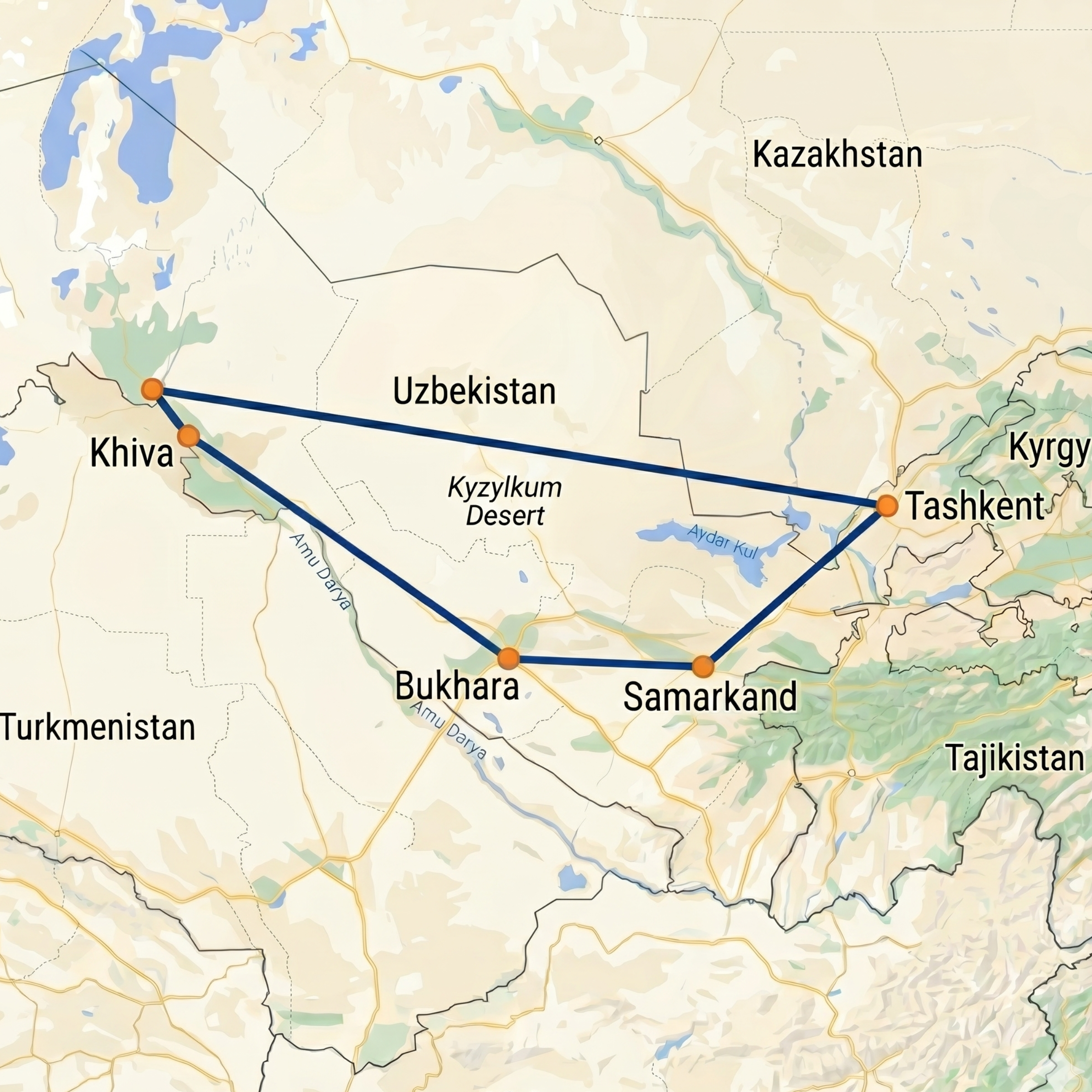
This premium itinerary focuses on the core architectural marvels of the Silk Road. Travel from Tashkent to experience the immense scale of Samarkand's Registan Square before walking the covered bazaars and historic alleyways of Bukhara and Khiva.
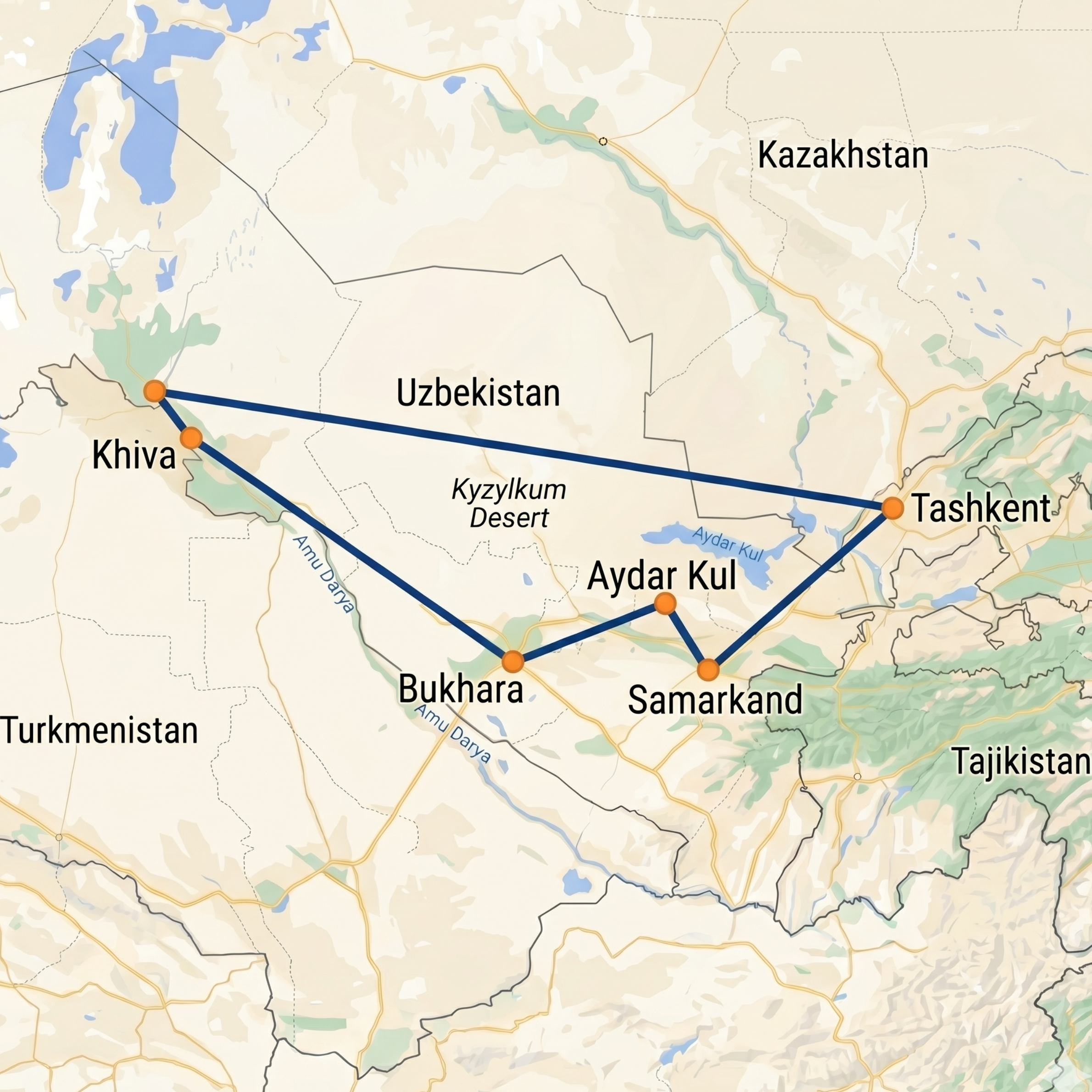
Explore Uzbekistan’s historic Silk Road. Journey from Tashkent to the magnificent mosques of Samarkand and Bukhara before exploring the mud-walled desert citadel of Khiva. A highlight is venturing into the Kyzylkum Desert to Aydar Kul for an overnight stay in a traditional yurt.
-
The best months to visit Khiva are from April to May and September to October. During these spring and autumn windows, the harsh desert climate softens into pleasant, temperate days that are perfect for exploring the open-air mud-brick citadel. Visiting in autumn brings comfortable, crisp evenings and markets loaded with regional harvests. Summers from June to August are punishingly hot, with desert temperatures frequently soaring past 40°C, while winter months from December to February bring freezing winds across the plains.
When establishing travel timelines, look out for major public holidays, particularly Navruz around 21 March and Independence Day on 1 September. During these times, domestic transport infrastructure gets completely booked out weeks in advance by local families, and several independent market stalls and local businesses temporarily close.
-
While a large percentage of visitors treat this ancient fortress city as a rapid overnight stop or a rushed day trip, moving quickly completely misses the magical atmosphere of the desert oasis. A minimum of two days is required to explore the primary monumental architectural structures within the walled inner city without rushing. However, extending a stay to three or four days creates the ideal amount of time to wander deep into the residential northern clay neighborhoods, watch local woodcarving masters work away from the main tourist paths, and embark on side trips to the dramatic ancient desert ruins nearby. Staying longer encourages genuine curiosity, fosters responsible tourism, and allows visitors to experience the profound stillness of the historic streets at dawn and dusk.
-
Staying fully informed by checking your government's official travel advisories before departure is highly necessary for up-to-date safety details and regional guidelines. The city is exceptionally peaceful, safe, and historically well-isolated from major criminal activity, making it one of the most secure environments for international visitors in Central Asia.
Dangers and complex scams are incredibly rare here, although standard awareness in crowded market zones is always smart to prevent minor pickpocketing. Practising basic common sense, such as avoiding drinking alcohol in excess, respecting traditional cultural spaces, and strictly adhering to national laws, keeps your journey entirely trouble-free. It is also essential to secure a comprehensive travel insurance policy before departing to handle any unforeseen transit disruptions or medical requirements.
For more practical tips and expert advice on staying safe during your trip, visit our dedicated page on Travel Safety.
-
Showing respect for the traditional Islamic culture and conservative values of the Khorezm region is highly important for a smooth and positive journey. While exploring the historic streets, casual attire is perfectly acceptable, but clothing should remain respectful and modest, ensuring shoulders, chests, and knees are fully covered whether exploring the streets or visiting historical sites. Tight or revealing clothing, such as singlet tops, crop tops, or shorts, is inappropriate for any gender.
When entering active religious monuments such as mosques, stricter guidelines apply. Everyone must remove their shoes at the entrance and have their legs fully covered. Women should also cover their arms and hair with a lightweight scarf, which is easily carried in a daypack. If invited into a local home, it is customary to remove shoes at the front door, and bringing a small gift of fruit or sweets from the market is a wonderful way to express gratitude for the legendary local hospitality.
-
Pack loose, lightweight garments made from breathable natural fabrics like cotton or linen to manage the sunny desert daytime weather while remaining fully and appropriately covered. Essential clothing items include long trousers, loose long-sleeved shirts, and modest maxi skirts or dresses. Don’t pack activewear, low-cut garments, or shorts, as these are highly unsuitable for this socially conservative region.
Because shoes must be removed frequently when touring active shrines, mosques, and local residences, packing comfortable, easily removable slip-on walking shoes is incredibly useful. There are no public swimming options in the historic core, but if a regional hotel features a private pool, very modest swimwear is expected to respect local staff. For spring or autumn travel, a light windbreaker handles sudden desert temperature drops, and if visiting during the winter months, heavy thermal base layers, a thick winter coat, and warm gloves are completely mandatory.
-
Sampling the distinct regional culinary specialties of the Khorezm oasis is a highlight of any trip. The absolute must-try local dish is shivit oshi, an vibrant, eye-catching dish of bright green noodles infused with fresh dill, topped with a flavourful meat and vegetable stew and served with sour cream. This unique pasta creation cannot be found authentically prepared anywhere else in the country.
Another staple to seek out is tukhum barak, an ancient square dumpling filled with a spiced egg mixture that is cooked instantly in boiling water. Head to the small family-run eateries located along the western ramparts of Itchan Kala or explore the outer markets to find these fresh specialties alongside hot tandoor flatbreads. Trying these local dishes supports agricultural heritages that have sustained life along the desert fringes for generations.
Essential Insights
-
Travelling to the city via rail is an excellent, sustainable choice that perfectly matches responsible travel goals by lowering the carbon footprint of your journey. Modern, comfortable regional and high-speed trains run directly from major tourist centers like Bukhara and Tashkent into the modern Khiva Railway Station, located just outside the eastern clay walls of Itchan Kala.
For those flying, the primary regional gateway is Urgench International Airport (UGC), situated roughly 35 kilometres to the north, which handles domestic arrivals from Tashkent alongside select international routes. Taking the train between the primary tourist city centres is often faster, more relaxing, and more environmentally friendly than checking into domestic flights.
-
The entirety of the primary tourist attraction zone inside the Itchan Kala citadel is completely pedestrianised, exceptionally compact, and best explored on foot.
For longer journeys outside the mud-brick fortifications to the train station or the modern suburbs, using the rideshare app Yandex Go is highly useful and provides clear upfront pricing. These rideshare trips are often paid for using cash directly to the driver at the end of the ride, although linking foreign cards inside the app is sometimes possible.
A unique electric trolleybus line also connects the central market area of Khiva to the neighbouring city of Urgench for a small cash fee.
-
Acquiring reliable data connectivity is simple, and travellers can easily purchase a local physical SIM card by presenting a passport at official mobile network store branches in the larger neighbouring city of Urgench. However, purchasing a digital eSIM prior to arrival completely removes the hassle of finding a physical retail kiosk.
For excellent data speeds and strong network coverage across the entire Khorezm region, Ohayu stands out as a reliable eSIM choice. This option ensures translation apps and navigation maps remain fully functional the moment you arrive.
-
Cash is king for daily transactions in the city, especially when purchasing hand-carved souvenirs from independent artisans, dining at traditional cafes, or paying transport fares. While standard ATMs are available near major commercial bank branches inside and just outside the citadel gates, they can occasionally experience network dropouts or run out of cash entirely, so relying on them as a primary source of funds is highly risky.
Visa and Mastercard are accepted at larger international hotels, but smaller guesthouses and local market vendors operate entirely on cash. Carrying a clean supply of unblemished US Dollar or Euro bills is highly recommended, as these can be quickly converted into local currency at official bank counters. While local businesses use a national QR code mobile system via apps like Uzum Pay, this infrastructure is built around domestic banking, making cash the primary tool for international visitors.
-
English proficiency varies significantly across the city, as Uzbek and Russian are the primary means of communication spoken by the vast majority of the population. While major historical monuments within the tourist core feature English descriptive plaques and museum staff often possess basic conversational English skills, English menus and signs are rare at traditional neighborhood eateries and local markets.
Despite the language barrier, local residents are incredibly warm and always eager to assist visitors navigating their town. Safely downloading a reliable translation application with offline capabilities onto a smartphone prior to arrival is highly recommended, as it makes bargaining for handicrafts, ordering local dishes, and interacting with community members a smooth and enjoyable experience.
-
No, the public tap water is not safe for international visitors to drink due to outdated regional distribution pipes and the unique mineral composition of the desert water table. To prevent any stomach issues or transit illnesses, rely completely on bottled, filtered, or purified water for drinking and brushing teeth.
To practice responsible travel and minimise single-use plastic waste, use a reusable water bottle equipped with an advanced internal microbiological filtration system. When booking accommodation, prioritise properties that explicitly offer complimentary filtered water refill stations, allowing for easy bottle top-ups before heading out to explore the ancient fortresses.