
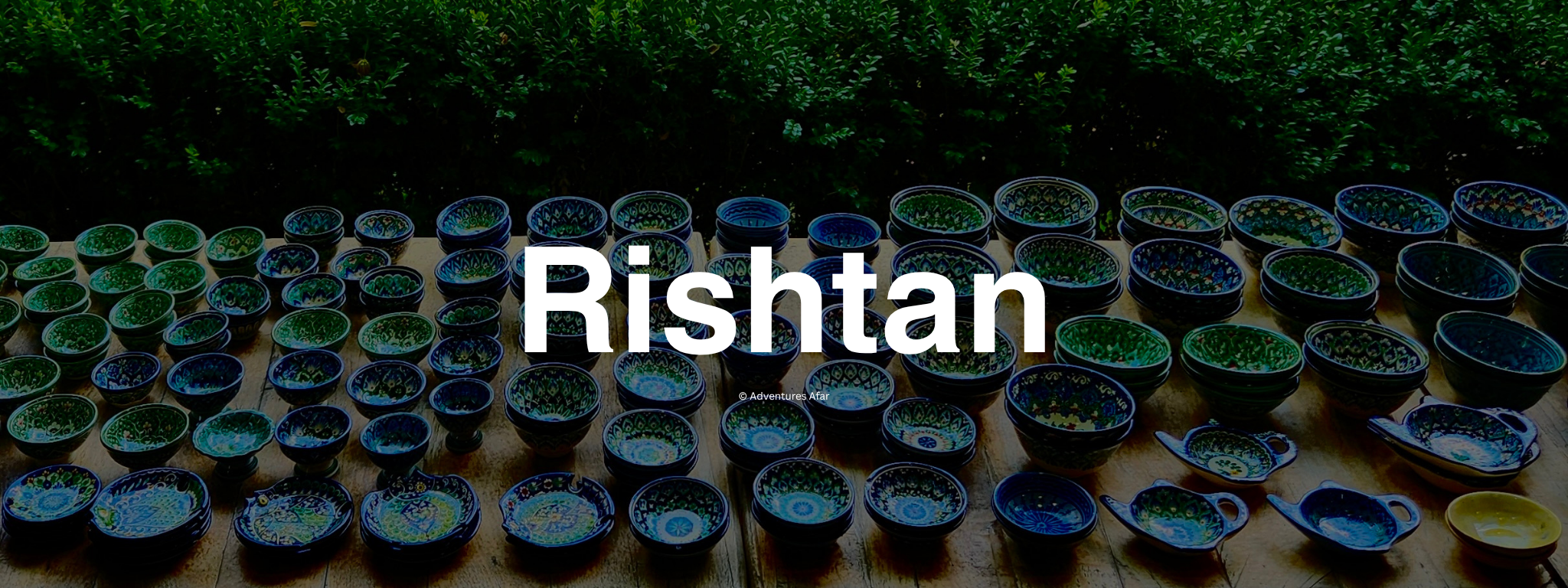
Ancient Clay and Azure Glazes
The historic pottery capital of Rishtan offers travellers a mesmerising window into a millennium of unbroken artisan heritage. Famous throughout Central Asia for its unique red clay deposits, this vibrant settlement is globally celebrated for producing magnificent, hand-thrown ceramics coated in a signature turquoise and ultramarine glaze. Visitors can Wander through tranquil family courtyards to watch multi-generational master craftsmen shape elegant serving platters and intricate tea bowls entirely by hand. The town serves as a vital cornerstone for anyone wanting to experience authentic Silk Road creative traditions up close. It provides a fascinating, deeply immersive stop that beautifully complements any wider exploration of the fertile Fergana Valley.
This Adventures Afar guide contains affiliate links. If you book through these, we may earn a commission at no extra cost to you.
Unmissable Highlights
-
International Ceramics Center
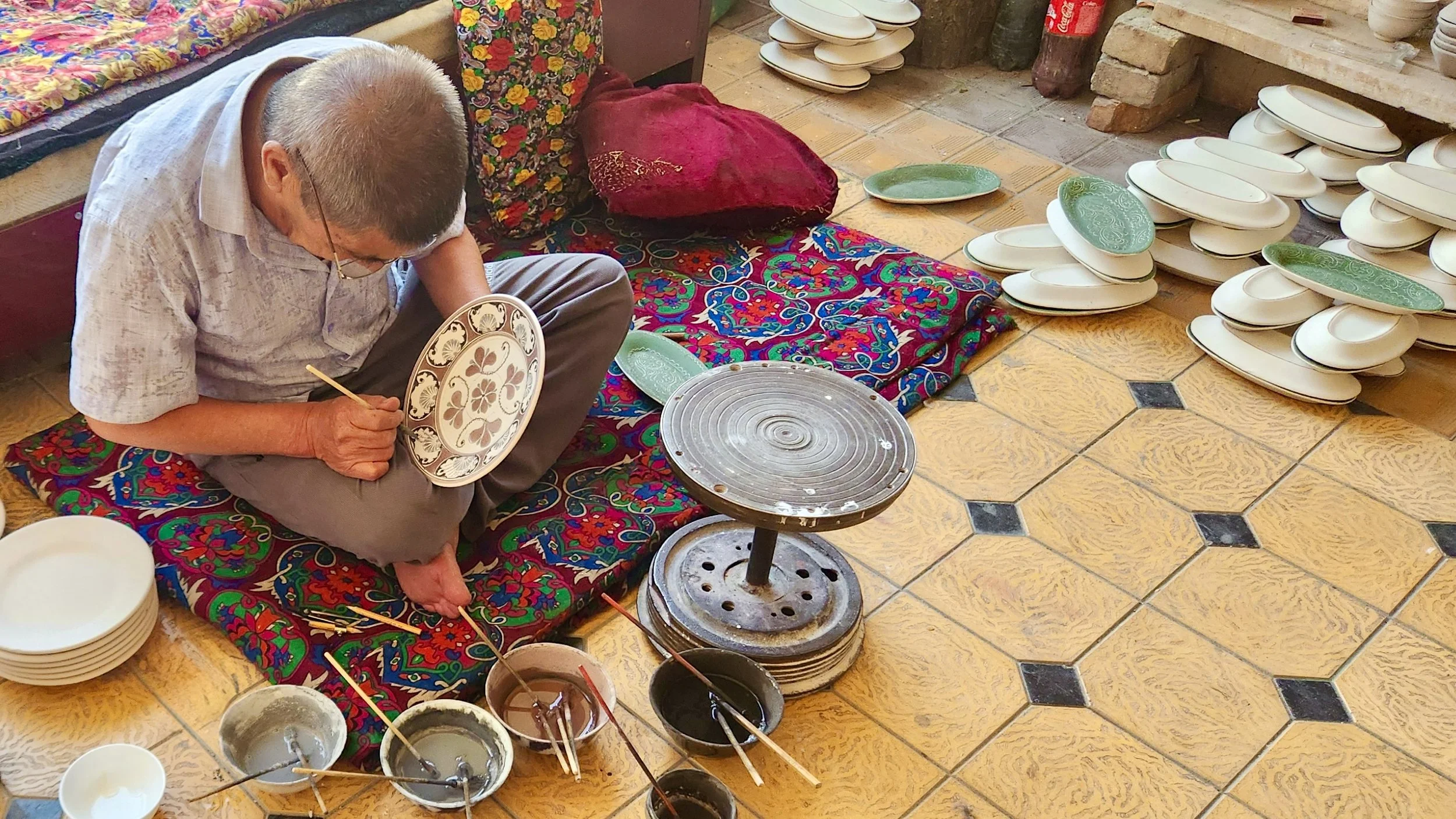
Providing an excellent focal point for the preservation of ancient Fergana Valley crafts, the newly constructed International Ceramics Center serves as a monumental hub for the city's legendary pottery heritage. Opened to foster the traditional master-apprentice model, the expansive complex houses over twenty distinct workshops, domestic artisan quarters, and a dedicated historical museum. Visitors can observe multiple generations of potters shaping local reddish clay on traditional foot-kicked wheels. The facility provides an unparalleled look at the intricate geometric and floral painting styles that define the region's artistic identity.
Did You Know? The stunning, glassy shine on the pottery here is achieved using an organic glaze called ishkor, which is derived entirely from the natural ashes of a specific wild desert plant harvested in the regional steppes.
-
Ceramic Workshop of Rustam Usmanov
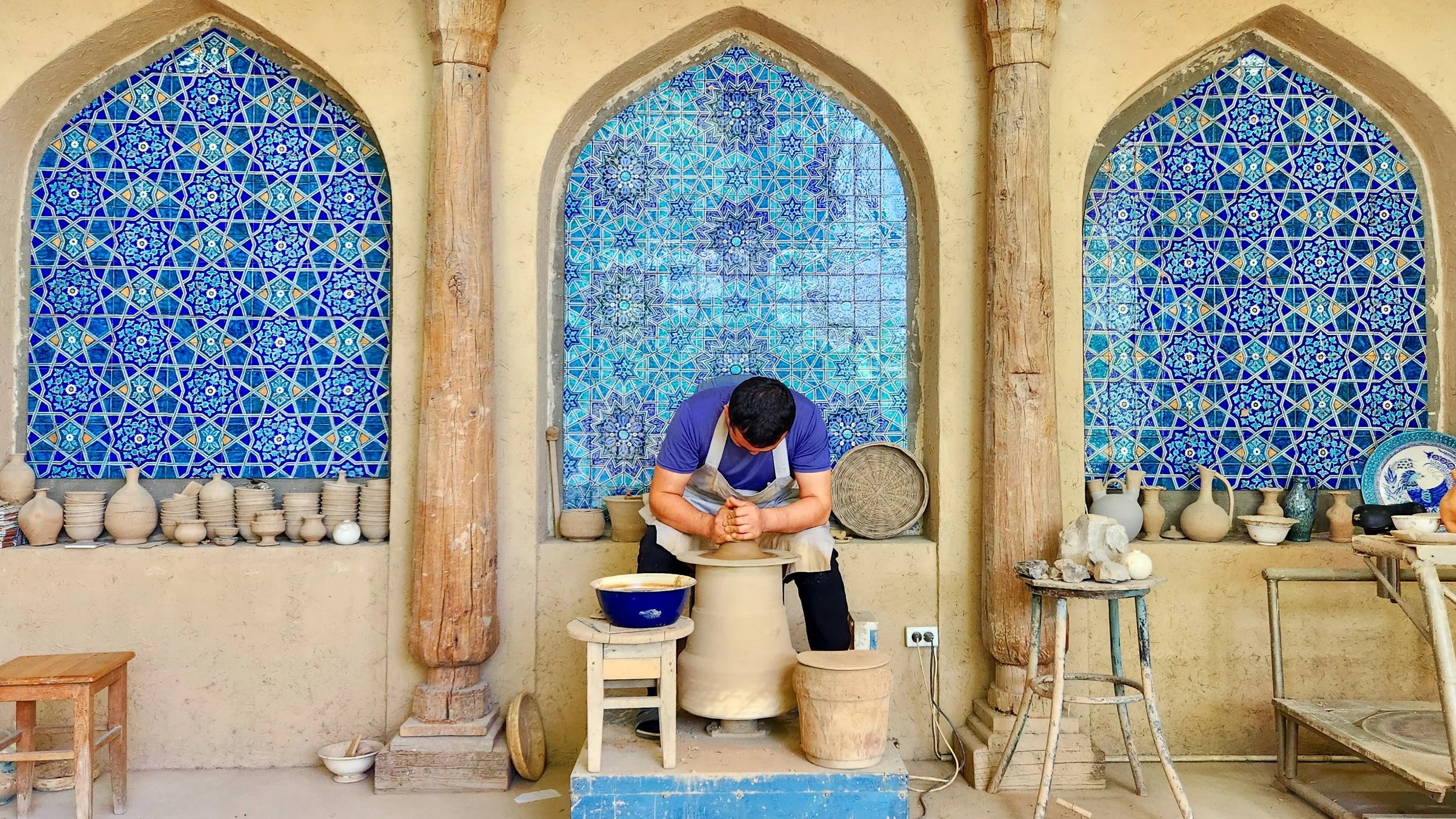
Tucked away within a beautifully landscaped private courtyard, the world-renowned Ceramic Workshop of Rustam Usmanov offers an intimate glimpse into the life of a master artisan. Established by a first-generation pottery designer who graduated from the Tashkent Institute of Arts, this home-based studio and private museum is dedicated to resurrecting lost 9th-century ornamental patterns. Visitors are welcome to tour the active firing kilns, watch family members carefully apply mineral pigments by hand, and view a rare collection of historical archaeological shards discovered throughout the valley.
Did You Know? Every single handmade bowl and plate produced in this family workshop features a tiny, unique signature on the underside, which identifies the exact apprentice or family member who individually shaped or painted that piece.
-
The optimal months to plan a trip to Rishtan are from April to May and September to October. During these times, the Fergana Valley enjoys mild, comfortable daytime temperatures, ideal for spending hours wandering between open-air pottery workshops. Visiting in spring offers the beautiful sight of blossoming apricot and cherry orchards across the region, while autumn brings the spectacular harvest season, when local markets overflow with fresh pomegranates, figs, and melons. Summers from June to August are intensely hot, with temperatures regularly climbing past 40°C, which causes several artisan studios to cut back their working hours.
When mapping out travel dates, it is wise to monitor major national public holidays, particularly Navruz around 21 March and Independence Day on 1 September. During these celebrations, domestic transport can become completely booked out well in advance, and small family workshops may close so artisans can spend time celebrating with their households.
-
While many travel itineraries treat this pottery hub as a brief two-hour pitstop between larger hubs, a rushed visit overlooks the true depth of the local culture. A minimum of one full day is necessary to visit the primary pottery studios and the central ceramics complex without feeling hurried. However, extending a stay to two or three days allows for a much more immersive experience, offering the time to participate in hands-on clay masterclasses, browse the local village markets, and engage in meaningful conversations with multi-generational artisan families. Choosing a longer, slower stay fosters a deeper appreciation for this ancient craft and ensures that travel spending directly benefits the local community.
-
Staying well-informed by reading up-to-date government travel advisories is an essential step for anyone planning a journey. While some government advisories flag the wider Fergana Valley due to complex regional border geography, Rishtan was incredibly safe, peaceful, and exceptionally welcoming when visited to research this guide in mid-2026.
Dangers and major scams are virtually non-existent here, although practicing standard situational awareness in busy market areas to safeguard personal belongings is always smart. Practicing basic common sense such as avoiding drinking alcohol in excess and strictly respecting all local laws keeps travel trouble-free. It is also essential to secure a comprehensive travel insurance policy before departing to ensure coverage for any unforeseen transit disruptions or medical needs.
For more practical tips and expert advice on staying safe during your trip, visit our dedicated page on Travel Safety.
-
Respecting the traditional customs and religious values of the local population is a key part of an enjoyable visit. While exploring the town, everyone should dress modestly by ensuring their shoulders, chests, and knees are completely covered. Revealing clothing like singlet tops, shorts, or tight activewear is entirely inappropriate and can cause genuine offense in this conservative region.
When entering sacred sites, such as the historic Khoja Ilgor Mosque, visitors must cover their legs completely and remove their shoes at the entrance. Women should also cover their arms and hair with a lightweight scarf. If invited into a family home for tea or a meal, shoes should always be taken off before entering. Accepting food or drink with the right hand is a wonderful, easy way to demonstrate respect for local etiquette.
-
Pack loose, lightweight clothing made from breathable natural fibres like cotton or linen to handle the sunny daytime weather while remaining completely covered. Essential items include long trousers, long-sleeved shirts, and modest maxi dresses or skirts. Don’t pack activewear, single tops, or shorts.
Packing comfortable walking shoes is highly beneficial. There are no public swimming facilities in the town, but if staying at a regional property with a pool, very modest swimwear is expected out of respect for local norms. For spring or autumn travel, pack a compact umbrella for sudden showers, and if visiting during the winter, bring heavy thermal base layers, a thick coat, and winter accessories to withstand the freezing continental temperatures.
-
The culinary landscape here is distinct, and enjoying a meal in a local home or market is highly memorable. The standout dish to try is Rishtan plov, a lighter, highly aromatic version of the national rice dish cooked in a traditional iron kazan, often uniquely topped with whole roasted heads of garlic and served on the town's famous blue ceramic platters.
Another staple is fresh non, a thick flatbread baked against the inner walls of a clay tandoor oven and stamped with beautiful geometric seals. Head to the central bazaar to find these hot breads alongside exceptional local produce or stop at a traditional garden chaykhana (teahouse) to try seasoned shashlik skewers. Sampling these dishes supports local agricultural traditions and offers a delicious window into the valley's distinct hospitality.
Essential Insights
-
As Rishtan doesn’t have its own railway station or airport, visitors need to travel via road through the scenic Fergana Valley landscape. The most authentic method is taking a local shared taxi or minibus from the transport hubs of neighboring Kokand or Fergana, both located roughly 50 kilometres away. Arranging private transport to Rishtan from Kokand, Fergana or Margilan via the Yandex Go ride share app also offers affordable options, however, returning via this method is often not possible.
Alternatively, those coming from Tashkent can arrange a direct long-distance shared vehicle or private transfer that travels across the spectacular Kamchik Pass mountain road, offering a dramatic entry into the valley floor.
For air travel, the primary regional gateway is Fergana International Airport (FEG), situated to the east, which handles domestic connections from Tashkent alongside select international arrivals. No maritime or ferry infrastructure exists within this landlocked valley region.
-
The central areas of town are highly walkable, allowing visitors to easily navigate between the primary artisan workshops on foot. Local minivans and shared mid-sized buses run along the main regional roads for a very small flat cash fee.
For longer journeys to outlying workshops or nearby villages, the regional rideshare application Yandex Go can be useful and offers clear upfront pricing, however, availability in Rishtan is very limited compared to larger towns in the valley. These trips are often paid for in cash directly to the driver at the end of the ride, although the app can sometimes accept international cards.
-
Securing reliable data is simple, and travellers can easily purchase a physical SIM card by presenting a passport at official mobile network stores in the larger neighbouring cities of Kokand or Fergana. However, avoiding the need to find a physical store is easily done by setting up a digital eSIM before the journey.
For excellent data speeds and consistent regional network coverage across the valley, Ohayu stands out as a reliable eSIM provider. This option will ensure translation and map apps continue running smoothly, even while in this remote town.
-
Cash is essential for almost all daily transactions in town, whether purchasing a hand-painted platter from an artisan, buying fruit at the bazaar, or paying for a local meal. ATMs can be found near the town centre but are prone to running out of cash or experiencing connectivity issues with foreign networks, so relying on them as a primary funds source is risky. Carrying a clean, crisp supply of US Dollars or Euros is smart, as these can be quickly converted to local currency at any official bank branch.
Visa and Mastercard are rarely accepted outside of large regional hotels. While a domestic QR code mobile payment system is used widely by residents, it requires a local bank account, making cash the primary tool for international travellers.
-
English is rarely spoken fluently in this part of the valley, with Uzbek and Russian serving as the primary modes of communication. While newer cultural centres feature some English signage, traditional workshops and neighbourhood eateries operate entirely in the local languages.
Despite this, the local artisans are incredibly warm and eager to share their craft using gestures and hospitality. Downloading a reliable translation app with offline capabilities onto a smartphone before arriving is highly recommended, as it allows for smooth communication when discussing pottery techniques with masters or purchasing souvenirs.
-
No, the public tap water is not safe for international visitors to consume due to regional piping infrastructure and varying treatment standards. To protect against stomach upsets, use purified or filtered water for drinking, rinsing produce, and brushing teeth.
To minimise single-use plastic waste and travel responsibly, use a reusable water bottle fitted with an advanced internal filtration system. When booking regional guesthouses or homestays through the website's affiliate links, look for properties that explicitly mention filtered water refill stations, making it easy to top up a reusable bottle before heading out to the workshops.