
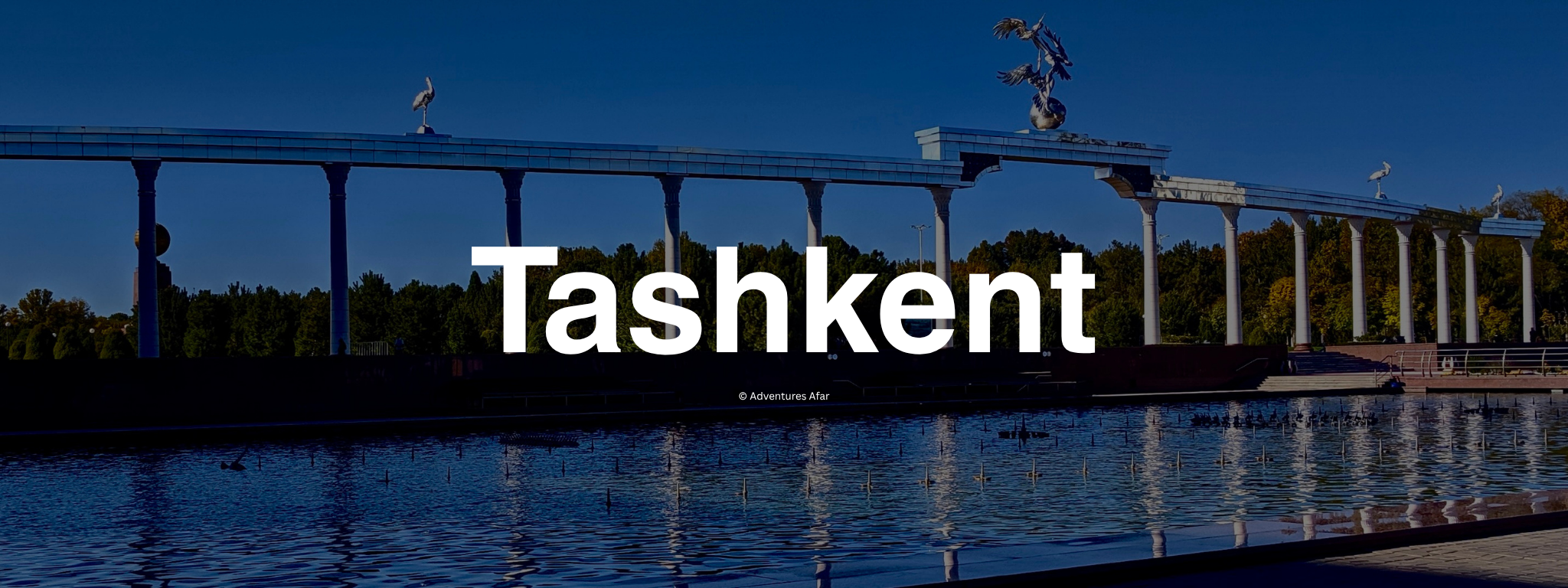
Modernist Gateway and Ancient Hub
As the primary entry point to Uzbekistan, Tashkent offers intrepid travellers a distinct blend of Silk Road history and bold Soviet-era infrastructure. Often bypassed for older regional counterparts, this sprawling hub rewards those who choose to linger. Wide, tree-lined boulevards frame a landscape where brutalist concrete blocks sit directly alongside lively, centuries-old bazaars and a highly decorated subterranean metro system. The destination presents an authentic immersion into everyday Uzbek life, free from overwhelming tourist crowds. Visitors can explore quiet courtyards showcasing traditional Islamic tile work before sampling local street food beneath towering modernist structures.
This Adventures Afar guide contains affiliate links. If you book through these, we may earn a commission at no extra cost to you.
Unmissable Highlights
-
Chorsu Bazaar
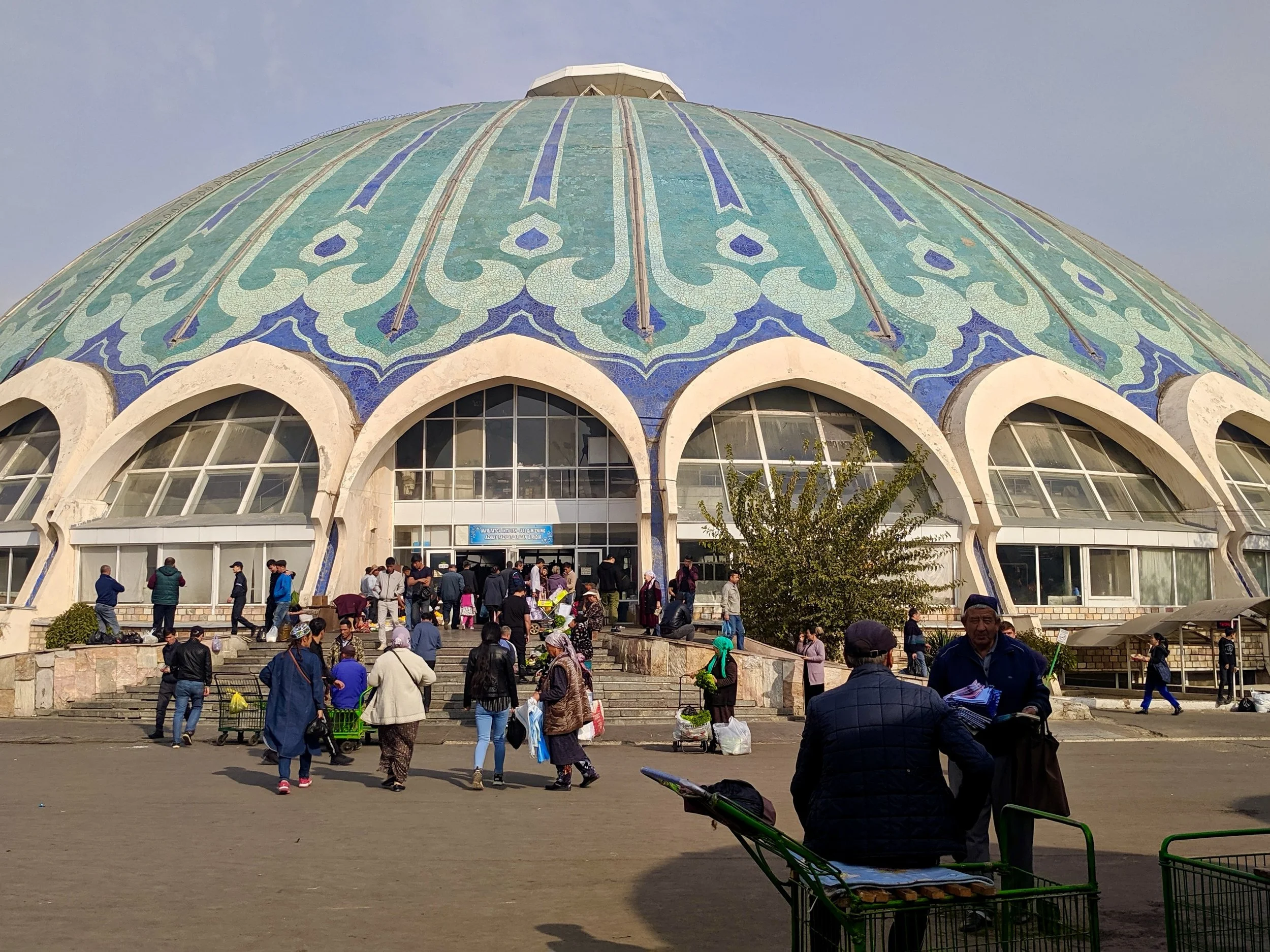
Serving as a sensory gateway to the old city, Chorsu Bazaar is a magnificent open-air market sheltered beneath a striking, turquoise concrete dome. This sprawling trading hub has occupied the same central crossroads for centuries, echoing the commercial spirit of the ancient Silk Road. Visitors can wander through concentric multi-level rings filled with rows of local cheeses, rich spices, dried fruits, and vibrant textiles. The atmosphere delivers an authentic slice of everyday life, blending Soviet-era engineering with traditional Islamic architecture.
Did You Know? The monumental dome is actually a masterpiece of Soviet structural design built in 1980 to replace historical structures that completely collapsed during the devastating Tashkent earthquake of 1966.
-
Amir Temur Square
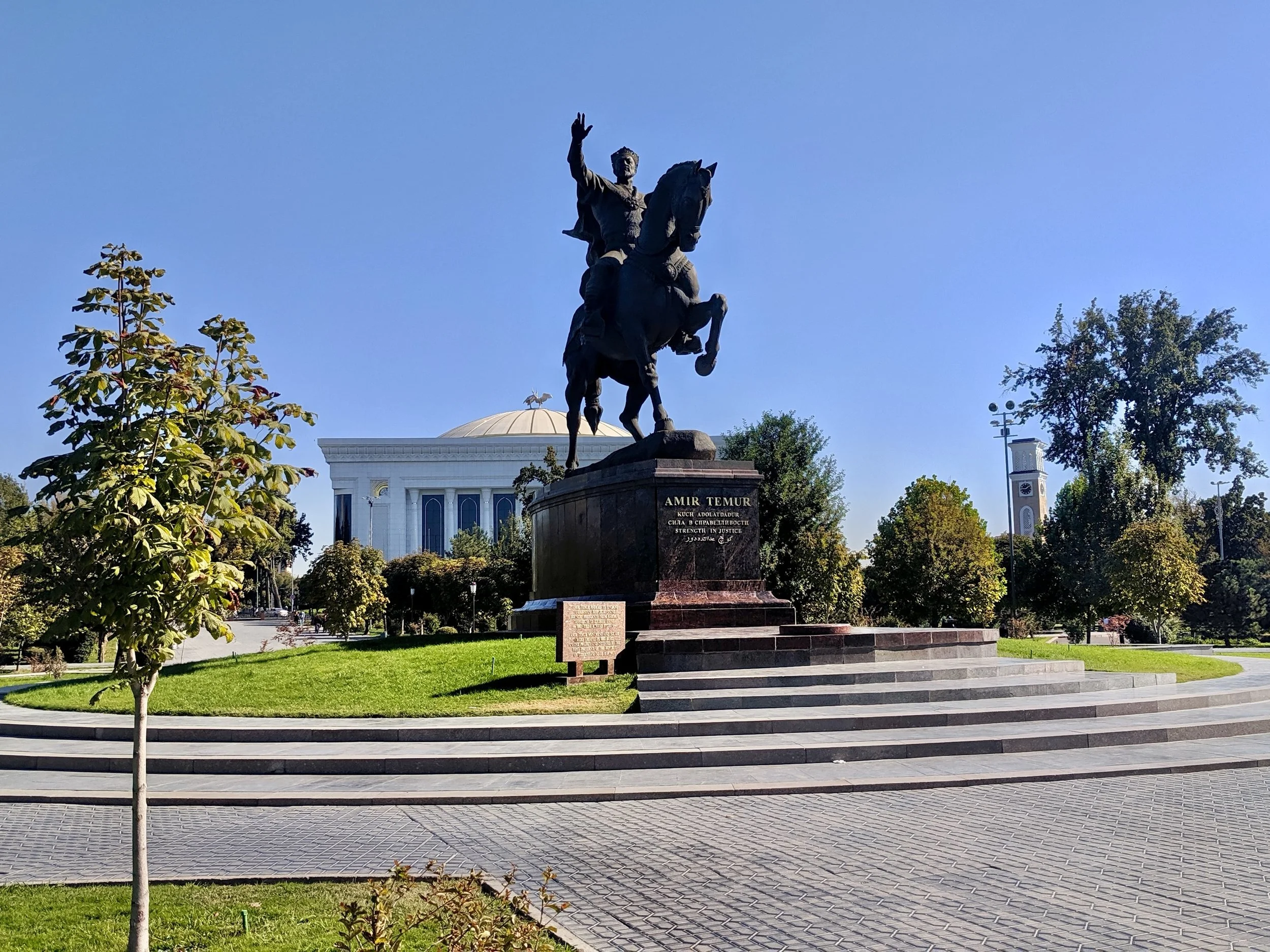
Acting as the definitive geographic and cultural axis of the modern city, Amir Temur Square provides an ideal vantage point to observe local life and history. A monumental bronze statue of the fourteenth-century conqueror on a rearing horse dominates the centre of the park. Grand avenues lined with cafes radiate outwards from this green space, telling the story of Tsarist and Soviet planning whilst leading to iconic architectural landmarks like the Soviet-era Hotel Uzbekistan and the elegant Tashkent Chimes clock tower.
Did You Know? The central monument has changed six times since 1870, shifting with political winds from a Russian governor's tomb to communist monuments before the warlord statue arrived in 1994.
-
Kosmonavtlar Station
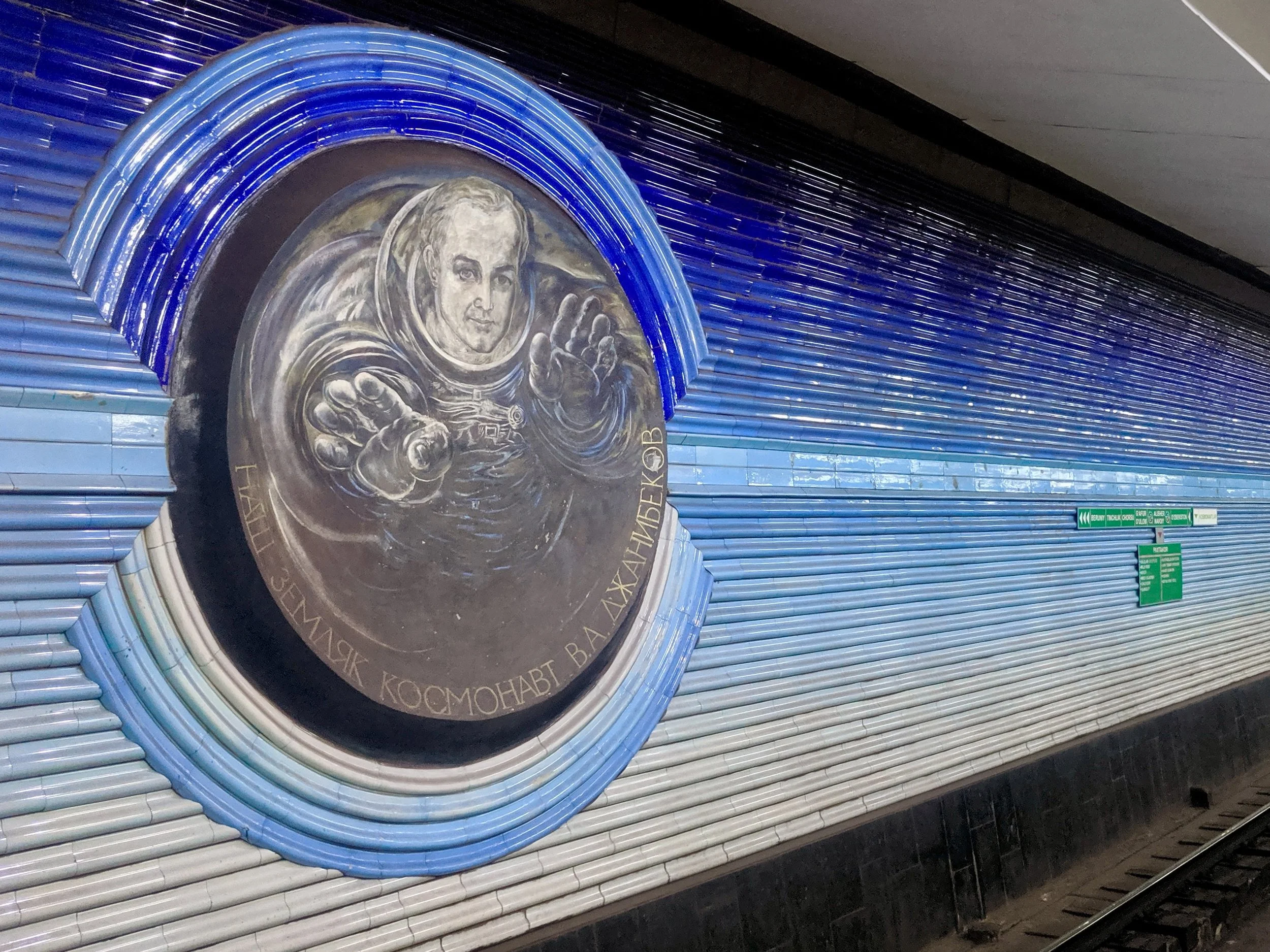
Descending into the subterranean world of the capital reveals Kosmonavtlar Station, a deeply atmospheric transport hub that also functions as a subterranean art gallery. Opened in 1984, the platforms celebrate the triumphs of the Soviet space program alongside Central Asian astronomical history. Intricate glass columns transition from pale shades to deep blues, creating the visual illusion of atmospheric departure. Large ceramic medallions decorate the walls, honouring legendary figures from ancient local astronomers to early cosmonauts.
Did You Know? The station features a portrait of the famous fifteenth-century Uzbek astronomer Ulugh Beg alongside Yuri Gagarin, beautifully connecting modern interstellar exploration with Uzbekistan's medieval scientific achievements.
-
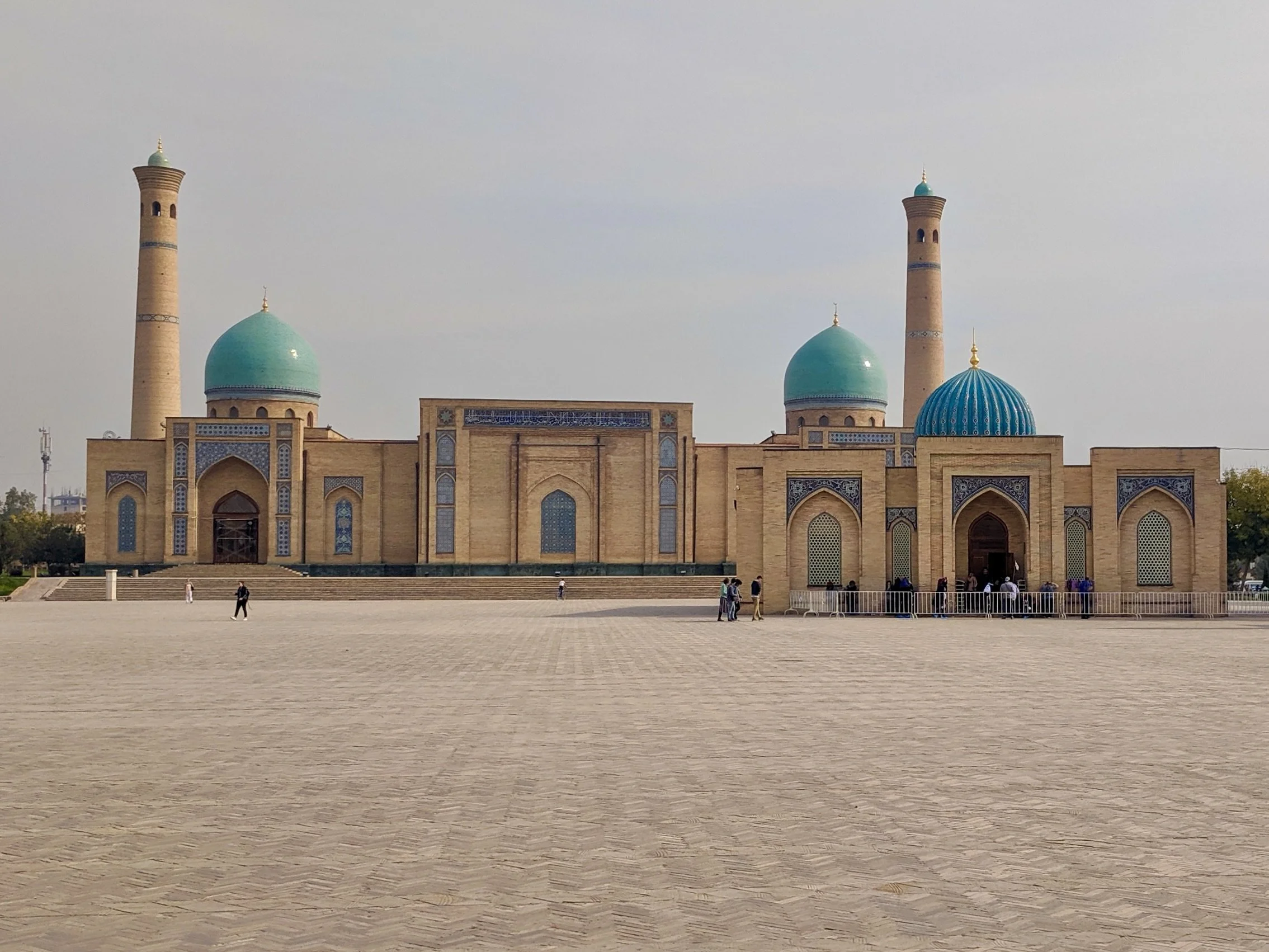
Hazrati Imam Complex
Reflecting the deep spiritual heritage of the nation, the Hazrati Imam complex stands as the official religious heart of the capital. This architectural ensemble features a collection of elegant mosques, madrasas, and mausoleums showcasing intricate tile work and carved sandalwood pillars. The manicured courtyards provide a peaceful sanctuary away from the urban bustle. These days, scholars and travellers gather here to admire the historic preservation of traditional regional craftsmanship and Islamic scholarship.
Did You Know? The library within this historic complex houses the legendary seventh-century Samarkand Kufic Quran, widely recognised as the oldest surviving written copy of the Quran in the world.
Recommended
Multi-Day Itineraries
Put this guide into practice with these hand-picked small group journeys,
featuring both iconic landmarks and immersive cultural experiences.
Samarkand, Bukhara & the Ancient Silk Road
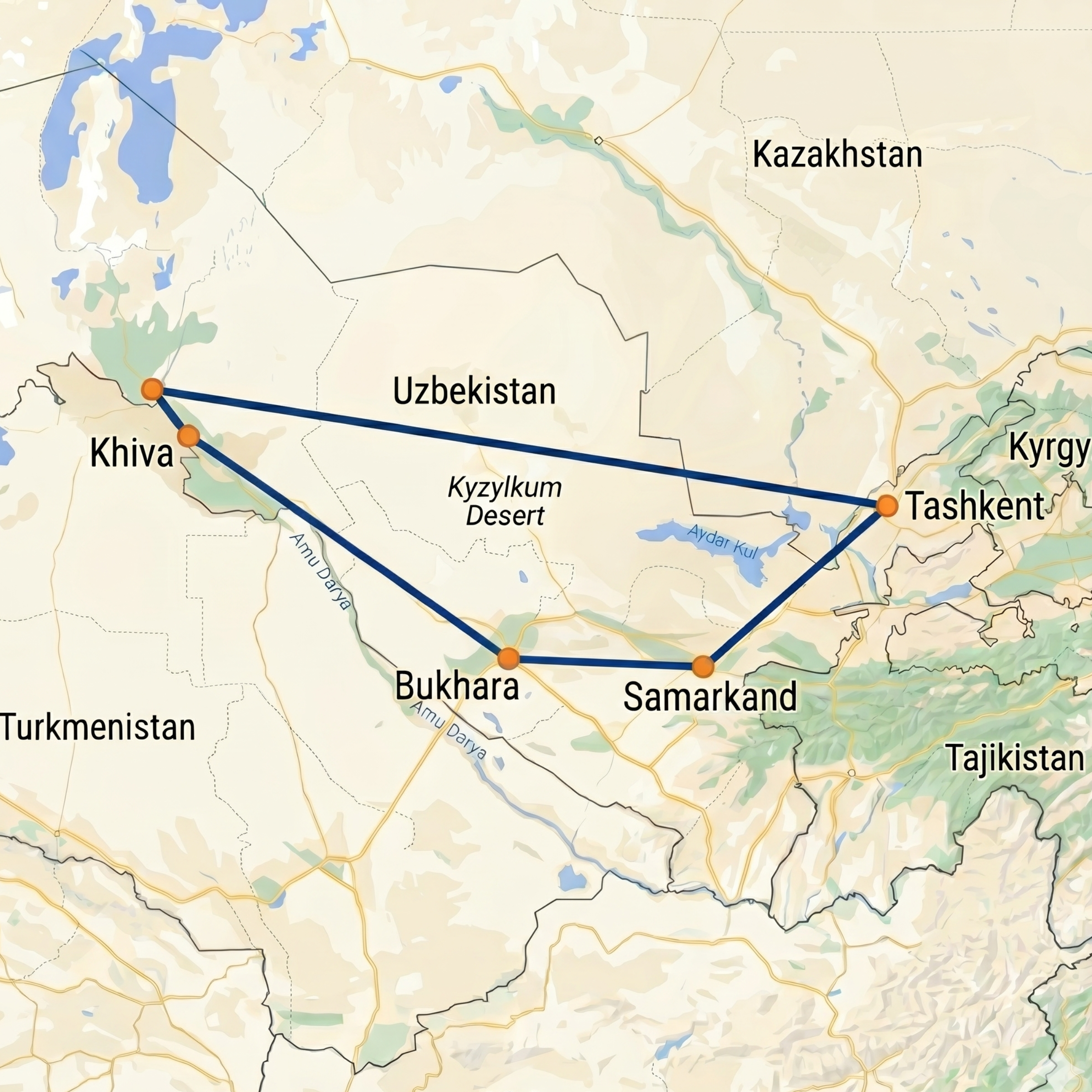
This premium itinerary focuses on the core architectural marvels of the Silk Road. Travel from Tashkent to experience the immense scale of Samarkand's Registan Square before walking the covered bazaars and historic alleyways of Bukhara and Khiva.
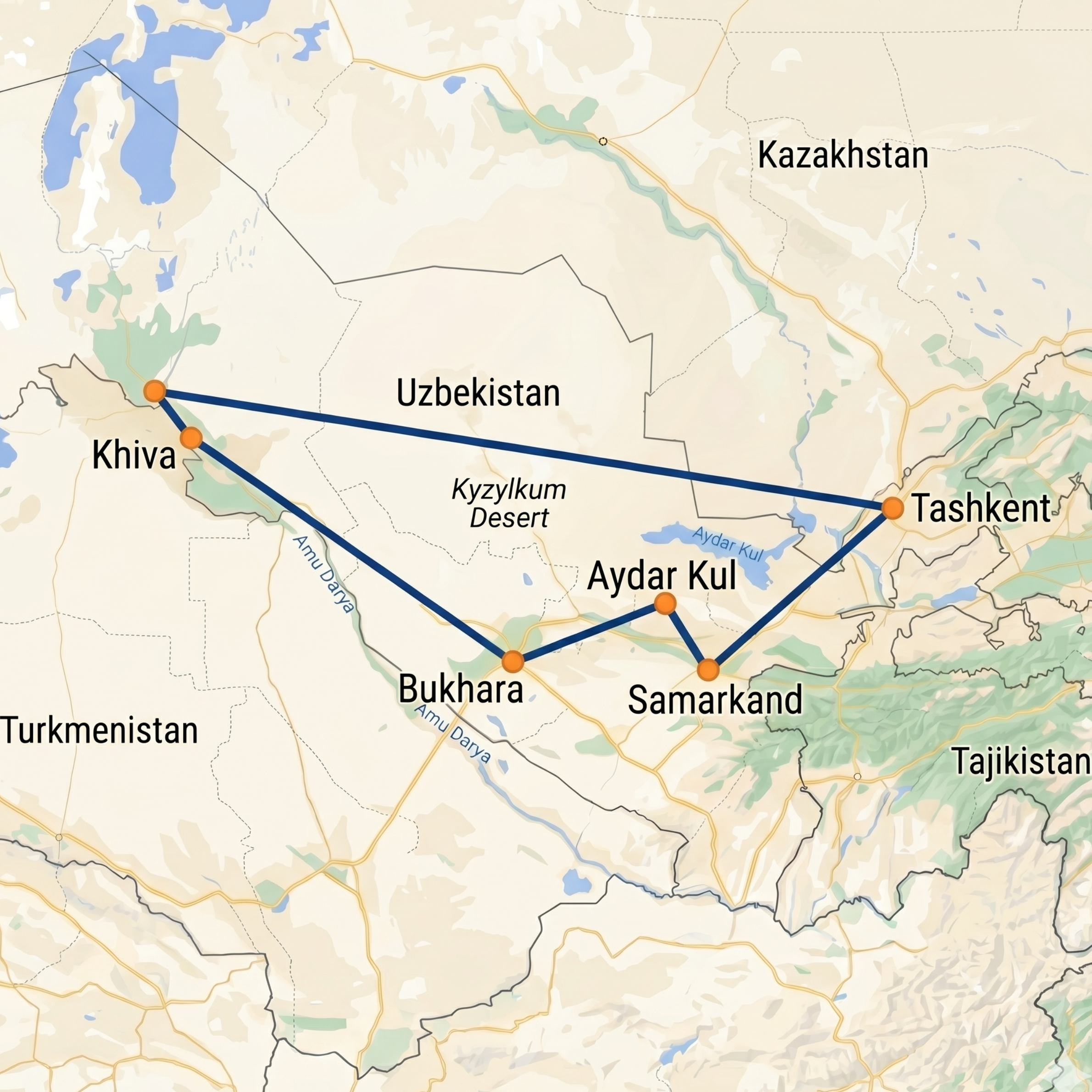
Explore Uzbekistan’s historic Silk Road. Journey from Tashkent to the magnificent mosques of Samarkand and Bukhara before exploring the mud-walled desert citadel of Khiva. A highlight is venturing into the Kyzylkum Desert to Aydar Kul for an overnight stay in a traditional yurt.
-
The ideal months to explore the city are April to May and September to October when spring and autumn bring mild, pleasant daytime temperatures. Planning a trip around 21 March allows travellers to experience the Navruz festival, which fills the streets with traditional music and communal cauldrons of sumalak.
Conversely, the peak summer months of July and August bring extreme heat regularly exceeding 40°C, making daytime sightseeing uncomfortable. Visitors should also check the dates for the major Islamic holidays of Eid al-Fitr and Eid al-Adha because many historical sites and local bazaars close completely for several days.
-
Most visitors treat the capital as a brief transit stop, spending only a single day rushing between the main transit hubs. Spending a minimum of three full days is necessary to discover the unique architectural layers and historic markets properly.
Extending the stay to five or six days allows travellers to explore lesser-known neighbourhoods and quiet residential mud-brick mahallas behind the main complexes. Lingering longer fosters responsible travel, giving visitors time to engage with local traders and understand how modern history shapes the nation.
-
The capital is highly secure with low rates of violent crime, but travellers should consult their government's local travel advisory for up-to-date information. Petty opportunist crimes like pickpocketing do occur, particularly within crowded spaces like Chorsu Bazaar or on busy public transport lines.
Unregulated street taxis can sometimes present scams involving inflated prices, so using official apps is a much safer choice. Travellers should practice common sense by avoiding drinking in excess, respecting local laws, and always securing a comprehensive travel insurance policy before departure.
For more practical tips and expert advice on staying safe during your trip, visit our dedicated page on Travel Safety.
-
Uzbekistan is a secular but deeply traditional nation where choosing modest dress shows genuine respect for the local population and culture. While walking around the modern sectors of the capital is more relaxed than in the conservative rural provinces, revealing items like singlets and shorts still draw disapproving stares and cause offence. For standard sightseeing throughout the city, opting for t-shirts and clothing that falls below the knee.
When visiting religious monuments, stricter rules apply, meaning everyone must ensure their shoulders, midriffs, chests, and legs are completely covered. Women are generally expected to cover their arms and heads with a light scarf before entering enclosed prayer halls or historic shrines.
Beyond dress codes, hospitality etiquette is highly valued when interacting with residents. If invited into a local home, travellers should remove their shoes at the front door as a fundamental sign of respect. It is also customary to present the hosts with a small gift, such as high-quality sweets or dried fruits, upon arrival.
-
Packing should focus on lightweight, loose-fitting garments made from breathable natural fibres like cotton or linen to manage the warm daytime conditions. Loose trousers, long skirts, and sleeved shirts are ideal, whereas singlet tops, crop tops, shorts and activewear are not suitable.
Comfortable slip-on shoes are essential for walking through markets and easily removing footwear at religious sites. For winter travel, thick coats and thermal layers are mandatory, while spring trips require a light waterproof jacket to handle sudden downpours.
-
Food plays a vital role in Uzbek hospitality, serving as a central connection to regional history and family identity. The definitive national dish is plov, a hearty combination of rice, mutton, yellow carrots, and spices traditionally simmered over wood fires in massive iron cauldrons.
Travellers should visit the Central Asian Plov Centre to see this dish prepared on a grand scale for the local community. Chorsu Bazaar features a famous street food alleyway where vendors prepare steaming bowls of naryn, which features hand-pulled noodles and shredded horse meat.
Essential Insights
-
The main international entry point is Islam Karimov Tashkent International Airport (TAS), located remarkably close to the city centre. The national rail network operates out of the Northern and Southern railway stations, handling a mixture of high-speed and local trains.
The premium high-speed Afrosiyob trains connect the capital to Samarkand and Bukhara much faster and more sustainably than flying or driving. Taking the train between city centres cuts down on airport queues and supports the responsible travel ethos. Multi-day international trains connect Tashkent with Kazakhstan and Russia.
-
The Tashkent Metro is the most reliable way to travel, directly connecting major tourist attractions like Chorsu Bazaar and Amir Temur Square. Passengers can pay at the turnstiles using contactless bank cards or by purchasing a reusable ATTO transport card.
For destinations outside the rail network, the Yandex Go rideshare app allows users to link an international credit card or pay cash to the driver. Selecting accommodation in the central districts provides excellent pedestrian-friendly options to visit most monuments completely by foot.
-
Maintaining a mobile data connection is highly useful for navigating the sprawling city streets and accessing digital translation apps. Major domestic telecommunications providers operate service desks directly inside the international arrivals terminal at the airport for physical SIM cards.
For maximum convenience and to minimise plastic waste, purchasing an eSIM before arriving is an excellent alternative. Travellers can set up a data package through Ohayu to ensure immediate internet connectivity the moment their aircraft lands.
-
The local currency is the Uzbek Som, and cash is the most common form of payment at traditional markets and neighbourhood eateries. ATMs are widely distributed across the capital inside large hotels, major metro stations, and local bank branches. Swapping USD or EUR at exchange booths is also a highly reliable backup strategy throughout the city.
Visa and Mastercard are accepted at high-end establishments, but American Express is rarely taken. Local QR payment apps require a domestic bank account.
-
Uzbek is the official state language, whilst Russian is exceptionally common as a language of widespread daily communication across the capital. English proficiency is generally limited to younger generations and staff working within the hospitality sector or upmarket restaurants.
English signs and bilingual menus are increasingly common in the modern centre but rare inside traditional markets and older transport routes. Downloading an offline digital language translator app onto a mobile phone is highly recommended for smooth daily interactions.
-
No, the tap water in Tashkent is generally not considered safe for direct consumption due to an aging distribution pipe network. To support responsible travel and minimise one-time use plastic, visitors should avoid buying small individual plastic bottles.
Travelling with a reusable water bottle featuring an inbuilt filtration system is the best way to safely treat water. Choosing accommodation options that provide free water refill stations also helps reduce plastic waste during your stay.