

Sovereign Citadels and Living Crafts
The historic crossroads of Kokand offers travellers an authentic immersion into the cultural heartland of the Fergana Valley. Once the capital of a powerful 19th-century khanate, this vibrant trade hub bridges its imperial past with a thriving modern artisan community. Visitors can explore grand architectural monuments that showcase unique yellow and green tiling, providing a distinct contrast to the classic blue mosaics seen in other parts of Uzbekistan. Recognised globally as an official World Craft City, Kokand is a fantastic base for viewing regional silk weaving and ceramic production. The city is a rewarding destination for anyone seeking true cultural depth and genuine local hospitality.
This Adventures Afar guide contains affiliate links. If you book through these, we may earn a commission at no extra cost to you.
Unmissable Highlights
-
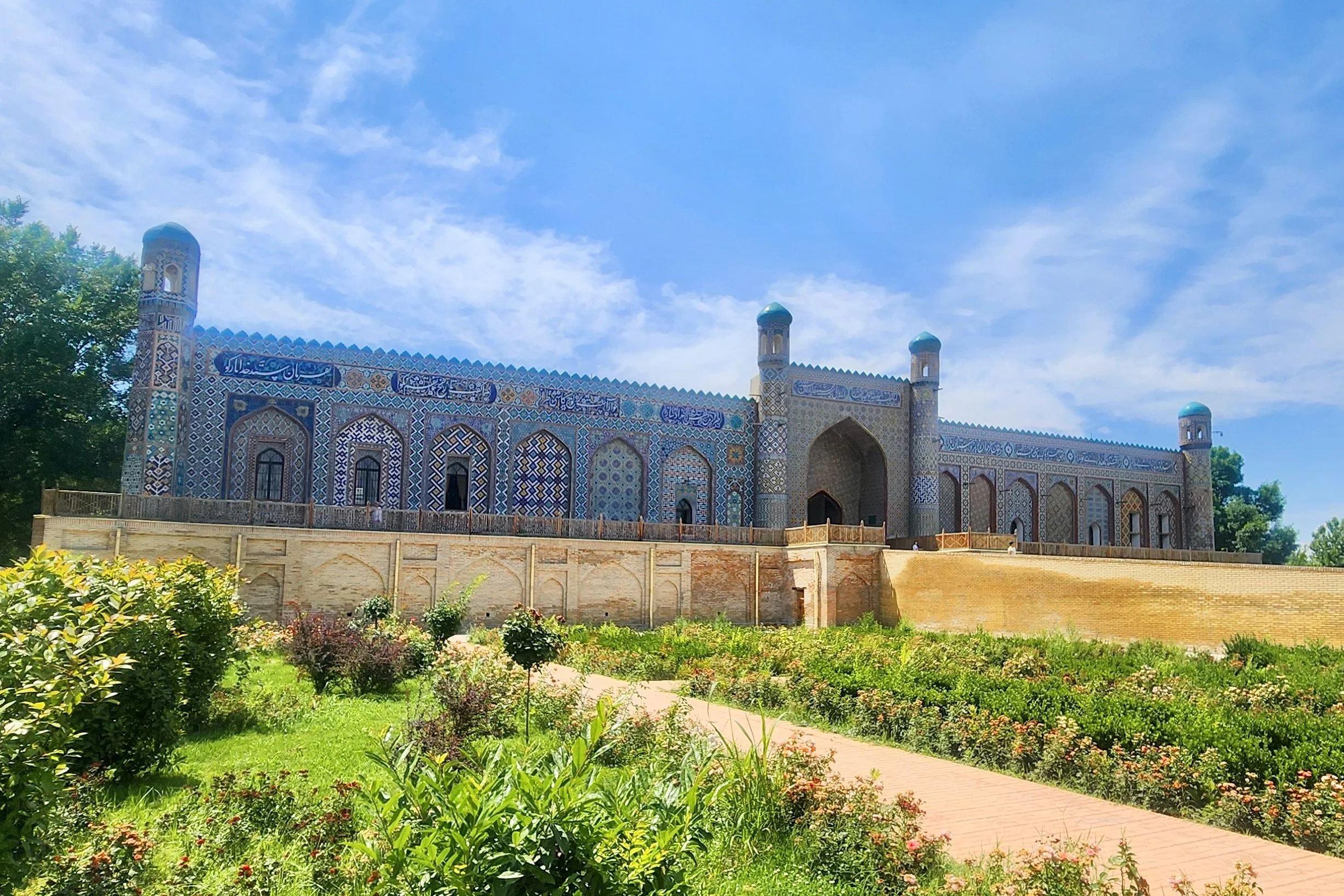
Khudoyarkhan's Palace
On arrival, visitors are immediately greeted by the breathtaking facade of Khudoyarkhan's palace, a dazzling architectural masterpiece often referred to as the Pearl of Kokand. Built in the 1870s as the residence for the last ruler of the Kokand Khanate, the complex originally spanned four hectares and contained 119 rooms arranged across seven expansive courtyards. Although only 19 rooms survive today, the structure showcases the pinnacle of local craftsmanship, featuring vibrant yellow and green ceramic tiling that sets it apart from the predominantly blue monuments found elsewhere in Uzbekistan.
Did You Know? The palace was constructed using the forced labour of 16,000 conscripted workers. Those who committed even minor infractions faced immediate corporal punishment or heavy financial penalties from the Khan's overseers.
-
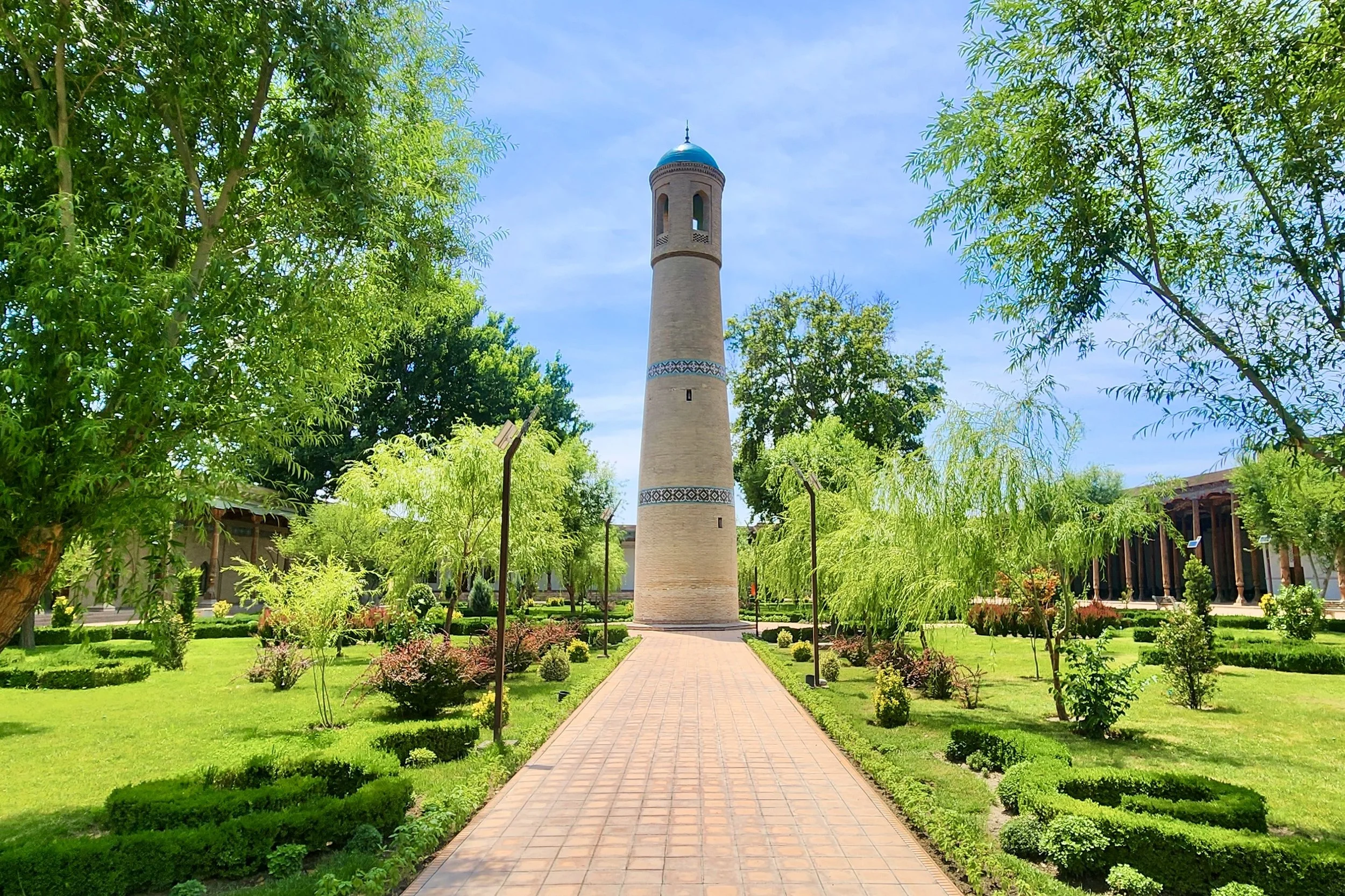
Jami Mosque
Dominating the vibrant expanse of Chorsu Square, the magnificent Jami Mosque serves as a profound testament to the golden age of the Kokand Khanate. Commissioned by Umar Khan in 1819, the religious complex features a massive open gallery supported by 98 intricately carved wooden columns, each showcasing distinct floral and geometric motifs. At the heart of the peaceful, green courtyard stands a 22.5-metre stone minaret constructed from smooth, circular brickwork. The white-walled prayer halls are adorned with unique ganch carvings, a traditional plaster art specific to the artisans of the Fergana Valley.
Did You Know? The stunning ceiling of the open gallery was painted by hand using vibrant natural pigments mixed with real gold, which allows the intricate, multi-tiered honeycomb details to brilliantly catch the daylight.
-
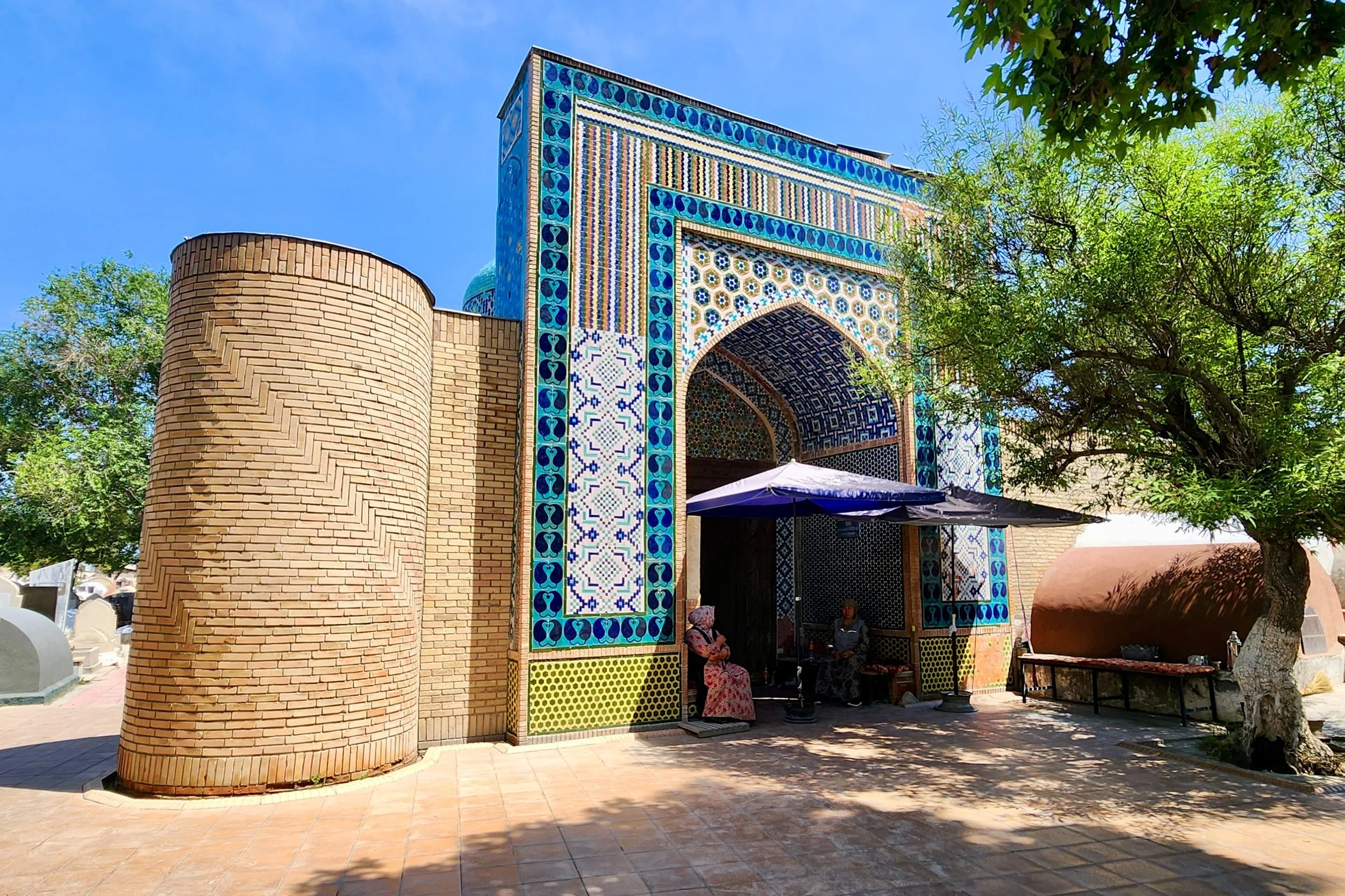
Dakhmai Shahan Necropolis
Tucked behind Norbutabiy Mosque, the historic Dakhmai Shahan Necropolis is a solemn family tomb dedicated to the royal rulers of Kokand. Construction began in 1822 under Umar Khan, but after his sudden death, the project was beautifully completed by his celebrated poet-wife, Nadira, and their son. The entrance portal features an exquisite, stylised depiction of pepper plants, a highly unique element in regional ornamentation. Inside the prayer chamber, visitors can observe complex geometric forms and masterful plaster carvings that reflect the architectural identity of the 19th-century khanate.
Did You Know? The inscription carved above the main gateway serves as a stern moral warning to all visitors, translating from Arabic to state that noble aspirations lead to respect, while envy leads to absolute poverty.
-
The ideal months to explore Kokand are from April to May and September to early November. During these spring and autumn windows, the weather is pleasant and temperate, perfectly suited for walking around the historical sites. Visiting in May offers the added bonus of catching the region in full bloom, when the surrounding Fergana Valley is lush and vibrant. Conversely, the summer months of June, July, and August bring intense, scorching heat, while the winter months from December to February can be bitterly cold.
When planning a trip, look out for the major national public holidays, particularly Navruz around 21 March and Independence Day on 1 September. During these times, public transport and domestic trains sell out weeks in advance, and many local businesses temporarily close their doors as families gather to celebrate.
-
While many travellers treat this historic hub as a quick day trip, rushing through only scratches the surface of what the city has to offer. A minimum of two days allows for an unhurried look at the primary monumental highlights, such as the Khan's Palace and the central mosques. Extending a stay to three or four days creates the opportunity to explore beyond the central core into the fascinating artisan neighbourhoods, where generations of woodcarvers and weavers maintain traditional workshops. Taking more time rewards travellers with a deeper understanding of the local heritage and directly supports the preservation of these historic crafts.
-
Travellers should consult their government's official travel advisories before departing for up-to-date safety statistics and regional information. While certain government advisories flag the broader Fergana Valley due to complex regional histories and border geography, Kokand itself was completely safe, peaceful, and welcoming when visited to write this guide in mid-2026.
Petty crime is exceptionally low, but standard situational awareness is always smart in crowded areas like marketplaces to avoid pickpocketing. Maintaining standard situational awareness, such as avoiding drinking alcohol in excess, respecting local customs, and strictly obeying national laws, ensures a trouble-free journey.
Finally, always secure a comprehensive travel insurance policy before departure to protect against unexpected medical issues or transit delays.
For more practical tips and expert advice on staying safe during your trip, visit our dedicated page on Travel Safety.
-
Showing respect for the traditional culture of the Fergana Valley means being mindful of dress codes. While walking around the city, casual attire is perfectly acceptable, but clothing should remain respectful and modest, ensuring shoulders, chests, and knees are fully covered whether exploring the streets or visiting historical sites. Tight or revealing clothing, such as singlet tops, crop tops, or shorts, is inappropriate for any gender.
When entering religious monuments such as mosques, stricter guidelines apply. Everyone must remove their shoes at the entrance and have their legs fully covered. Women should also cover their arms and hair with a lightweight scarf, which is easily carried in a daypack.
If invited into a local home, it is customary to remove shoes at the front door, and bringing a small gift of fruit or sweets from the market is a wonderful way to express gratitude for the legendary local hospitality.
-
Pack lightweight, breathable garments made of natural fabrics like linen or cotton to stay comfortable while walking. Long, loose trousers, maxi skirts, and breathable long-sleeved shirts are ideal for keeping cool while remaining appropriately covered. Don’t pack tight activewear, crop tops, or shorts, as these will cause discomfort and offense in this socially conservative region.
Comfortable, slip-on walking shoes are recommended, as shoes must be taken off frequently at religious sites and homes. While there is no swimming infrastructure here, if a hotel features a pool, modest swimwear is highly recommended out of respect for local staff. For those visiting during the transition months of April or October, bringing a compact umbrella or a light windbreaker handles any sudden spring or autumn showers. If travelling during the winter months, a heavy thermal coat, gloves, and warm layers are absolutely mandatory to combat the freezing continental temperatures.
-
Sampling the local culinary specialties is an essential part of the cultural experience. The signature dish to try is Kokand plov, a regional variation of Uzbekistan's national dish featuring tender mutton, yellow carrots, and local rice, cooked slowly in a massive iron cauldron. Unlike the heavier versions found in Tashkent, the local preparation feels lighter yet intensely flavourful.
Another highlight is the Kokand patyr, a unique, heavy flatbread that is beautifully stamped with geometric patterns and baked fresh inside a clay tandoor oven. This bread holds immense cultural value, often gifted at weddings and family gatherings as a symbol of prosperity. Head to a bustling bazaar to sample these fresh breads alongside seasonal apricots, pomegranates, and walnuts, or visit the small, family-run eateries clustered around the outskirts of the central square for authentic, home-cooked shashlik skewers.
Essential Insights
-
Travelling to the city by rail aligns perfectly with responsible travel principles, as the journey through the mountains from Tashkent, or across the Fergana Valley, is both highly scenic and more sustainable than flying. Comfortable trains run regularly from Tashkent Northern Railway Station, travelling through the Kamchik Tunnel to arrive at Kokand Station. This train route connects both city centres much faster and more comfortably than navigating airport security.
For air travel, the closest major gateway is Fergana International Airport (FEG), located roughly 80 kilometres to the east, which handles domestic connections from Tashkent as well as select international arrivals.
A network of shared minivans and long-distance buses links the main bus terminal to nearby crafting enclaves, however, surprisingly private taxis, organised through the Yandex Go app, are an affordable option to get to nearby towns.
-
The central historic core is incredibly compact and pedestrian-friendly, making it easy to visit the majority of the premier tourist attractions on foot.
For longer distances across the city, the most convenient option is the rideshare app Yandex Go, which provides upfront pricing and lets users call official vehicles easily. Payment for these rideshare trips can be settled in cash directly to the driver at the end of the journey, although digital cards linked to the app can also be used.
Public mid-sized buses and small fixed-route minivans crisscross the main avenues, costing a small flat fee paid in cash directly to the conductor upon boarding.
-
Staying connected is straightforward, and visitors can easily acquire a local physical SIM card from major national providers like Ucell or Beeline at official store branches by presenting a passport. However, utilizing a digital eSIM before arrival eliminates the hassle of tracking down a physical kiosk.
For a seamless digital transition, Ohayu provides excellent eSIM data coverage across the region. It allows travellers to access navigation apps and translation tools the moment they cross into the valley.
-
Cash remains king for daily transactions, especially when buying handicrafts at markets, dining at traditional cafes, or paying transport fares. While standard ATMs are readily available at major bank branches near the city centre, they can occasionally run out of cash or reject foreign cards, so having a reliable backup plan is essential. Carrying a supply of crisp, unblemished US Dollar or Euro bills is highly recommended as these can be easily exchanged for local currency at any bank counter.
Visa and Mastercard are accepted at larger hotels, but smaller guesthouses and local vendors rarely have card terminals. While local businesses are rapidly adopting a new mandatory Unified QR Code system for mobile payments via domestic banking apps, this setup is geared towards residents rather than short-term international tourists.
-
English proficiency is generally low throughout the Fergana Valley, as Uzbek and Russian are the primary languages spoken by the vast majority of the population. While major historical monuments feature English descriptive plaques, English menus and signs are rare at local restaurants and neighbourhood markets.
Despite the language barrier, local residents are incredibly patient, warm, and eager to help visitors navigate their city. Downloading an offline translation application with voice-to-text capabilities onto a smartphone prior to arrival is highly recommended, as it makes ordering food, bargaining at the bazaar, and interacting with artisans a smooth and enjoyable experience.
-
No, the public tap water is not safe for international visitors to drink due to outdated distribution pipes and inconsistent regional sanitation treatment standards. To avoid gastrointestinal issues, rely completely on filtered or purified water for drinking and brushing teeth.
To practice responsible travel and minimise the accumulation of single-use plastic bottles, invest in a reusable water bottle equipped with an internal microbiological filter. When booking accommodation, look for property listings that offer complimentary filtered water refill stations in their common areas, allowing for easy bottle top-ups before heading out to sightsee.