

Woven Legends and Vibrant Bazaars
The legendary Silk Road trading post of Margilan offers travellers an unparalleled journey into the ancient art of Central Asian textile production. As the undisputed silk capital of Uzbekistan, this historic Fergana Valley destination houses traditional factories where masters still extract and weave delicate threads completely by hand using centuries-old techniques. Visitors can immerse themselves in the spectacular kaleidoscope of colours at the bustling local markets, which feature incredible arrays of authentic ikat fabrics alongside mountain spices and fresh regional produce. Margilan serves as an essential destination for cultural explorers eager to witness living heritage, interact directly with passionate local craftspeople, and experience the warm hospitality that defines this traditional hub.
This Adventures Afar guide contains affiliate links. If you book through these, we may earn a commission at no extra cost to you.
Unmissable Highlights
-
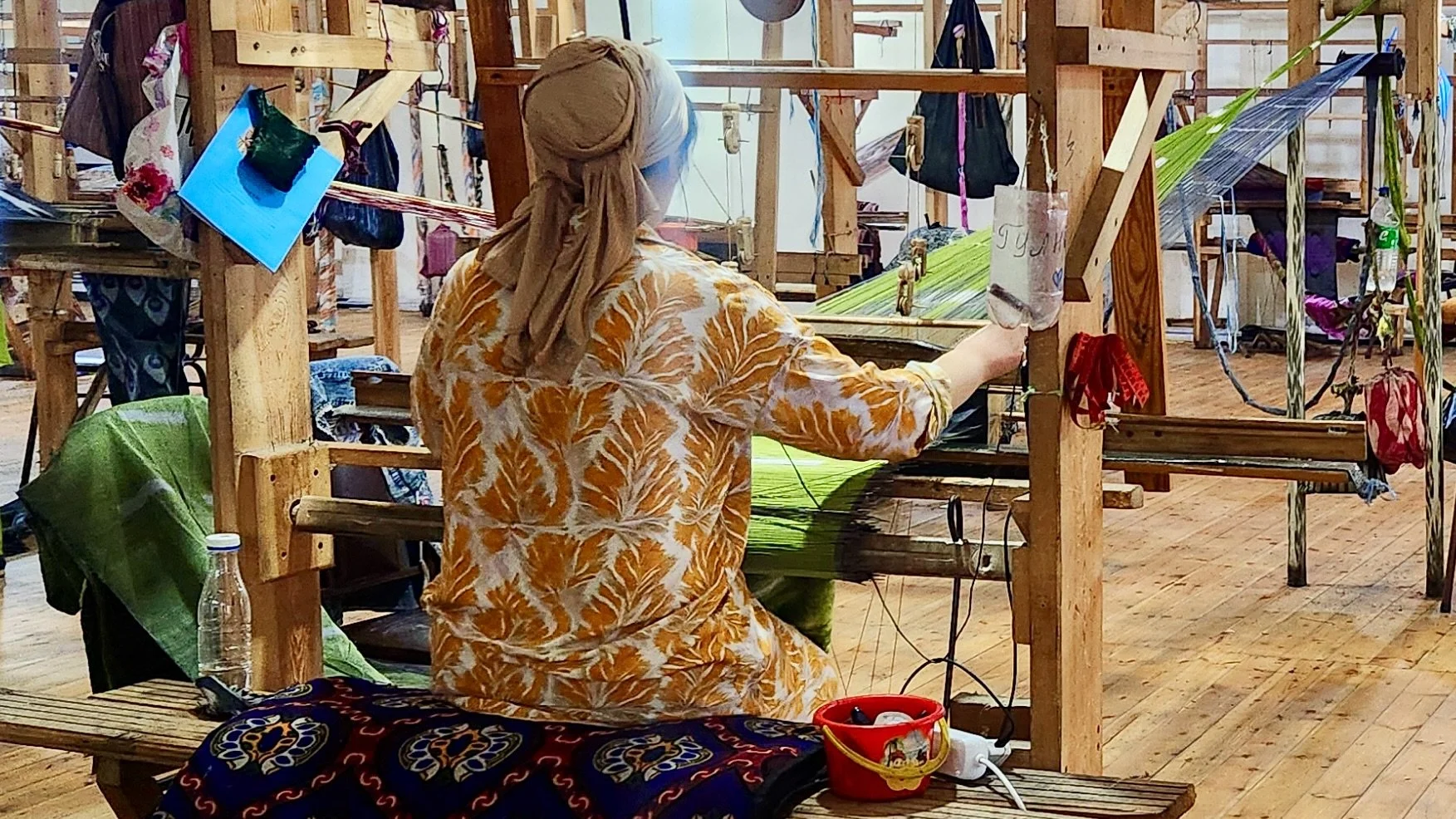
Silk Factories
Operating as the beating heart of Central Asia’s historic textile industry, the famous silk factories of Margilan offer an incredible window into ancient sericulture. The most prominent facilities maintain traditional, entirely hand-processed production methods that have remained virtually unchanged for centuries. Visitors can follow the captivating lifecycle of the fabric, watching artisans boil silkworm cocoons, spin delicate threads, and dye them using natural colourants like pomegranate peel and madder root. They can also watch the complex creation of ikat fabrics, a traditional weaving method officially included on the UNESCO Representative List of the Intangible Cultural Heritage of Humanity.
Did You Know? The intricate ikat patterns are created using a complex resist-dyeing method where the threads are tightly bound with waterproof cords to shield specific sections before hitting the dye vats, meaning the vibrant design is finalised before the loom is even threaded.
-
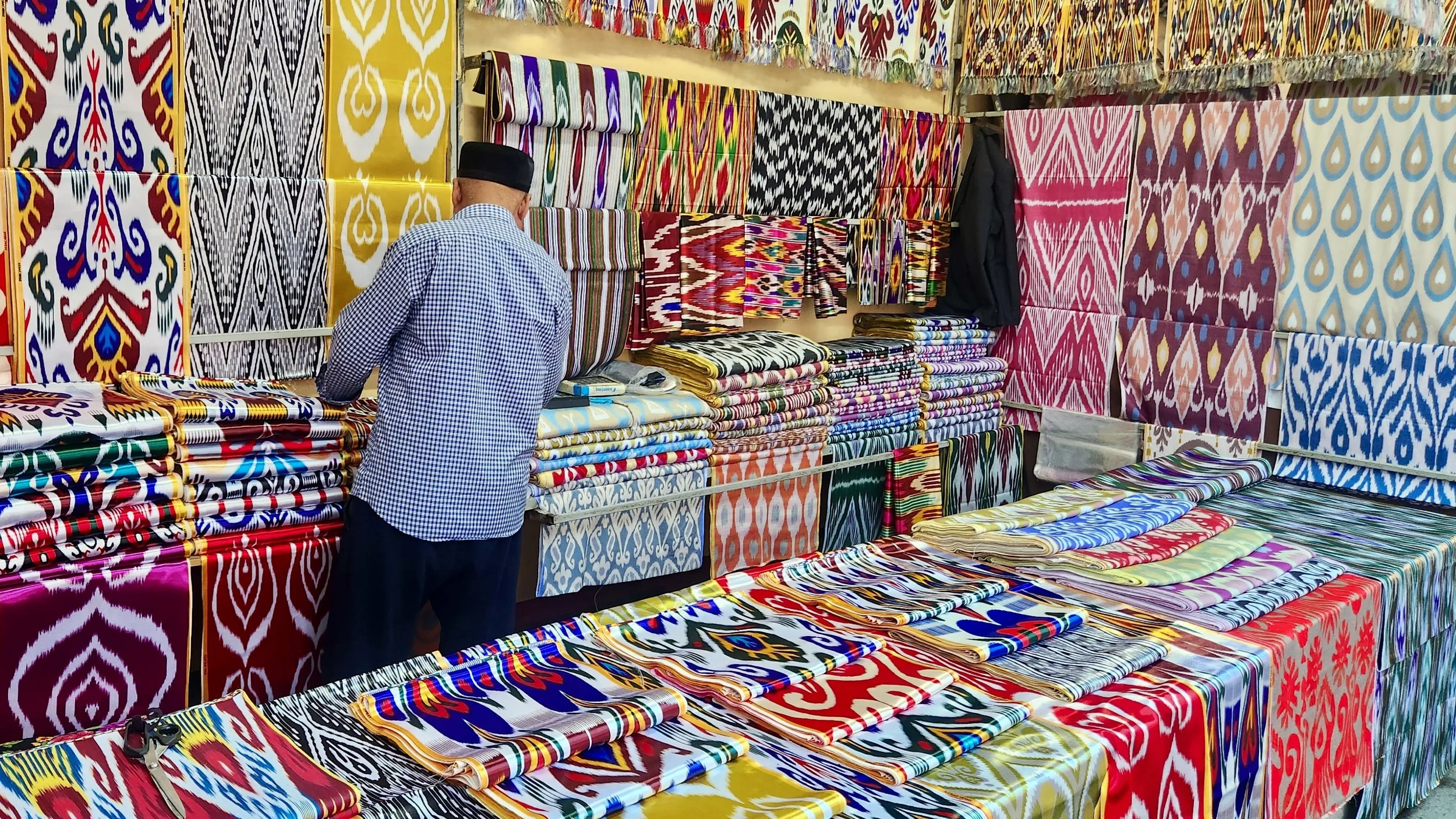
Kumtepa Bazaar
Located just a short journey west of the city centre, the sprawling Kumtepa Bazaar stands as one of the most authentic, energetic, and visually spectacular trading markets in the entire Fergana Valley. Unlike the heavily commercialised souvenir stalls found in more prominent tourist tracks, this massive market operates primarily for local residents, hitting its chaotic peak every Thursday and Sunday. Endless rows of stalls showcase magnificent bales of hand-woven fabrics, traditional clothing, seasonal fruits, and aromatic spices. It serves as an unmissable cultural crossroads where elders in traditional skullcaps and quilted coats gather to trade, chat, and drink green tea.
Did You Know? The bazaar is the cheapest place in Uzbekistan to purchase authentic silk, with high-quality, hand-woven lengths of fabric often trading for a mere fraction of the retail prices found in the boutique shops of Tashkent or Bukhara.
-
The most ideal months to experience Margilan are from April to May and September to October. During these temperate spring and autumn windows, daytime temperatures are warm and comfortable, which is excellent for walking between active weaving mills and outdoor trading squares. Planning a trip in September offers the added benefit of witnessing the region's massive pomegranate and cotton harvests. Summers from June to August bring intense, dry continental heat, while the winter months from December to February bring freezing temperatures that can make sightseeing uncomfortable.
When establishing travel dates, it is wise to avoid major national public holidays, particularly Navruz around 21 March and Independence Day on 1 September. During these significant cultural holidays, domestic train tickets sell out weeks in advance, and several independent silk workshops temporarily close so that workers can celebrate with their families.
-
While many visitors treat this textile capital as a quick day trip from neighboring cities, a rapid visit misses the true essence of the community. A minimum of one full day is necessary to tour the main silk factories and explore Kumtepa Bazaar without feeling rushed. However, extending a stay to two or three days allows for a much more rewarding exploration, providing ample time to discover lesser-known residential neighborhoods, meet independent master weavers in their home studios, and absorb the region's unique heritage at a slow pace. Choosing a longer stay rewards curious travellers with a deeper understanding of Silk Road history and directly supports the local artisans who keep these historic crafts alive.
-
Staying properly informed by reading official government travel advisories prior to departure is an essential step for any international journey. While some official travel advisories highlight the broader Fergana Valley due to its complex regional border geography, the city itself was entirely peaceful, safe, and welcoming when visited in mid-2026 to research this guide.
Violent crime is practically unheard of, although exercising standard situational awareness in highly crowded areas like the Kumtepa Bazaar is a smart way to guard against minor pickpocketing. Adhering to basic common-sense practices, such as avoiding drinking alcohol in excess and strictly obeying all national laws, ensures a trouble-free trip. It is also wise to secure a comprehensive travel insurance policy before departing to protect against unexpected transit cancellations or medical emergencies.
For more practical tips and expert advice on staying safe during your trip, visit our dedicated page on Travel Safety.
-
Showing respect for the traditional Islamic culture and local values of the Fergana Valley is highly important for a smooth and positive journey. While exploring the town or navigating the markets, everyone should choose modest clothing that fully covers the shoulders, chest, and knees. Revealing items such as singlet tops, crop tops, shorts, or tight-fitting activewear are completely unsuitable and will cause genuine discomfort among conservative residents.
Stricter clothing expectations apply when entering sacred religious monuments such as active mosques, where everyone must cover their legs fully and remove their shoes before crossing the threshold. Women should also cover their arms and wrap a lightweight scarf over their hair. If invited into a local home or a family-run weaving studio, always remove shoes at the front door. Accepting tea or food using the right hand is a simple, highly appreciated gesture of respect.
-
Pack loose-fitting, lightweight clothing made from breathable natural textiles like linen or cotton to stay cool during the day while remaining appropriately covered. Ideal wardrobe choices include long trousers, maxi skirts, and loose long-sleeved shirts. Don’t pack activewear, low-cut tops, or shorts.
Packing comfortable shoes for walking is essential. There are no public swimming facilities or recreational swimming areas in the city, but if staying at a regional hotel with a private pool, modest swimwear is highly recommended to respect local norms. For spring or autumn travel, packing a compact umbrella prepares travellers for sudden showers, and if visiting during the winter months, heavy thermal base layers, a thick winter coat, and warm gloves are completely mandatory.
-
Exploring the distinct local food scene offers a memorable window into the culinary traditions of the valley. The must-try regional specialty is Margilan plov, a delicate, highly aromatic rice dish cooked slowly over an open flame in a massive iron kazan, typically featuring tender local mutton, yellow carrots, and minimal oil compared to the heavier styles found in western Uzbekistan.
Another regional classic is manti, which are large, steamed dumplings stuffed with finely minced lamb, onions, and traditional spices, served with fresh sour cream. Head directly to the bustling Kumtepa Bazaar or the central market streets on a Thursday or Sunday morning to sample hot, tandoor-baked flatbread alongside exceptional local seasonal fruits like sweet figs and fresh apricots. Sampling these traditional dishes supports local agricultural producers and provides an excellent taste of the region's historic hospitality.
Essential Insights
-
Reaching the city by rail is a highly efficient, sustainable option that supports the responsible travel ethos by reducing aviation emissions. Regular regional trains operate daily from Tashkent Central Railway Station, traveling through the spectacular mountain passes via the Kamchik Tunnel to arrive at Margilan Railway Station. This scenic rail journey connects both city centres much faster and with significantly less hassle than navigating domestic airport security.
For those arriving by air, the primary regional gateway is Fergana International Airport (FEG), situated just 11 kilometres south of central Margilan, which handles flights to and from Tashkent alongside select international routes.
-
The central areas of the city are highly compact and easy to navigate on foot, allowing travellers to easily visit primary textile factories and central squares. Local fixed-route minivans (marshrutkas) and mid-sized public buses cover the main avenues for a tiny flat cash fee paid upon boarding.
For longer journeys across town or trips to the outlying bazaars, utilising the ride share application Yandex Go is the most efficient choice, offering clear upfront pricing. These ride share trips are often settled using cash paid directly to the driver at the end of the ride, although international cards can sometimes be linked.
-
Acquiring reliable data connectivity is straightforward, and travellers can easily purchase a local physical SIM card by presenting a passport at official mobile provider offices in the city centre. However, setting up a digital eSIM prior to arrival completely removes the hassle of visiting a physical retail branch.
For excellent data speeds and strong network coverage across the entire Fergana Valley, Ohayu is a reliable eSIM choice. This option ensures translation apps and navigation maps are fully functional the moment travellers arrive.
-
Cash is the primary and most reliable method of payment for almost all daily transactions in the city, including buying handmade silk scarves at the factories, purchasing produce at the bazaar, or dining at local cafes. ATMs are available near major commercial bank branches in the town center, but they can occasionally run out of cash or fail to connect with foreign banking networks, making them unreliable as a primary source of funds. Carrying a clean supply of unblemished US Dollar or Euro bills is highly recommended, as these can be quickly converted into local currency at any official bank exchange desk.
Visa and Mastercard are accepted at large international hotels, but smaller guesthouses and local market vendors operate entirely on cash. While local residents widely use a domestic QR code mobile payment system, it requires a local Uzbek bank account, making cash the primary tool for international visitors.
-
English proficiency is generally low throughout the city, with Uzbek and Russian serving as the primary languages spoken by the vast majority of the population. While major historical sites and prominent silk factories feature English speaking tour guides or basic English descriptions, English menus and signs are rare at neighbourhood restaurants and local markets.
Despite the language barrier, local residents are incredibly warm and eager to assist visitors navigating their town. Safely downloading a reliable translation application with offline capabilities onto a smartphone prior to arrival is highly recommended, as it makes bargaining at the bazaar, ordering local dishes, and interacting with independent artisans a smooth and enjoyable experience.
-
No, the public tap water is not safe for international visitors to drink due to aging distribution networks and inconsistent regional sanitisation standards. To prevent any stomach issues or transit illnesses, rely completely on bottled, filtered, or purified water for drinking and brushing teeth.
To practice responsible travel and minimise single-use plastic waste, use a reusable water bottle equipped with an advanced internal microbiological filtration system. When booking guesthouses or traditional homestays, prioritise properties that offer complimentary filtered water refill stations, allowing for easy bottle top-ups before heading out to explore the silk factories.