
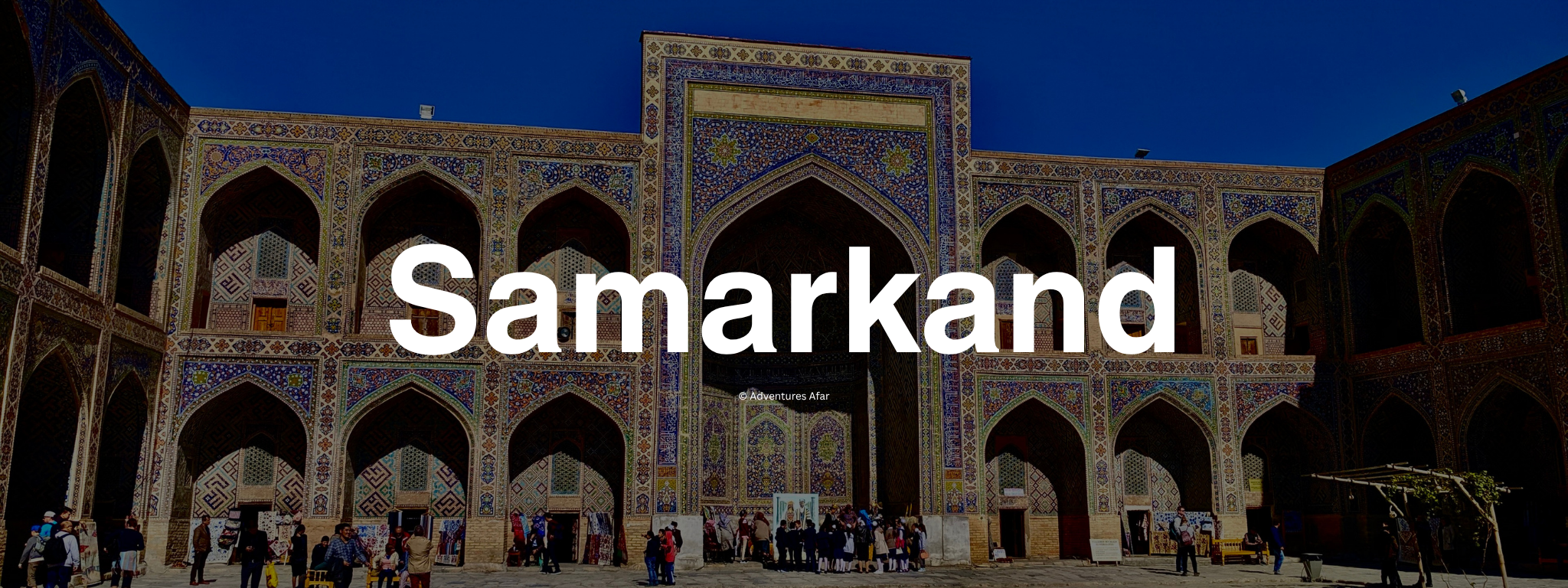
Ancient Crossroads and Golden Horizons
Few destinations capture the legendary romance of the Silk Road quite like Samarkand. This historic oasis serves as an essential destination for travellers seeking deep cultural immersion and genuine exploration. As a designated UNESCO World Heritage site, the city showcases a breathtaking landscape of turquoise domes, glittering majolica tiles, and soaring minarets that mirror the ambition of the ancient Timurid Empire. Beyond the monumental architecture of the old town, a journey here reveals vibrant bazaars overflowing with artisan textiles and rich Central Asian flavours. Samarkand bridges timeless Islamic artistry with genuine Uzbek hospitality, offering an unparalleled travel experience.
This Adventures Afar guide contains affiliate links. If you book through these, we may earn a commission at no extra cost to you.
Unmissable Highlights
-
Registan Square
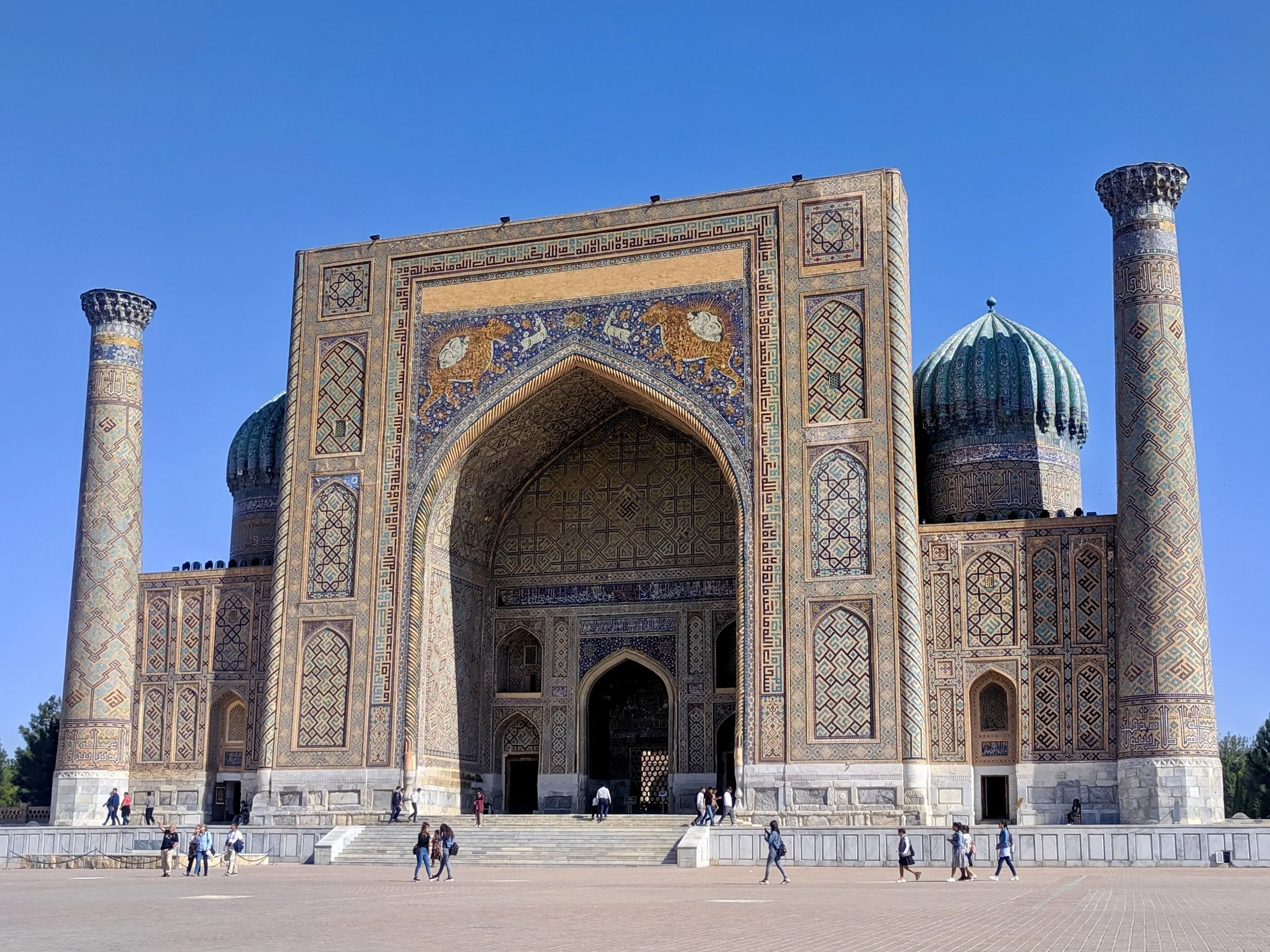
As the grand crossroads of the ancient Silk Road, Registan Square stands as the definitive crown jewel of Central Asian architecture. This monumental public square features three massive madrasas, Ulugh Beg, Sher-Dor, and Tilla-Kari, each adorned with glittering azure mosaics and geometric brickwork. Serving as the core of historic Samarkand, a UNESCO World Heritage site, the complex functioned as a medieval forum for royal decrees, bustling markets, and intellectual discourse. The soaring minarets and turquoise domes create an unforgettable skyline that perfectly embodies Islamic architectural mastery.
Did You Know? The facade of the Sher-Dor Madrasa directly defies traditional Islamic art rules by depicting live tigers chasing deer, a bold architectural choice meant to symbolise the power of the ruling governor.
-
Amir Temur Mausoleum
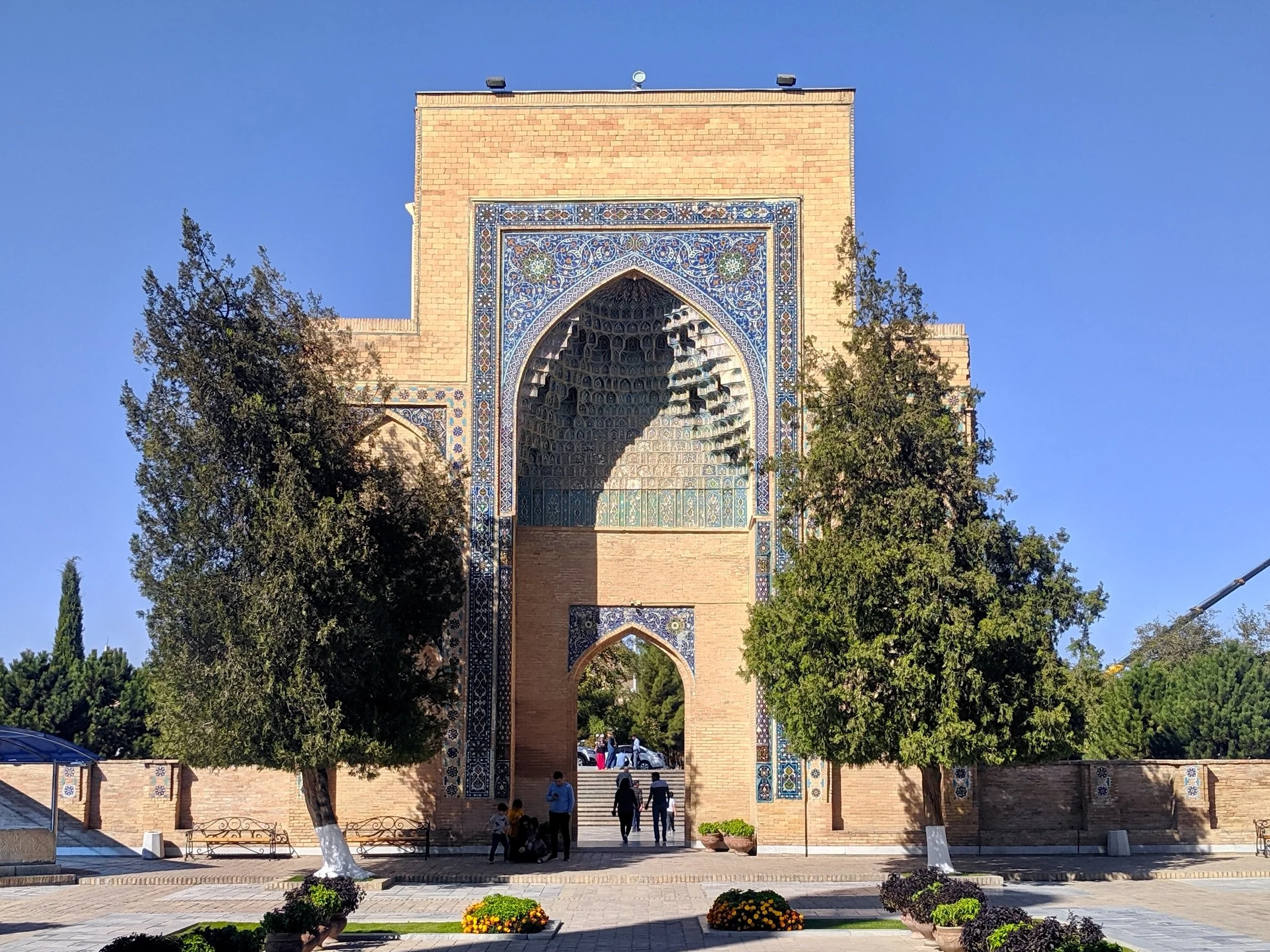
Famously known as Gur-e-Amir, the Amir Temur Mausoleum is an architectural masterpiece that holds the resting place of the legendary Asian conqueror. The structure features a distinctive fluted dome clad in brilliant turquoise tiles, which sits atop an elegant octagonal base. Inside, the tomb chamber displays breath-taking craftsmanship, with walls covered in carved onyx and gilded papier-mache relief work. This landmark serves as a major component of Samarkand's UNESCO World Heritage designation, drawing historians and travellers eager to experience the monumental grandeur of the Timurid dynasty.
Did You Know? Timur's dark green jade cenotaph is inscribed with a famous curse warning that anyone who disturbs his peace will unleash an invader far more terrible than he ever was.
-
Shah-i-Zinda
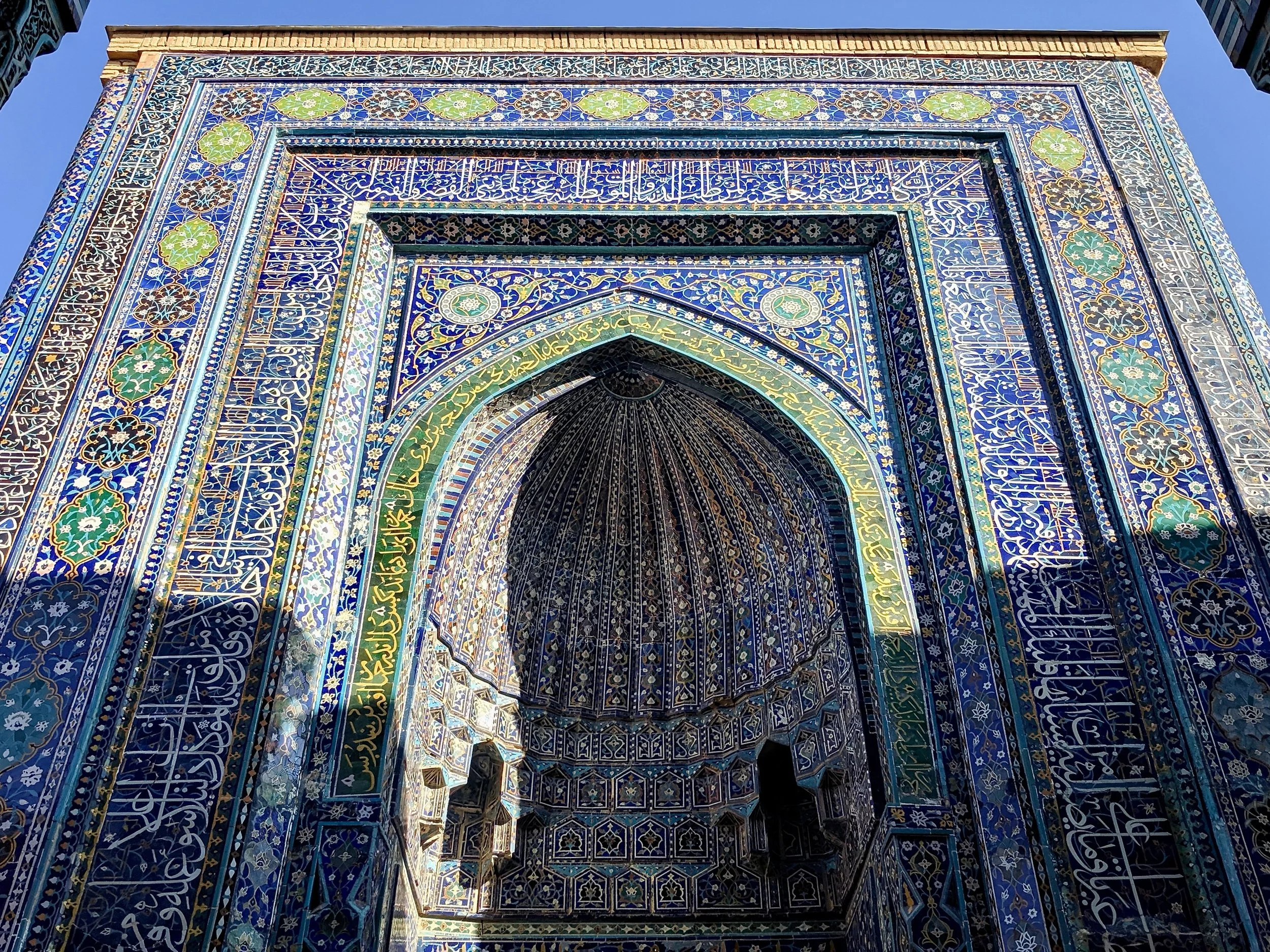
Tucked away on the slopes of the ancient Afrasiab Hill, Shah-i-Zinda is an enchanting avenue of mausoleums showcasing the finest ceramic tilework in the world. The sacred necropolis features a narrow street of tombs built across eight centuries, creating an open-air archive of evolving architectural styles. Each monument along the pathway is wrapped in vivid shades of cobalt, majolica, and intricately carved terracotta. A key spiritual landmark within the UNESCO World Heritage borders of Samarkand, the complex acts as a revered pilgrimage site that seamlessly blends deep religious devotion with timeless artistry.
Did You Know? The name translates to "The Living King", referring to a legendary cousin of the Prophet Muhammad who allegedly arrived here in the seventh century to preach and remains hidden inside a deep well.
-
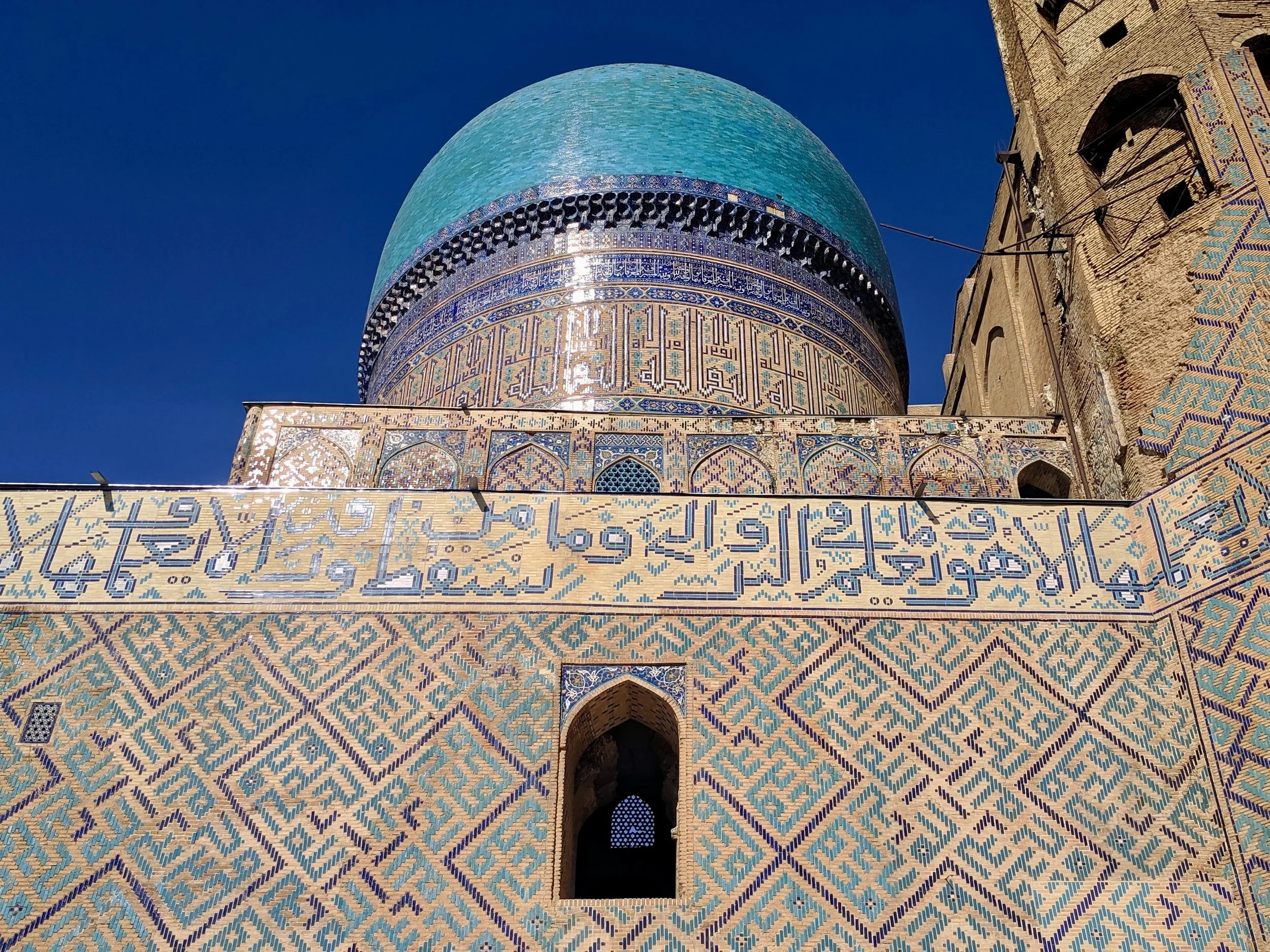
Bibi-Khanym Mosque
Commissioned to commemorate Amir Timur’s favourite wife, the Bibi-Khanym Mosque was built to be one of the largest and most ambitious religious structures in the medieval Islamic world. The monument boasts a colossal 35-metre-high front gateway that leads into a vast courtyard flanked by marble columns and majestic blue domes. Although the ambitious scale pushed 15th-century engineering techniques past their limits and caused partial structural collapses over the years, intensive restoration has revived its jaw-dropping scale. Today, the complex is a foundational pillar of Samarkand's UNESCO World Heritage status.
Did You Know? According to a famous Silk Road legend, the master architect fell so deeply in love with Queen Bibi-Khanym that he refused to finish the mosque unless she permitted him to kiss her cheek.
Recommended
Multi-Day Itineraries
Put this guide into practice with these hand-picked small group journeys,
featuring both iconic landmarks and immersive cultural experiences.
Samarkand, Bukhara & the Ancient Silk Road
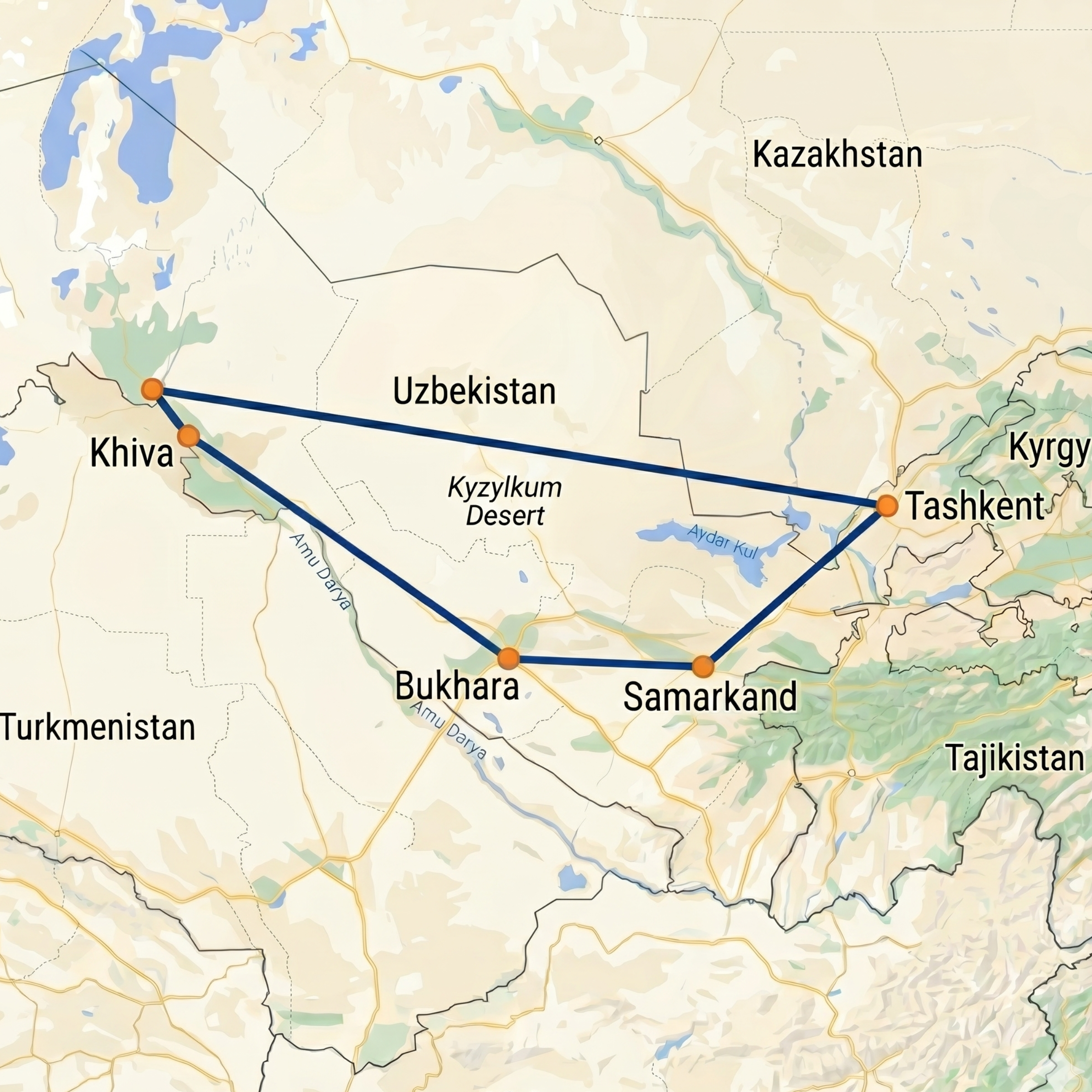
This premium itinerary focuses on the core architectural marvels of the Silk Road. Travel from Tashkent to experience the immense scale of Samarkand's Registan Square before walking the covered bazaars and historic alleyways of Bukhara and Khiva.
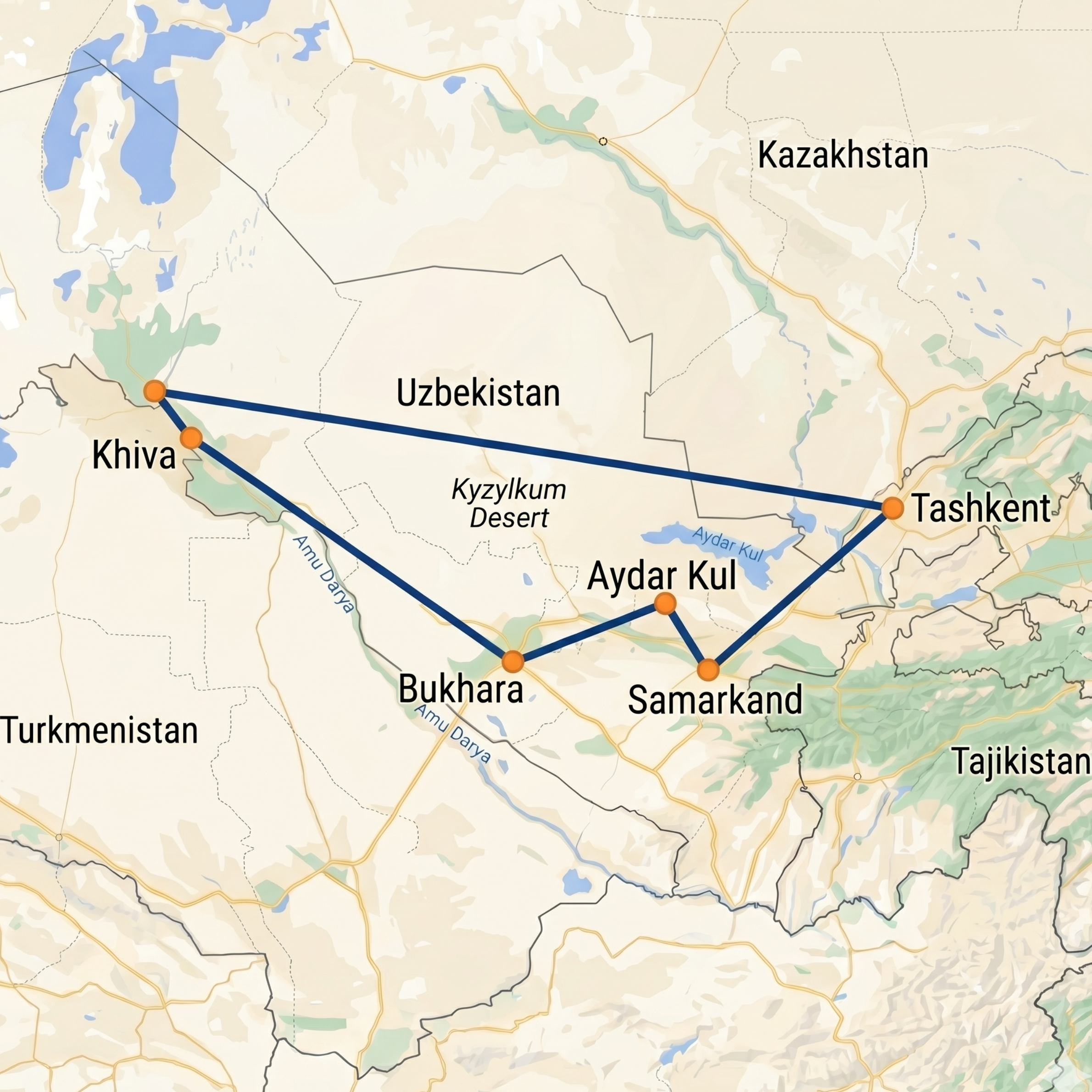
Explore Uzbekistan’s historic Silk Road. Journey from Tashkent to the magnificent mosques of Samarkand and Bukhara before exploring the mud-walled desert citadel of Khiva. A highlight is venturing into the Kyzylkum Desert to Aydar Kul for an overnight stay in a traditional yurt.
-
Optimal comfort and excellent photography conditions occur during the shoulder seasons, specifically from April to May and September to October. These months provide mild temperatures and clear desert skies, making them ideal for exploring extensive outdoor archaeological sites. Navruz, the Persian New Year celebrated around 21 March, brings vibrant cultural festivals, folk music, and traditional street food, providing an extraordinary atmosphere.
Conversely, the intense summer heat of July and August routinely exceeds 40°C, creating a physically taxing environment for sightseeing, whilst December and January bring biting winter frost and occasional snowfall. Key dates to avoid include the peak national holidays around Independence Day on 1 September and Republic Day on 8 December. During these periods, domestic tourism surges, transport tickets become remarkably scarce, and key monuments occasionally close for state events.
-
A rushed itinerary does an immense disservice to a city with over two millennia of history. Whilst a minimum of two days allows a baseline visit to iconic monuments like Registan Square and Gur-e-Amir, most fast-paced itineraries miss the deeper texture of local life. Planning a four or five day visit rewards curiosity and encourages responsible travel by slowing the pace.
This extended timeframe allows for immersive exploration of lesser-known neighbourhoods, such as the ancient Jewish Quarter, or quiet contemplation amongst the artisan workshops of the Konigil Mud Brick Village. A longer stay supports local communities directly and provides the necessary time to witness how the shifting sunlight transforms the sapphire monuments from dawn until dusk.
-
Before finalising any itineraries, checking your government's local travel advisory is essential for accurate, up-to-date safety assessments. Samarkand maintains a generally low rate of violent crime, but remaining vigilant against petty theft in crowded markets is always wise. Well-known scams involve unregistered taxi drivers quoting exorbitant fares upon arrival or souvenir vendors inflating prices dramatically for international shoppers.
Common-sense safety practices are paramount, including avoiding public intoxication, adhering strictly to local legislation, and respecting law enforcement. Securing a comprehensive travel insurance policy before departure ensures full medical and logistical protection against any unforeseen travel disruptions.
For more practical tips and expert advice on staying safe during your trip, visit our dedicated page on Travel Safety.
-
Showing respect for local traditions and Islamic heritage means adopting a modest dress code throughout the city. While general sightseeing requires respectable attire, religious monuments demand stricter adherence where everyone must ensure their shoulders, chests, midriffs, and knees are fully covered. Loose, lightweight garments are highly practical for navigating the climate whilst remaining entirely appropriate.
When visiting mosques or the Shah-i-Zinda necropolis, women are expected to cover their arms and legs fully, as well as their hair with a scarf, whilst men should avoid sleeveless tops and shorts. If invited into a family home, removing shoes at the threshold is standard practice, and accepting food or tea with the right hand shows excellent manners.
-
Modest attire forms the baseline of any packing list for Central Asia. Revealing clothing, such as singlet tops, crop tops, or shorts, is unsuitable for this conservative destination and should be left behind. Packing a lightweight scarf, a wide-brimmed hat, and high-factor sunscreen protects against the intense sun.
Sturdy walking shoes are vital for navigating uneven cobblestones and archaeological pathways. Because shoes must be frequently removed at the entrances of religious shrines, choosing slip-on footwear is highly practical. For spring visits, particularly during wet April afternoons, light wet-weather gear is essential, whilst winter journeys require heavy thermal layers and a thick coat.
-
Central Asian cuisine is deeply intertwined with community identity, and trying it provides an authentic window into local hospitality. The primary local dish is Samarkand Plov, a legendary layered rice creation cooked with tender beef, yellow carrots, spices, and linseed oil, prepared over an open flame in a massive cauldron known as a kazan. Unlike variants in other Uzbek regions, Samarkand plov is uniquely served unmixed to showcase the quality of each ingredient.
The bustling Siab Bazaar is the premier destination to sample local specialities, including the famous, heavy Samarkand bread (Obi Non), glazed to perfection and stamped with traditional patterns. Sampling these dishes directly supports local bakeries and culinary traditions that have endured for centuries.
Essential Insights
-
The main rail hub, Samarkand Railway Station, acts as a primary link on the national transport network. The sleek Afrosiyob high-speed train connects Tashkent and Bukhara to Samarkand in just over two hours, making it substantially faster, more comfortable, and greener than flying. Traditional, slower local passenger trains also service this line, providing a scenic, relaxed alternative through the rural landscape. Samarkand International Airport (SKD) welcomes an expanding network of regional and international flights, however, domestic travel between major cities is usually faster and more environmentally friendly by train.
For those looking to explore beyond the border, Samarkand serves as the perfect gateway to neighbouring Tajikistan and the stunning Seven Lakes of the Fann Mountains. Travellers can take a local shared taxi or a private vehicle from the city centre to the Jartepa land border crossing, which is less than an hour away. After completing passport control and crossing into the Tajik side at Sarazm, onward shared cars are readily available to complete the brief twenty-minute drive to Panjakent, where local transport hubs connect directly to the mountain trails.
-
The historic core of the old town is exceptionally pedestrian-friendly, allowing visitors to access iconic attractions like Registan Square, Siab Bazaar, and the Bibi-Khanym Mosque entirely on foot. For longer cross-city journeys, public buses offer a highly economical transport method, with fares typically settled via cash or local transport cards.
The most efficient point-to-point option is via Yandex Go, a reliable rideshare app operating throughout the city. Fares are calculated transparently and settled via cash directly to the driver at the end of the trip or pre-linked card.
-
To ensure seamless navigation and translation capabilities, maintaining digital connectivity is highly useful. Using a digital eSIM is the most convenient option for modern travellers, allowing data activation immediately upon crossing the border.
Ohayu provides reliable eSIM data packages tailored specifically for Central Asia, bypassing the need to search for physical vendors. For those preferring standard physical cards, local SIM cards can be purchased at the airport arrival hall or official telecommunication offices in the city centre by presenting a passport.
-
Cash operates as the undisputed king in daily transactions throughout local markets, small eateries, and souvenir stalls. ATMs are readily available in central tourist zones and major hotel lobbies, though they occasionally run out of currency during peak weekends. Carrying crisp, unblemished US Dollar or Euro banknotes is an excellent backup strategy, as local exchange booths maintain strict standards and will reject torn or creased foreign currency.
Whilst major international hotels and upscale restaurants accept Visa and Mastercard, American Express is rarely supported. Mobile QR code payment platforms are common amongst residents but remain largely inaccessible to foreign bank accounts.
-
Generally, English proficiency is limited, although young hospitality staff, boutique hotel concierges, and high-end souvenir vendors in central tourist zones possess enough for basic communication. Uzbek is the official language, whilst Tajik is widely spoken natively across the city alongside Russian, which serves as a common language for commerce.
Menus and informational signage at primary UNESCO monuments generally include English translations, but neighbourhood eateries and local transport do not. Downloading an offline language translator app onto your mobile device before arrival is highly recommended for smooth daily interactions.
-
No, the tap water in Samarkand is not safe for drinking or brushing teeth due to outdated piping infrastructure and varying mineral treatment levels. To minimise the consumption of single-use plastic bottles, using a reusable water bottle equipped with an advanced inbuilt microbiological filter is strongly recommended.
Alternatively, purchasing large-volume water jugs to refill reusable flasks helps limit environmental waste. Prioritising accommodation options that provide complimentary filtered water refill stations in common areas is an excellent way to practice responsible travel throughout your trip.