
Zen Gardens and Aquatic Pathways
Nestled at the base of the eastern peaks, Kyoto’s northeastern suburbs are a sanctuary of scholarly history and quiet contemplation. The district is famously connected by the Philosopher’s Path, a peaceful canal-side walk that links significant Zen complexes and hidden woodland shrines. From the understated aesthetics of the Silver Pavilion to the striking red-brick aqueducts of Nanzen-ji, the area offers an intimate encounter with Japanese design, and is ideal for those seeking a reflective pace with the subtle charm of traditional teahouses.
This Adventures Afar guide contains affiliate links. If you book through these, we may earn a commission at no extra cost to you.
Unmissable Highlights
-
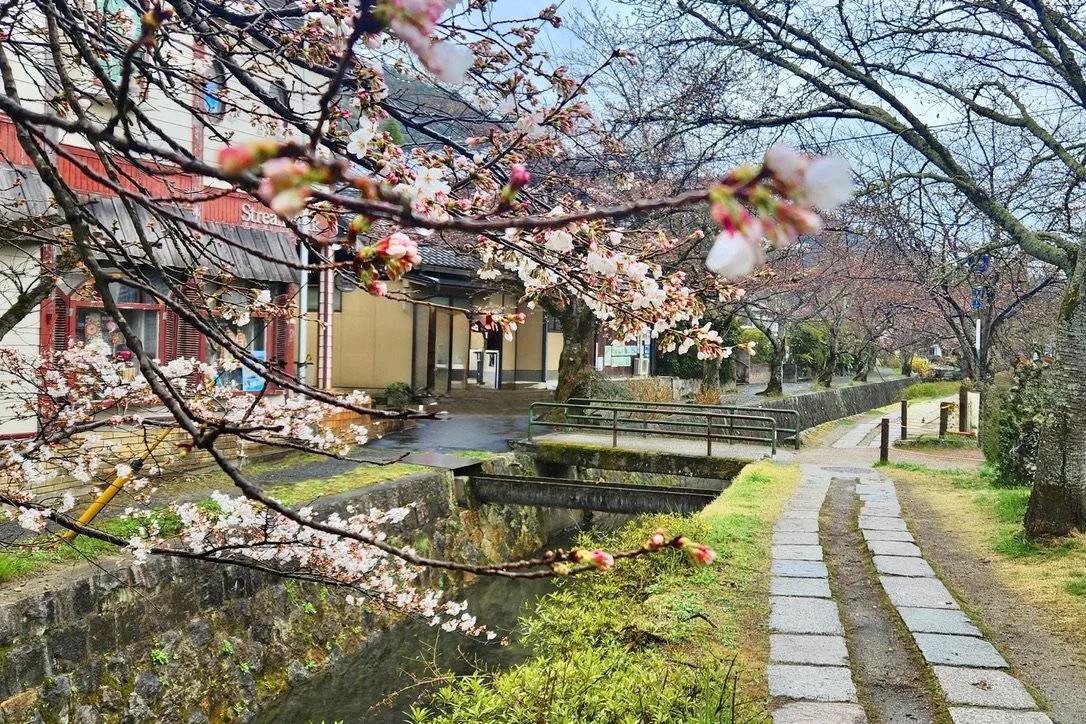
The Philosopher's Path
At the base of Kyoto's eastern mountains, the Philosopher's Path is a stone walkway that follows a cherry-tree-lined canal. The pathway is named after Nishida Kitaro, a famous Japanese philosopher who used this route for his daily meditation. Stretching roughly two kilometres, the path connects the areas around Ginkaku-ji and Nanzen-ji. In April, the blossoms form a pink canopy over the water, while in summer, the lush green leaves provide a cool shade. The gentle walk rewards curiosity with small shrines, galleries, and teahouses along the way.
Did You Know? The pathway is exceptionally popular with local artists and writers. You will often see people sitting on the benches with sketchbooks or notebooks, carrying on the tradition of using this peaceful route for creative and intellectual inspiration.
-
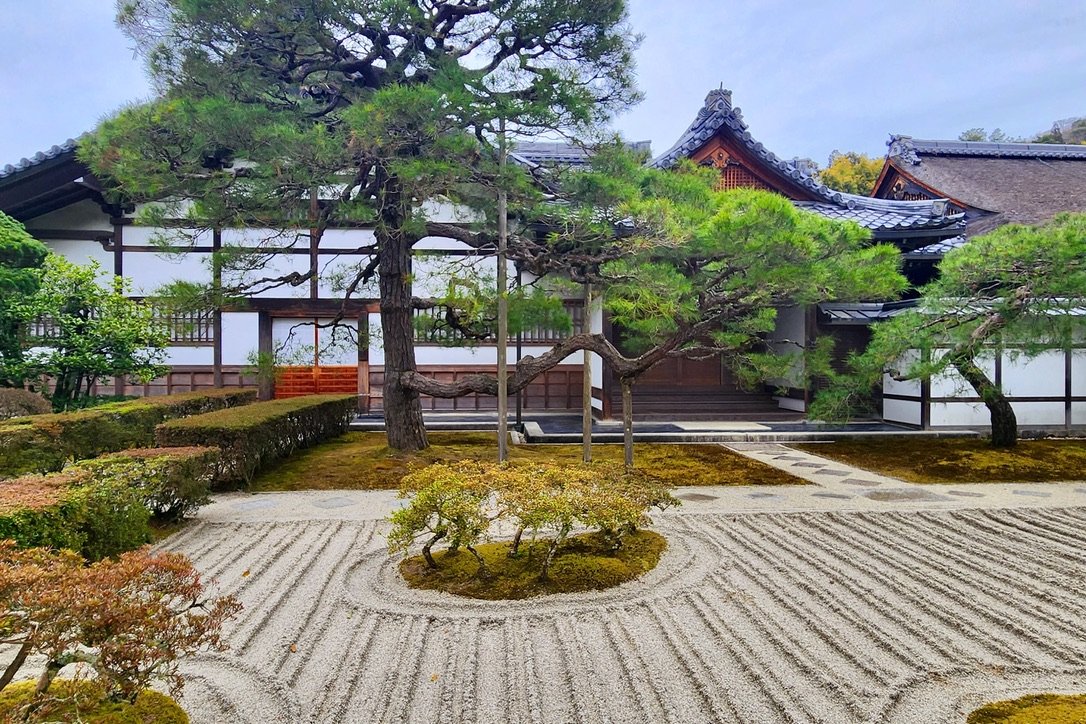
Ginkaku-ji
The Silver Pavilion, also known as Ginkaku-ji, was inspired by its golden counterpart but opted for a more understated, Zen-influenced beauty. This UNESCO World Heritage site is famous for its "Sea of Silver Sand," a large area of raked gravel that reflects the moonlight, and a meticulously maintained moss garden. The pavilion itself was never actually covered in silver, but its dark wood and simple lines reflect the wabi-sabi aesthetic of finding beauty in imperfection and transience. The complex is a place of profound quiet and refined elegance, particularly during the autumn foliage season.
Did You Know? The cone-shaped sand mound in the garden is called the Kogetsudai, or Moon Viewing Platform. It is designed to reflect the light of the moon onto the pavilion, creating a luminous glow during the evening hours.
-
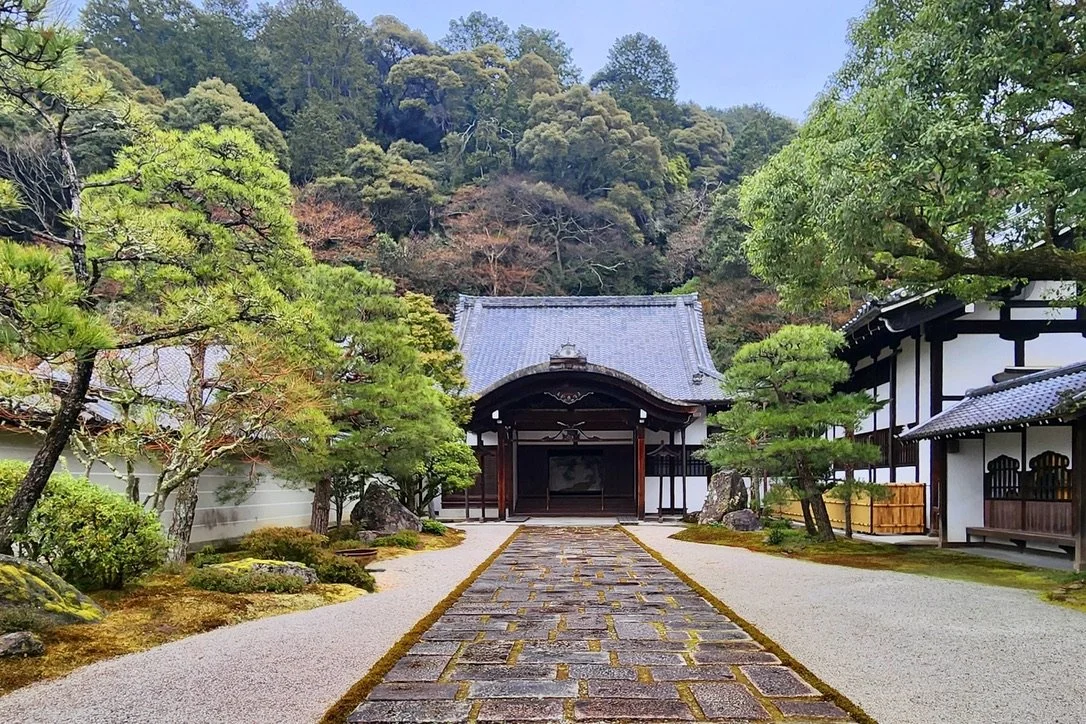
Nanzen-ji
Nanzen-ji is one of the most important Zen temples in Japan, featuring a massive wooden Sanmon gate that offers panoramic views of the city. The temple grounds are expansive, containing several smaller sub-temples and beautiful rock gardens. One of the most surprising features is a large, Western-style red-brick aqueduct that runs through the complex. Built in the Meiji era to carry water from Lake Biwa, it has become an iconic part of the temple’s landscape, blending modern industrial history with ancient spiritual grounds in a way that is unique to Kyoto.
Did You Know? The Sanmon gate at Nanzen-ji is so large that it was famously featured in a Kabuki play called Sanmon Gosan no Kiri. In the play, a legendary outlaw stands on the balcony and marvels at the magnificent view of Kyoto.
-
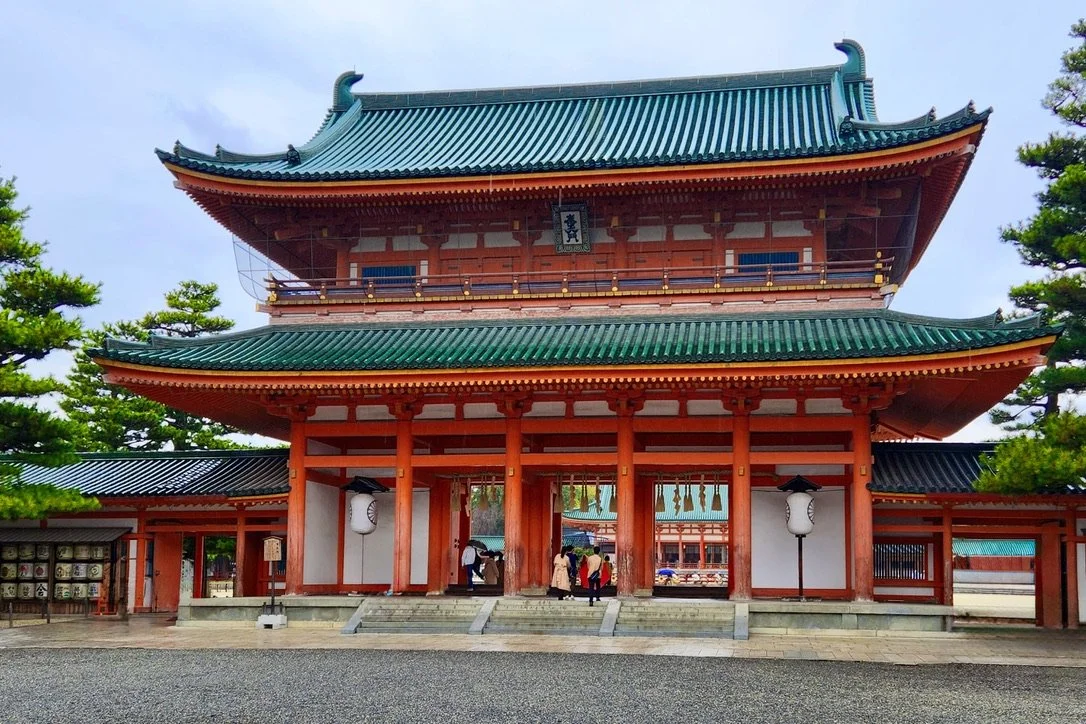
Heian-jingu Shrine
In 1895, Heian-jingu Shrine was built to commemorate the 1,100th anniversary of Kyoto’s founding. The shrine is a partial reproduction of the original Imperial Palace from the Heian period, featuring striking vermilion-painted wood and bright green roof tiles. Its vast gravel courtyard and towering torii gate make it one of the city’s most visually impressive sites. Behind the main buildings lies a large strolling garden divided into four sections, famous for its weeping cherry trees and a beautiful covered bridge that spans a lily-filled pond, providing a vibrant contrast to the city's older temples.
Did You Know? The giant torii gate at the entrance of Heian-jingu Shrine is one of the largest in Japan, standing over 24 metres tall. It is so big that its pillars are wider than the cars that drive through the street beneath it
Recommended
Multi-Day Itineraries
Put this guide into practice with these hand-picked small group journeys,
featuring both iconic landmarks and immersive cultural experiences.
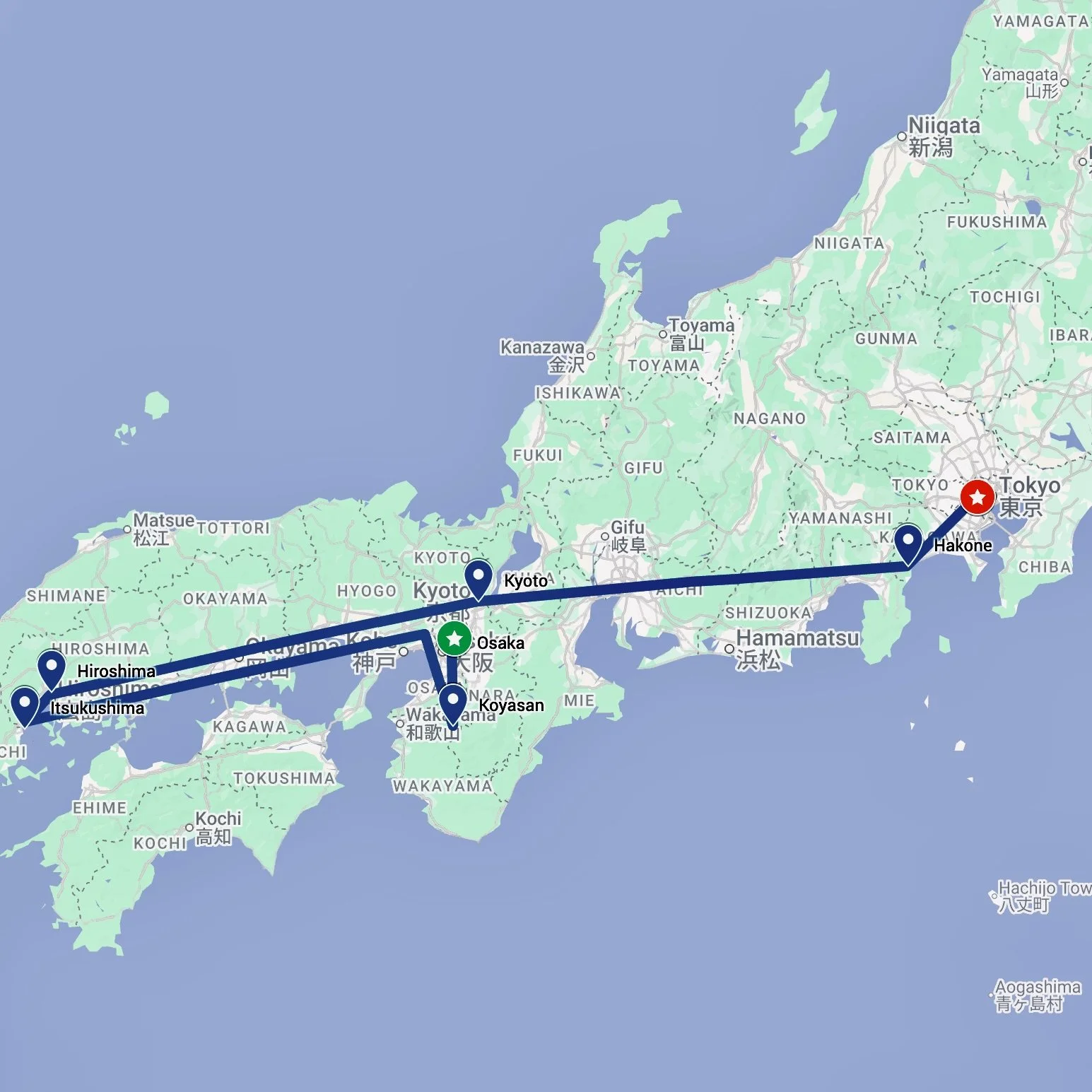
Discover the many faces of Japan, beginning in Osaka and ending in Tokyo. Visit the mountain temples of Koyasan, the historic streets of Kyoto, and the poignant sites of Hiroshima and Miyajima before witnessing Mount Fuji and the neon lights of Tokyo's vibrant districts.
Iconic Japan
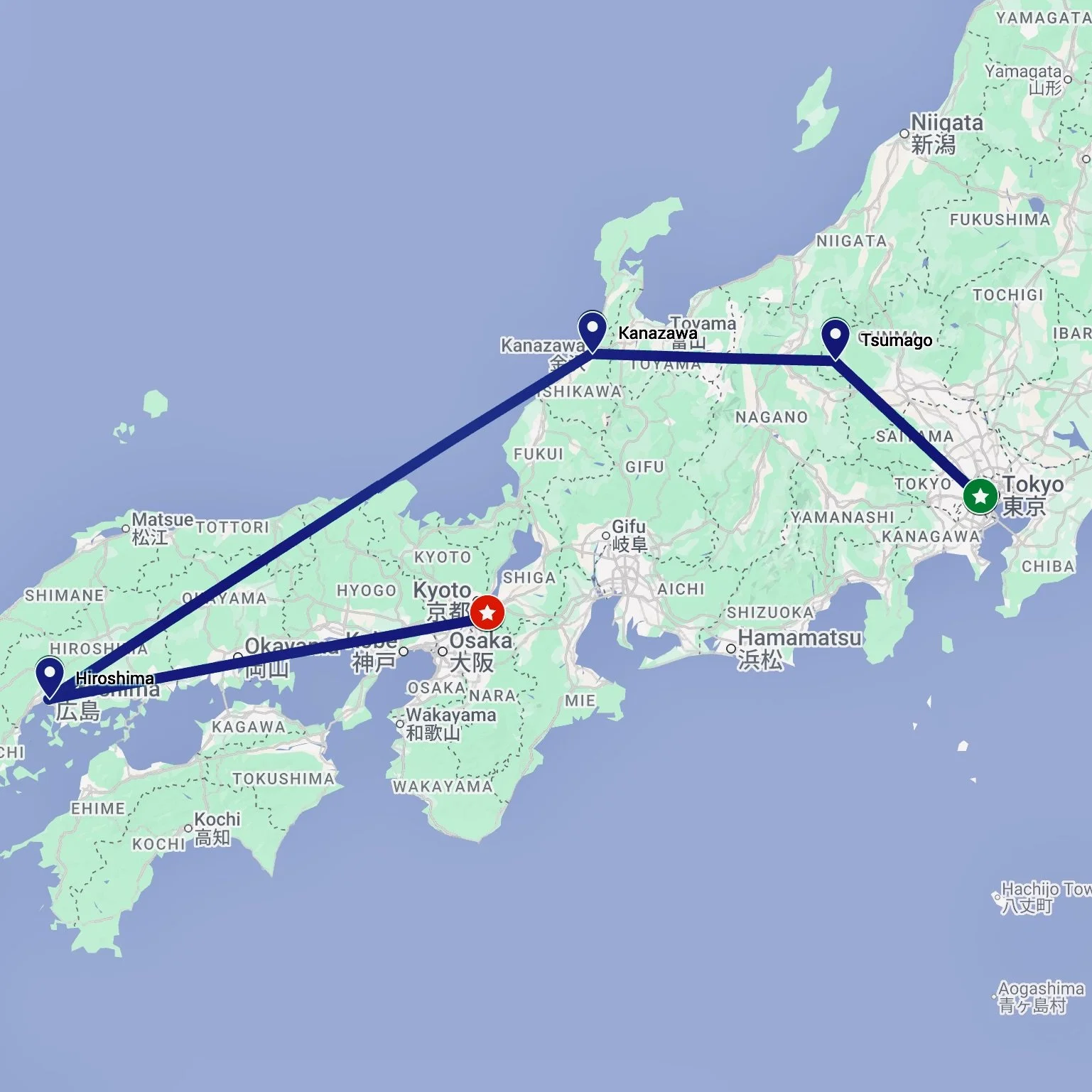
Immerse yourself in Japan’s living history, from Tokyo’s neon-lit streets to the quiet temples of Kyoto. Visit the samurai traditions of Hagi, the scenic beauty of Hakone and Mount Fuji, and the landmarks of Hiroshima and Osaka while enjoying regional Japanese cuisine.
-
Kyoto is a city that wears the seasons beautifully, but for the most comfortable weather and iconic scenery, April and November are the standouts. April is the time for cherry blossoms, where the city is draped in soft pink. However, it is also when crowds are at their peak. November offers a stunning alternative with vibrant autumn foliage, especially around the temples in the Higashiyama district. For those interested in traditional culture, July is famous for the Gion Matsuri, one of Japan's most spectacular festivals, though the heat and humidity can be intense.
There are certain dates that are better avoided if you prefer to skip the heaviest crowds. Golden Week, which falls between late April and early May, is a major domestic holiday period when transport and hotels are often fully booked. The Obon period in mid-August and the New Year holidays also see a significant surge in travel. If you prefer a quieter experience, the winter months of January and February can be quite peaceful and cold, occasionally offering a rare and beautiful dusting of snow on the golden pavilions.
-
While many visitors attempt to see Kyoto in just two or three days, this often leads to a frantic pace that misses the subtle charm of the city. A minimum of three days is typically required to tick off the major landmarks like Fushimi Inari and Kinkaku-ji. However, to truly satisfy your curiosity, a stay of four to seven days would be far more rewarding. Taking a week allows for a deeper exploration of the different districts without the need to rush between sites.
A longer stay provides the freedom to discover lesser-known neighbourhoods like the traditional workshops of Nishijin or the quiet temples of Ohara. It also makes it possible to take slow day trips to places like Uji or the spiritual mountain of Kurama. By lingering, you get a much better feel for the city’s daily habits and contribute more meaningfully to the local economy. Kyoto rewards those who take the time to walk its narrow lanes and pause in its smaller moss gardens.
-
Kyoto is remarkably safe and is often cited as one of the most secure cities for international travellers. Nevertheless, it is always a sensible habit to read your government's local travel advisory for the most up-to-date information before you depart. While violent crime is extremely rare, petty theft can occasionally occur in very crowded tourist hubs. A common practice for a smooth trip is to remain aware of your surroundings in busy markets or at major rail stations.
Scams are not a significant problem, but be careful of "overcharging" at certain bars in the nightlife districts. Common sense practices like avoiding drinking in excess and not breaking local laws are the best way to ensure your trip remains trouble-free.
It is also essential to always have a comprehensive travel insurance policy. Even in a safe destination, having cover for unexpected medical issues or travel disruptions provides important peace of mind while you explore.
For more practical tips and expert advice on staying safe during your trip, visit our dedicated page on Travel Safety.
-
Japanese social harmony is built on respect, and this is especially evident in a cultural capital like Kyoto. When sightseeing or walking around generally, smart-casual dress is the standard. For visits to religious monuments, everyone should dress modestly, meaning that shoulders and knees are covered. Avoiding very revealing clothing or beachwear is a simple way to show respect for the local population and the sacred nature of the shrines and temples.
If you are lucky enough to be invited into a home or a traditional guesthouse, you will be expected to remove your shoes at the entrance. Because of this, always make sure you are wearing clean, presentable socks. Generally, keeping your voice low on public transport and refraining from eating while walking are small gestures that go a long way in following local social norms. It is also important to be mindful of photography, especially in geisha districts like Gion, where taking photos of performers without permission is strictly prohibited.
-
Since Kyoto is a city designed for walking, your most important item is a pair of comfortable shoes. You will be taking them off frequently at temple entrances and traditional restaurants, so choose footwear that is easy to slip on and off. For clothing, pack layers that are suitable for both sacred sites and dining out. Avoid packing singlets or very short shorts if you plan on visiting temples, as these are generally not suitable.
If you are visiting in the winter, from December to February, it gets quite cold, so bring plenty of warm layers and a good coat. June and July are the wettest months, so a compact umbrella or a light waterproof jacket is a must. For the humid summer, light and breathable fabrics are essential. Kyoto is not a swimming destination, so you won't need swimwear unless your hotel has a pool. If you plan on visiting a traditional onsen nearby, remember that these are usually enjoyed without clothing, so no specific swimwear is required there.
-
Kyoto has a sophisticated culinary identity, and you must try kaiseki, a traditional multi-course meal that focuses on seasonal ingredients and beautiful presentation. For a more casual experience, the Nishiki Market, known as "Kyoto's Kitchen", is a fantastic place to sample local snacks like soy milk doughnuts or fresh pickles. The Pontocho Alley is also famous for its wide variety of restaurants, offering everything from high-end dining to humble yakitori stalls.
Green tea is a vital part of the local community, and a visit to the Uji district is highly recommended for tea lovers. Trying matcha in a traditional teahouse is an essential experience. Another local speciality is yudofu (boiled tofu), which is particularly popular around the Nanzen-ji area. Trying these dishes is more than just a meal, it is a way to support local producers and experience the refined flavours that have defined Kyoto for centuries.
Essential Insights
-
Many international travellers will use Kansai International Airport (KIX) or Osaka's Itami Airport (ITM). From Kansai Airport, the "Haruka" limited express train is the fastest way to reach Kyoto, taking about 75 minutes.
If you are already in Japan, the Shinkansen (bullet train) is the best way to arrive. High-speed trains run directly from Tokyo, Osaka, and Hiroshima into Kyoto Station, which is the city's main transport hub. Taking the train between major city centres is often faster than flying when you factor in airport transfers and security checks, and it is a much better choice for the environment. Kyoto Station services both high-speed Shinkansen and local JR lines, making it incredibly easy to connect to other historic destinations like Uji, Nara or Horyuji.
For those looking for budget options, long-distance highway buses also arrive at the station's south terminal from various parts of the country.
-
Kyoto is a very accessible city with a comprehensive public transport network. The bus system is particularly useful for reaching major tourist attractions like the Golden Pavilion or the Ginkaku-ji. You can pay for your fare using a rechargeable IC card like Suica or Pasmo, allowing you to just tap when boarding and exiting. For those planning to make multiple trips, a one-day bus pass can be a great way to save money. The subway system is also efficient for crossing the city quickly.
Many of the most beautiful areas, such as Gion, the Higashiyama district, and Arashiyama are very pedestrian-friendly and are best explored on foot. It’s also possible to rent a bicycle to explore the riverside paths along the Kamo River.
While ride-sharing apps like Uber are available, they mainly act as a way to hail licensed local taxis, which are clean and reliable but can be expensive for long distances.
-
Having a reliable data connection is essential for using maps and translation apps while you explore the city's winding lanes. While physical SIM cards can be bought at the airport or at major electronics stores, an eSIM is generally the most convenient and modern option. It allows you to get connected as soon as you land without having to fumble with tiny pieces of plastic or searching for a paperclip.
An eSIM option like Ohayu is a great choice for staying online during your trip. It is typically more cost-effective than using international roaming from your home provider and gives you the freedom to check bus times and look up restaurant reviews on the fly. You can easily set it up on your phone before you even arrive in Japan, so you are ready to go the moment you land.
-
In Kyoto, cash is still used very frequently, especially for smaller shops, market stalls, and entry fees for temples. You will definitely need some yen for the smaller eateries and local buses. However, major hotels, department stores, and larger restaurants will widely accept Visa, Mastercard, and Amex. You will also see many locals paying with QR codes or IC cards, which are becoming increasingly common for daily purchases in convenience stores.
ATMs are easy to find, particularly inside convenience stores like 7-Eleven, which typically accept international cards and have English menus. While you can exchange USD or EUR at banks, you will often find better rates and more convenience by simply withdrawing yen from an ATM. It is a good idea to keep a few 1,000 yen notes and some coins handy for smaller purchases and vending machines as you explore the city’s historic streets.
-
You will find that English language signs and menus are very common in the main tourist areas of Kyoto, especially around the major temples and the central rail station. Staff at the larger hotels and the main ticket offices usually speak enough English to help with most enquiries. However, as you move into the smaller backstreets or visit the more traditional local restaurants, the level of English can be a bit more limited.
Most restaurants in the city have menus with photos, which makes ordering much easier even if you don't speak the language. It is always a brilliant idea to download a language translator app onto your phone before you arrive. Using the camera function to translate a menu or a sign can be incredibly helpful and adds a layer of confidence to your exploring. Even with a language gap, the people of Kyoto are famously polite, and a few basic Japanese phrases will always be appreciated.
-
Yes, the tap water in Kyoto is completely safe to drink and follows very high health and safety standards. You can refill your bottle from the tap in your hotel or at public fountains without any concern. In fact, many people find the water in this part of Japan to be quite fresh and pleasant. Refilling your own bottle is not only safe but also the most responsible choice for the environment.
To help minimise the quantity of one-time-use plastic, it is a great idea to bring a reusable water bottle with you. While you don't need a filter for safety, some travellers prefer them if they are sensitive to the slight taste of chlorine. You can also look for accommodation options that provide free water refill stations in their common areas. With the thousands of vending machines across Japan, using your own bottle is a small but impactful way to travel more sustainably.