
Vast Waters and Wild Horizons
Framed by the snow-capped peaks of the northern Tian Shan mountains, Lake Issyk-Kul is the world’s second-largest alpine lake and a premier destination for adventurous travellers. This colossal body of water is known locally as the pearl of Central Asia, offering crystal-clear saline water that never freezes, even in the depths of winter. The surrounding region serves as a dramatic playground where rugged hiking expeditions, authentic nomadic culture and thermal hot springs collide. Visitors can explore the desolate beauty of sandstone canyons along the wild southern shore or enjoy water sports on the northern beaches, making this high-altitude wonder a spectacular cornerstone of any Kyrgyz itinerary.
This Adventures Afar guide contains affiliate links. If you book through these, we may earn a commission at no extra cost to you.
Unmissable Highlights
-
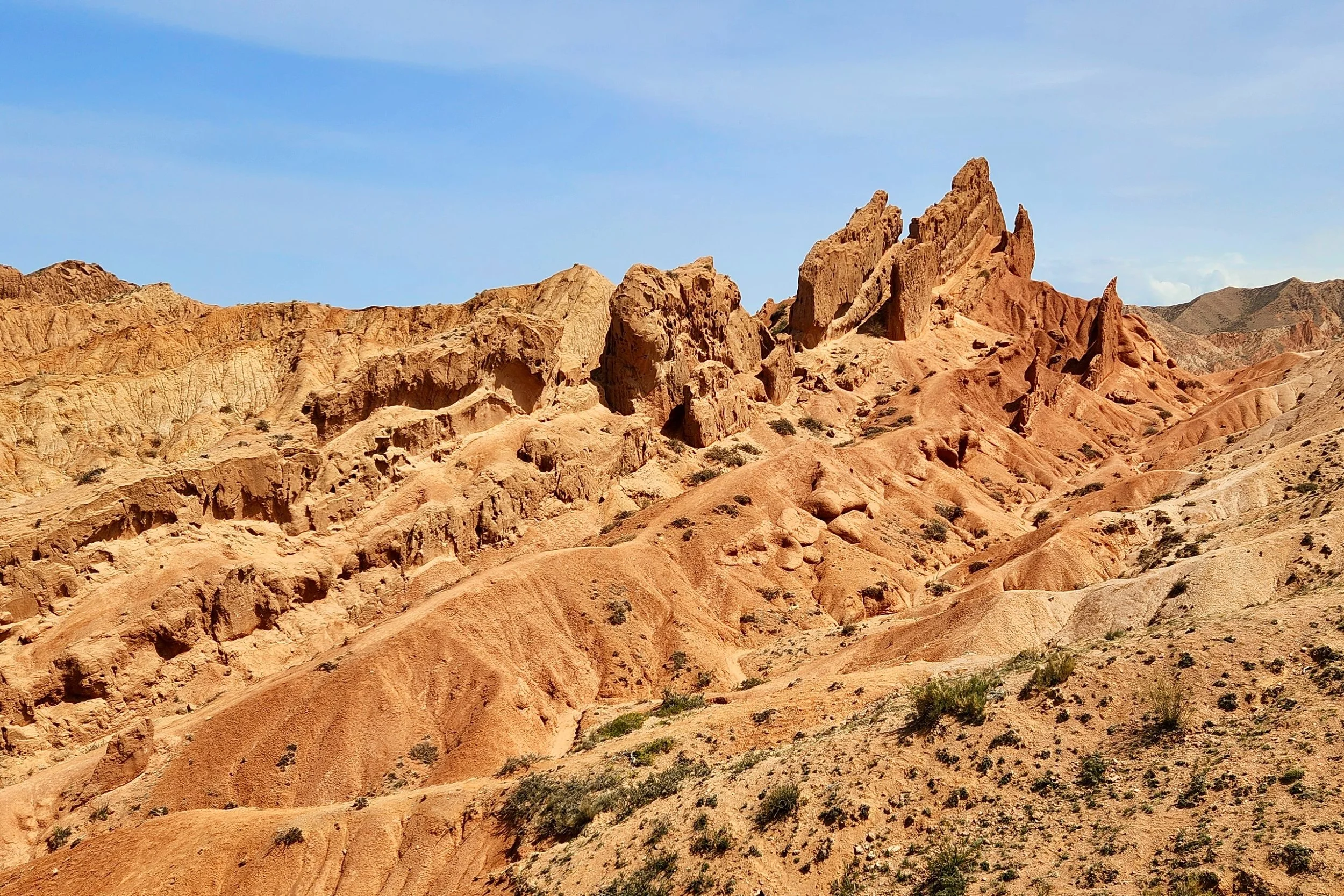
Skazka Canyon
The southern shore of Lake Issyk-Kul hosts Skazka Canyon, a breathtaking labyrinth of vibrant sandstone formations shaped by millions of years of wind and water erosion. Often referred to as Fairytale Canyon due to its surreal scenery, this natural open-air gallery features jagged ridges and steep towers that alter visually under changing sunlight. The dramatic mineral layers shift between deep crimson, burnt orange and ochre, providing a striking contrast to the alpine lake in the distance. Visitors can wander freely along sandy tracks to reach panoramic viewpoints over the semi-desert landscape.
Did You Know? Local legend says the canyon was formed when a heartbroken dragon, shocked by the sudden flooding of the valley that created Lake Issyk-Kul, instantly froze into stone, creating the rugged, scaly rock ridges visible today.
-
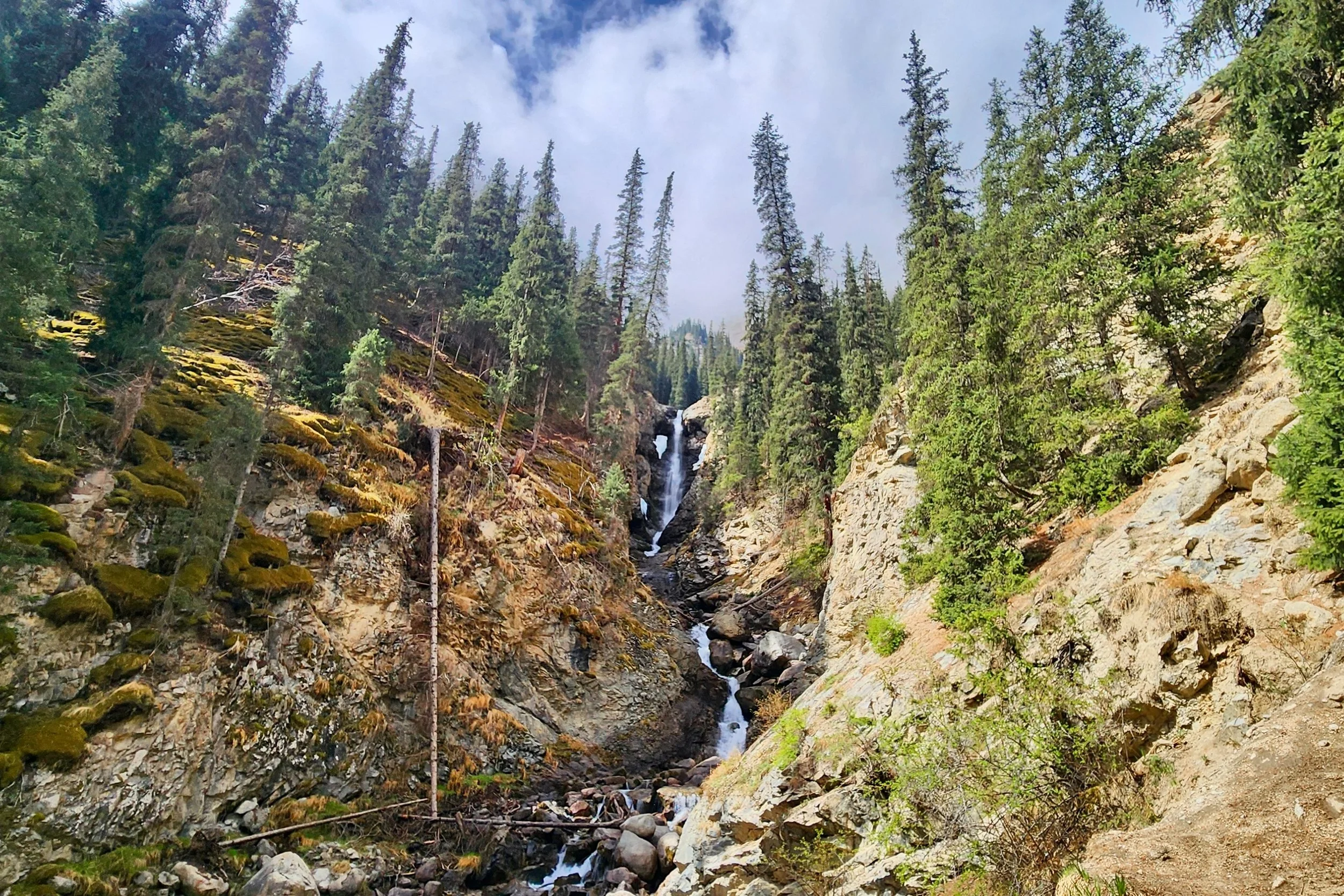
Barskoon Waterfall
Surrounded by dense forests of ancient Tien Shan spruce trees, Barskoon Waterfall cascades dramatically through a spectacular mountain gorge on the southern side of Lake Issyk-Kul. The main 24-metre cascade, poetically known as the Tears of the Snow Leopard, is the centerpiece of a magnificent chain of waterfalls crashing over steep rocky shelves. Reaching the falls requires a scenic alpine trek filled with fields of wild edelweiss and barberry bushes. The trail ascends through the high-altitude valley, offering misty, refreshing viewpoints where the deafening roar of the rushing water completely fills the air.
Did You Know? Yuri Gagarin, the first human in space, spent time holidaying in this specific valley to recuperate after his historic orbital flight, which is why multiple monuments dedicated to him stand near the base of the trail.
-
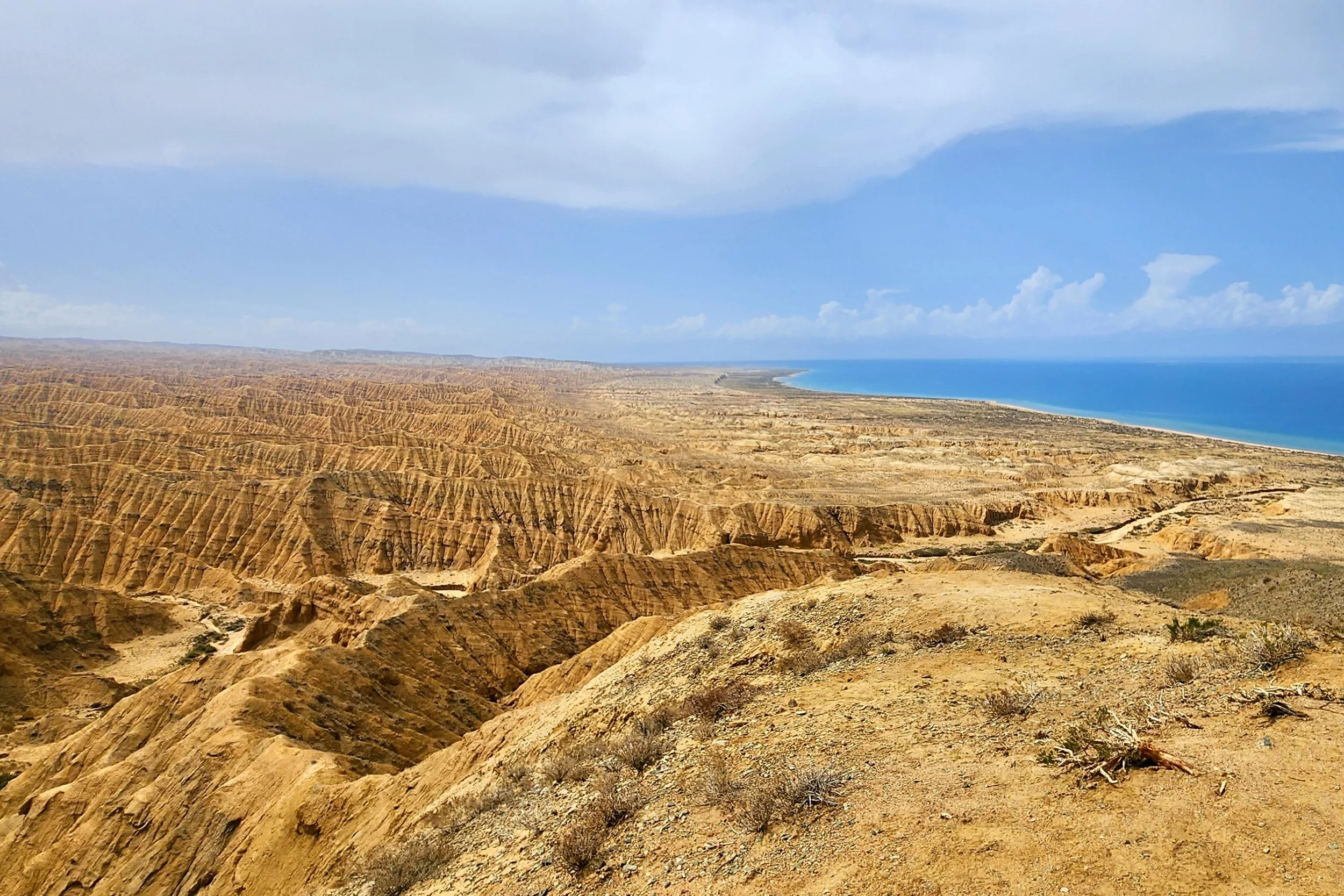
Ak-Say Canyon
Tucked away along the remote southern coast of Lake Issyk-Kul, Ak-Say Canyon is a hidden geological treasure characterised by its dramatic mud and sandstone scenery. The area is locally known as the Valley of Forgotten Rivers because the canyon entrance clearly displays the empty, winding beds of ancient water systems that dried up long ago. Over millennia, the elements have carved the pastel-tinted walls into intricate networks of narrow labyrinths and sheer cliffs. Reaching altitudes of 1,750 metres, this arid landscape rewards hikers with isolation and spectacular, sweeping vistas of the snow-capped Terskey Ala-Too mountain range.
Did You Know? The canyon functions as a natural sound amphitheatre. Because of the unique curvature of the clay walls, a whisper spoken at the base of certain ravines can travel clearly to listeners standing on the cliffs above.
Recommended
Multi-Day Itineraries
Put this guide into practice with these hand-picked small group journeys,
featuring both iconic landmarks and immersive cultural experiences.
Northern Stans: Kyrgyzstan & Kazakhstan
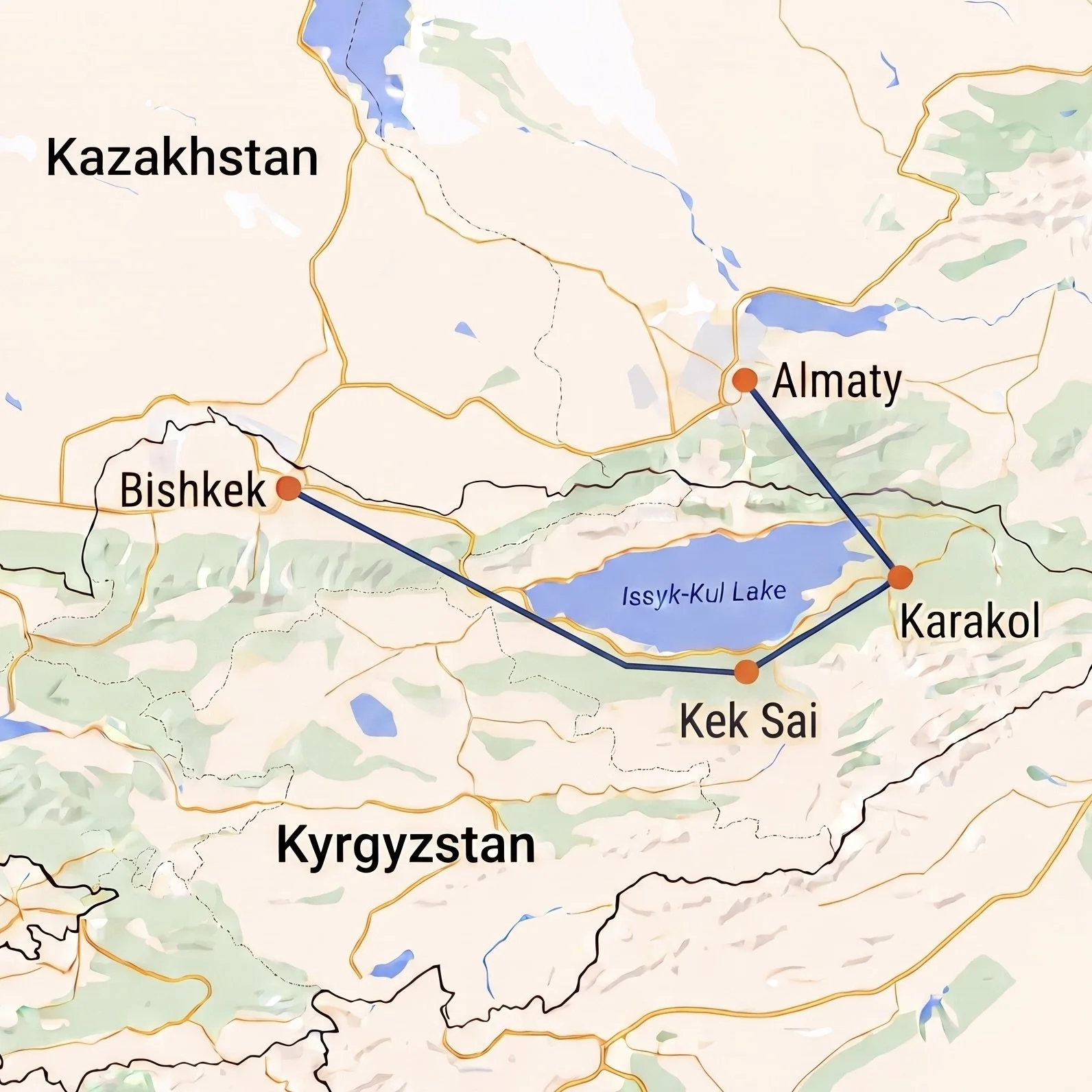
Travel from Bishkek through Kyrgyzstan’s dramatic mountain scenery, exploring Fairytale Canyon and yurt traditions near Karakol and Issyk-Kul Lake. Journey past ancient minarets and deep gorges before a brief finale in leafy Almaty.
Highlights of Kyrgyzstan and Kazakhstan
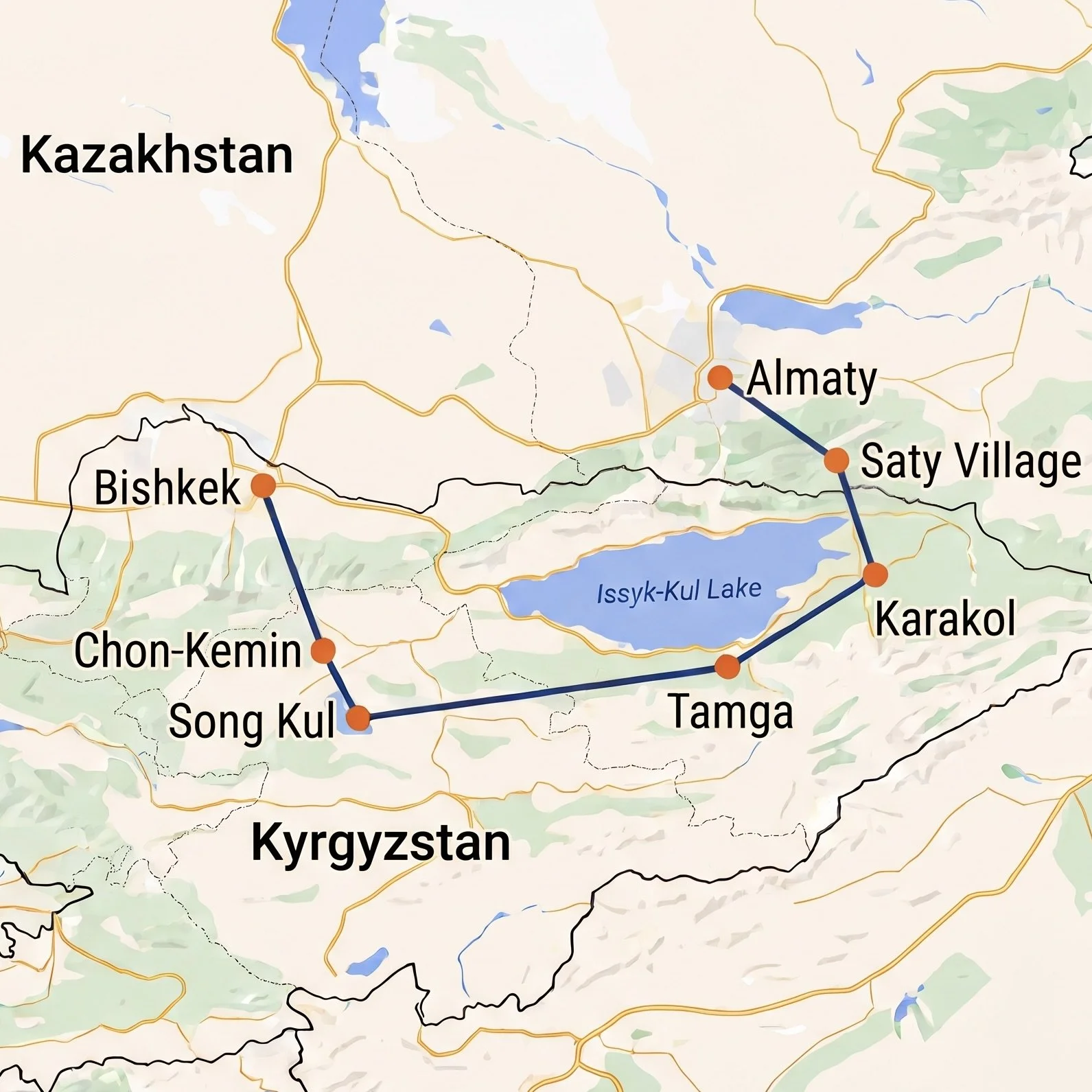
Travel from Bishkek through Central Asia’s raw landscapes. Stay in traditional yurts and guesthouses beside alpine lakes, discover Karakol’s wooden architecture, then cross into Kazakhstan to experience Charyn Canyon and leafy Almaty.
-
July and August are the absolute peak months to explore the south shore, providing the most reliable weather for trekking into high-altitude gorges and staying in lakeside yurt camps. During summer, daytime temperatures hover around the mid-to-high 20s, which is ideal for hiking through the exposed, sun-drenched paths of Skazka and Ak-Say canyons.
If you prefer quieter trails, September is a magnificent alternative when the fierce summer heat mellows into crisp, pleasant autumn days and the foliage in Barskoon Gorge turns brilliant shades of gold. Late spring is also a beautiful time to visit, as May and June see the lake-level snow melt away entirely, bringing pleasant temperatures and valleys blanketed in vibrant wildflowers. These shoulder months are perfect for exploring the lower shoreline canyons without the summer crowds, although higher mountain trails and alpine yurt camps may not fully open until late June due to melting snowpacks in the upper gorges.
For a quieter journey, try to avoid regional public holidays like Independence Day on 31st August when local transport hubs face immense delays. It is also wise to look critically at summer events like the annual Birds of Prey Festival in Bokonbayevo, usually held in August. While it draws massive crowds that book out regional accommodation months in advance, staging flight demonstrations during the hot summer months raises significant animal welfare concerns. Golden eagles naturally molt and rest during this time of year, meaning flying them in the August heat causes the birds unnecessary stress and disrupts their natural biological cycle. To minimise animal cruelty and witness this ancient nomadic tradition responsibly, plan your visit between October and February, which is the authentic winter hunting season when the colder climate is perfectly suited for the birds to take flight.
-
Most holidaymakers passing through Kyrgyzstan tend to spend about three to four days around the lake, usually basing themselves on the northern shore around Cholpon-Ata. While this is the minimum time needed to tick off a few beach spots and see the ancient petroglyphs, a rushed stay completely misses the true magic of the region. This destination rewards the curious traveller who slows down to understand the immense scale of the landscape and the communities calling it home.
An ideal amount of time to circumnavigate the lake is five to ten days. This will allows you to complete the loop, contrasting the busier northern resorts with the rugged, quiet south shore. You will have ample time to dive deep into lesser-known villages, trek through the red rock formations of Skazka and Ak-Say canyons and spend a few nights in traditional yurt camps. A longer stay supports responsible travel by distributing tourist income to local families and homestays outside the major commercial hubs.
-
The lake area is generally a very safe and welcoming destination for foreigners, but checking your government's local travel advisory before setting off is the best way to get up-to-date information. While violent crime is rare, petty theft and pickpocketing can happen in crowded locations like the bustling bazaars in Karakol or around busy public transport hubs.
Practising basic common sense goes a long way. Avoid drinking alcohol in excess, stay well clear of any rare political demonstrations, and ensure you do not inadvertently break local regulations. Because mountain weather is highly unpredictable and phone reception is sparse on hiking trails, always secure a comprehensive travel insurance policy that specifically covers high-altitude trekking and outdoor adventure activities before you arrive.
-
The communities living around the lake are warm and incredibly hospitable, but the region blends traditional nomadic roots with conservative Islamic and Orthodox Christian values. Showing respect to the local population is easy if you dress thoughtfully. When walking around towns or sightseeing, everyone should avoid overly revealing clothing. Keeping shoulders, chests, and knees covered is appreciated by local residents and ensures you blend in comfortably.
When visiting religious monuments, such as mosques or Orthodox churches, stricter rules apply. Everyone must cover their shoulders and legs fully, meaning long trousers or maxi skirts are essential. Women are generally expected to cover their heads with a scarf, and you will need to remove your shoes before entering many sacred spaces.
If you are lucky enough to be invited into a local home or a yurt, always remove your footwear at the entrance. It is customary to accept any food or tea offered with your right hand as a sign of appreciation, and bringing a small gift of fruit or sweets from the local market is a wonderful way to return the hospitality.
-
Packing for this region requires balancing hot beach days with freezing mountain nights. For general sightseeing and exploring conservative villages, pack lightweight, modest attire like long trousers, maxi dresses, and breathable t-shirts. Leave items like singlets, crop tops, and shorts at home, as they are culturally inappropriate away from the immediate resort beaches. If you plan to swim in the lake, one-piece swimsuits or modest swimming shorts are perfect for avoiding sideways glances from conservative locals.
Sturdy, broken-in hiking boots are essential, as you will be doing plenty of walking over uneven terrain and sandstone paths. Even in mid-summer, temperatures plummet drastically after dark in the high-altitude valleys, so pack thermal base layers, a fleece, and a down jacket. May and June can be particularly wet months, making high-quality wet weather gear, a windproof jacket, and a packable umbrella non-negotiable items for your suitcase.
-
The culinary scene here is a delicious reflection of the diverse cultures that have settled along the Silk Road, blending Kyrgyz, Dungan, Uyghur, and Russian influences. The absolute must-try dish in the region is Ashlan-Fu, a famous cold noodle soup that originated within the local Dungan community. This unique dish features a tangy, spicy broth seasoned with vinegar and chilli, loaded with both wheat noodles and translucent starch ribbons, and topped with shredded omelette. It holds a special place in the community as a refreshing summer staple and a legendary hangover cure.
For a hearty nomadic meal, try Beshbarmak, a traditional dish of boiled mutton or horse meat served over hand-cut noodles, which is traditionally eaten with five fingers. Sampling these dishes directly from local market vendors or community homestays directly supports local food heritage and gives you a genuine taste of regional life.
Essential Insights
-
Reaching the shores of Lake Issyk-Kul from Bishkek is straightforward, with a variety of overland options to suit different paces. A beautifully slow, eco-friendly choice is the seasonal summer train that departs from Bishkek-2 Railway Station between June and August. This scenic rail journey winds through the deep Boom Gorge before terminating at Balykchy station at the western tip of the lake, offering a relaxed, low-emission start to your trip. Once in Balykchy, you can easily switch to a local marshrutka or shared taxi heading along either the northern or southern highway, although taking road transport directly from the capital is ultimately faster.
When shared transport options aren't an option, hitchhiking is a widely accepted alternative that is deeply embedded in Kyrgyz travel culture. While generally safe and common practice across the country, it pays to exercise standard common sense if you choose this travel style. Avoid travelling after dark and always trust your gut instinct if a particular vehicle or driver does not feel right.
-
The most common and affordable way to navigate between the lakeside towns is by using a marshrutka, which is a local fixed-route minibus. You can board these at regional bus stations or flag them down on the main road by waving your hand. Payment is made in cash directly to the driver upon boarding or at the station ticket office (kassa). For routes reaching major tourist attractions or remote canyon trailheads, shared taxis are a faster alternative. They depart from designated parking lots near bus stations as soon as every seat is full, with fares split among the passengers in cash.
Within larger hubs like Karakol or Cholpon-Ata, the Yandex Go ride-hailing app is highly reliable for booking private taxis. The app displays a fixed fare beforehand, which you pay by card via the app or with cash to the driver at the end of the journey, helping you avoid tourist overcharging. Hitchhiking is also a common and usually safe option, however, to reduce the chances of anything untoward occurring, always travel during daylight hours and listen to your gut if something feels off about the driver or vehicle.
-
Staying connected while looping the lake is highly recommended, especially for navigating mountain roads and checking weather updates. Purchasing a local physical SIM card upon arrival is a fantastic option, with networks like Beeline, O!, and MegaCom offering data packages that provide surprisingly good coverage in the towns along both the north and south shores. You can easily pick these up at official provider shops in Bishkek or Karakol by showing your passport.
If your phone supports digital cards and you prefer having internet access the moment you land, an eSIM is an excellent alternative. Using Ohayu as your digital provider allows you to set up your data connection before your trip even begins, saving you the hassle of hunting down a physical kiosk. Keep in mind that while coverage is excellent around the lakeside settlements, signal reduces significantly when you head deep into remote mountain gorges or high-altitude hiking trails, so downloading offline maps beforehand is essential.
-
Cash is the main way to pay at most places around the lake, so you will need to carry Kyrgyz Som for your daily transactions. ATMs are widely available in larger towns, usually accepting Visa and Mastercard without issue. However, as you travel into smaller villages along the southern shore or head into yurt camps, ATMs disappear completely, and machines can occasionally run out of cash, so keeping a healthy stash of paper notes on hand is essential.
Credit cards like Visa and Mastercard are accepted in mid-range hotels and upscale restaurants in major towns, but American Express is rarely taken anywhere. Mobile app payments and QR codes are popular among locals in the capital, but they are not commonplace for travellers around the lake. Carrying crisp, unblemished US Dollars or Euros is highly recommended as banks and exchange booths will gladly exchange them for som, making cash backups an excellent safety measure for rural exploration.
-
English proficiency is relatively limited around the lake, outside of younger tourism workers, hotel staff, and tour guides in main hubs like Karakol. In rural villages, markets, and local transport hubs, Russian and Kyrgyz are the primary languages spoken. English signage and menus are becoming more common in tourist-centric restaurants along the northern shore but expect to encounter menus written purely in Cyrillic script when dining at authentic local spots.
Navigating this language barrier is simple with a bit of preparation. Downloading a reliable language translator app onto your phone with offline capabilities for Russian and Kyrgyz is essential for deciphering menus and communicating with guesthouse hosts. Learning a few basic phrases in Kyrgyz, like "Salamatsyzby" (Hello) and "Rakhmat" (Thank you), is warmly received by the locals and shows a wonderful level of respect for the community you are visiting.
-
No, the tap water around the lake is generally not considered safe for travellers to drink directly without treatment. To avoid stomach upsets and stay healthy during your journey, avoid drinking unboiled tap water and skip ice cubes in your drinks when dining at local establishments.
To help minimise the huge quantity of one-time-use plastic bottles ending up in local landfills, avoid buying endless small plastic water bottles. Instead, pack a reusable water bottle equipped with an inbuilt filter capable of removing bacteria and parasites, or purchase large five-litre water jugs to refill your personal flask. Many eco-conscious guesthouses and homestays across the region now offer free water refill stations using purified or boiled water, so choosing these accommodation options is a fantastic way to reduce your environmental footprint while staying hydrated.